 5:34
Using the drop when the beatmatch will not come
On YouTube this video is called Can't Beat Mix to Save Your Life Then Use the Drop!
What this lesson teaches
For somebody who cannot beatmatch yet, or can but does not feel confident doing it live. And it is worth saying that plenty of very good DJs drop-mix by choice.
The mechanics
Get the two tempos roughly close - and he is relaxed about how. Read the display if you like: 127 on one, so set the other to around 126.5 or 127.5. You are not trying to match them, only to avoid a jarring change of pace.
Both channel faders up. Play one, and at the right moment take the crossfader straight over into the other.
That is the whole move.
What still matters
Two things, and getting either wrong is what makes a drop sound cheap.
Timing. The cut has to land on a phrase boundary. Everything from the counting stage applies unchanged - the new record arrives on the one of a new phrase, not in the middle of something. A drop that lands correctly sounds like an edit; one that lands anywhere else sounds like somebody knocked the crossfader.
Key. He lays out four outcomes and they are worth memorising:
- Constant - the new track is in the same key. The change is purely rhythmic and energy stays level.
- Down a key - the mix suddenly goes deeper. A real effect, used deliberately.
- Up a key - the mix lifts. The oldest trick in pop music and it works on a floor.
- Wrong key - and this is the one that makes drop mixing a bad reputation. It sounds, in his word, naff, and the listener cannot say why.
Three of those four are choices. The fourth is an accident, and avoiding it is just a matter of knowing your keys or using the key display.
Why it is not cheating
Because a drop does something a blend cannot: it is decisive. A blend eases a room from one record to the next; a drop announces that the next thing has arrived.
Used at the right moment, after a build, on the one, in a sensible key, it is more effective than any blend. The reason to learn beatmatching is not that drops are inferior - it is that you want both available.
Contents of the video
0:00 A lot of things need to be taken into consideration
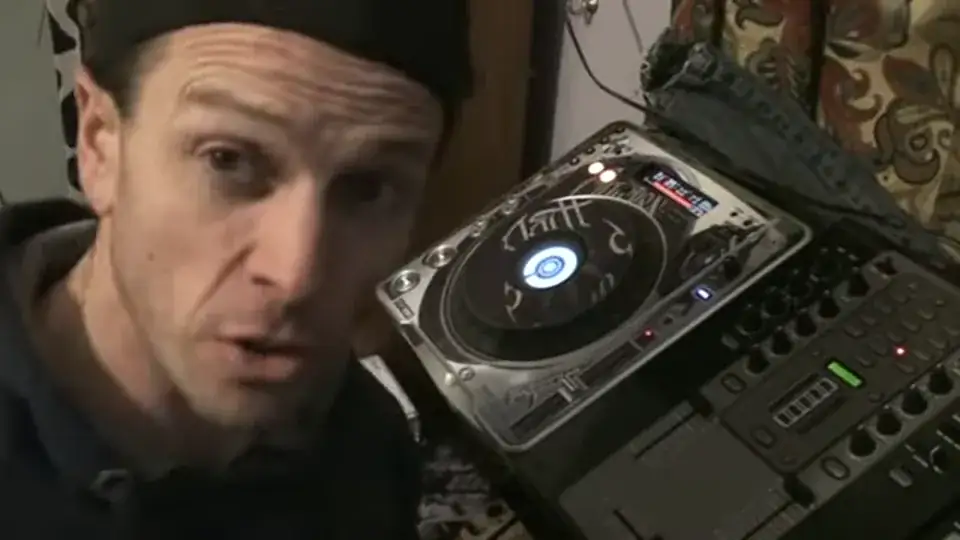
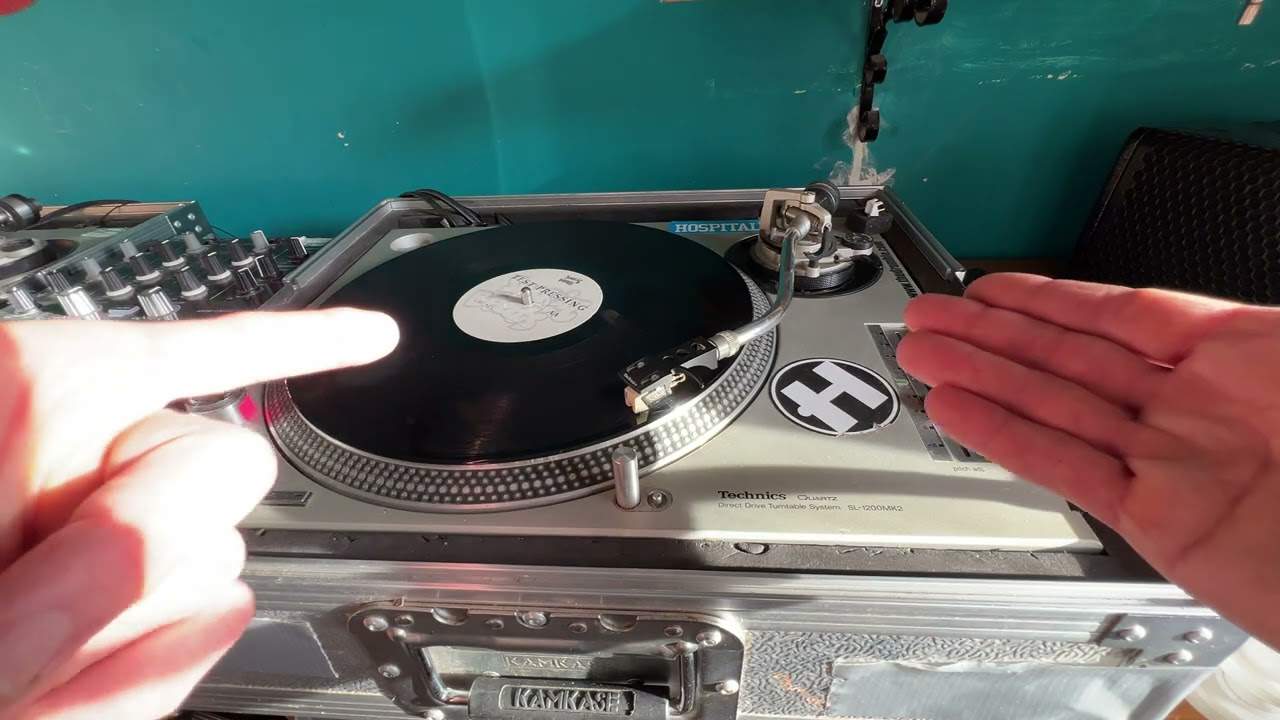
Alright folks, now this video is I suppose in a sense a demonstration also tutorial on what I would class as drop mixing. Now let's say hypothetically you can't beatmix to save your life or maybe you're slowly getting used to beatmixing but you don't feel confident enough to do it let's say in your set. Well what I would class as chopping or sometimes known as drop mixing is when you just all of a sudden you just drop in another tune. Now, a lot of things need to be taken into consideration. Now, first of all, if you cannot beatmatch, if you can near enough get them sort of the same speed, now again with a lot of CD players, it'll tell you the speed. So even if you don't want to beatmatch it, all you need to do is say for example on the player over here, for example I may look at that and think well it's going to be around about 127, 126.5, all I need to do if I'm bringing this one in, get this one to around about 126, 127.5.
Because what we're going to do is basically, we've got the two volumes up. This one here is for that side. This one here is for that side. So, play this one. All I'm going to do is just play that one, crossfade over straight into that track. Right. If it was only that simple. Right. Of course, lots of considerations. You've got to remember the key. You've also got to remember the timing. Now, first of all, the key. We can go three ways, well we can actually go four ways with the key. One is we can keep a constant which is what I'm going to do now. The other one is we can drop a key, make all of a sudden the mix just go a little bit deeper. Alternatively we could make the mix go slightly higher by slowly getting a bit of a higher key. Then the fourth one is where we have a wrong key and it'll just sound a bit like naff. I do that occasionally but what the heck, it's about practice isn't it? Right so...
1:55 This is the track we're playing
What I'm going to do is, by the way if you want to know the names of the tracks, follow the description and all that sort of stuff. So this is the track we're playing. And then this is the one we're bringing in. Now very quickly an important factor about the track you're bringing in. This is an important factor. What you have to do is you have to find the right place. In other words, you have to imagine... The track you're playing to, oh sorry, the track you're playing to, proper English, English, Honglish, calm down. Right, you have to imagine, you have to imagine the track you're playing, right, brain work, where's the brain cell gone? Damn, where's it gone? I should have lost it. Okay, what you have to do, you have to just picture the track you're playing.
3:41 For example, right, calm down
And picture the track you want to drop into it, and you have to imagine a sort of a part where you feel this track will be perfect in with that track. So have a listen to this part here. Ah, crossfader. Sorry, I said, I listen to this track. It's like, duh. Yeah. Okay, so basically what I've done... The track itself, like I said, I'll put the name in the description. But I've gone through quite a few bars until I've come to a certain point. Bam! Now, again, I haven't just thought, I'm just going to chuck it in anywhere. I've counted 1, 2, 3, 4. 1, 2, 3, 4. So, I mean, for example... I'm kneeling on stuff here. So, for example... Oh dear, it's fun this. Right, so for example, right, calm down. I'm going to start laughing in a minute. No, I shouldn't. Right, for example, let's say, right, we start counting as soon as we hear the first beat on this particular track. So, bang, and we go one, two, three, four, one, two, three, four, one, two, three, four, one, two...
What I want you to make a note of with the tracks you're using is how many sets of fours you're having. 1, 2, 3, 4, 1, 2, 3, 4, 1, 2, 3, 4, 1, 2, 3, 4. Just a beat and you could have another four. 1, 2, 3, 4, 1, 2, 3, 4, 1, 2, 3, 4, 1, 2, 3, 4. All of a sudden you can have a slight change. There could be maybe a bit of a hi-hat there or maybe, I don't know, a bass line or something like that. So what I've done, I've listened to that and I've listened to the point where I think... Like so. We've got this one playing. Listen. There you go. Alright. It is sort of as simple as that, but then again it's about listening and finding the best place. Now believe me if you cannot beatmix, but you know your tunes and you can do that, you can have a stunning mix without even having one beat going over the other. Practice and enjoy. Thank you.
How do you normally go in the red? Oops. Watch. Down there a little bit on the gain, and if I want to turn it back up to the original level it was, all I've got to do is turn the master up. See? Very simple. Practice and enjoy. Thank you.
This transcript was produced automatically from the audio of the video and may contain mistakes.