 4:17
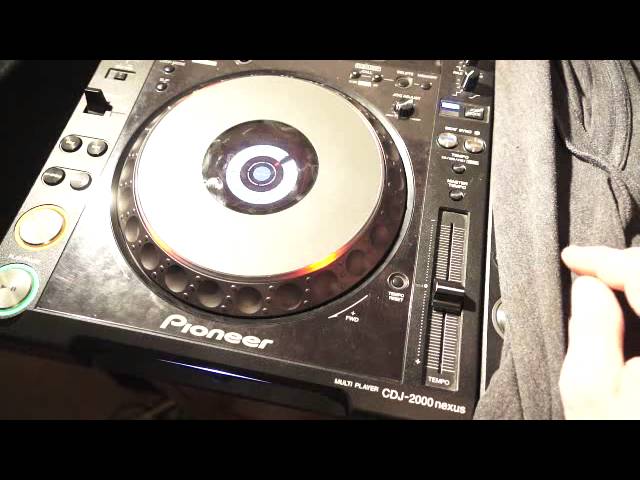
Demonstration of the Master Tempo Feature on the Pioneer CDJ2000NEXUS
Contents of the video
0:01 Is it any good above or below 20%?
Alright guys, you have in front of you the Pioneer CDJ Nexus 2000 and a friend of mine on Facebook, Gerald Bazilians, asked what the key lock is like. Is it any good above or below 20%? So first of all what I will do is I'll set the tempo to plus or minus 6. Now all I've got is just a very quick kind of loop. Because the idea is, again, if you have music then if we do disengage the master tempo there's more chance of hearing a difference in the way the sound will increase, go higher or lower. First of all for anyone out there who's not familiar with master tempo, what that will do is while it's engaged it will let you keep the same tone, the same key of the sound while you're moving the pitch. To the minus or the forward position, so while you're slowing the track down or while you're speeding the track up.
1:19 The opposite applies when you speed it up
With master tempo disengaged when you slow the track down not only will you slow the BPM or the speed of the track, you'll also lower the key so that the whole feel, the vibe of the tune will not only slow down but the whole vibe will start to dip. The opposite applies when you speed it up. Not only will the track, the BPM, the beats per minute of the track, increase, the overall key, the sound will start to rise. So first of all with master tempo engaged I will do plus and minus six. I'm going to shut up, okay, and I'm just going to do a demonstration and you can hear for yourselves what it's like. So first of all plus or minus six with master tempo engaged. Back to the centre, disengaged, back to the centre, now we're plus or minus ten, master tempo engaged.
2:54 You're increasing or decreasing the speed
Back to the centre, master tempo disengaged. Back to the centre, plus or minus sixteen, master tempo engaged. Back to the centre, master tempo disengaged. Alright here we go to 100% which is wide. That means that whatever the BPM of the track is at the centre point for example if it's 120 if you speed it up as far as it will go it'll go to 240. If you slow it down as far as it will go it'll go to zero. So you're increasing or decreasing the speed. By 100% so this is 100% wide, this is with the master tempo engaged, stopped. Now if we have a listen that's about 20% and around about 20% you do start to have a double tap, more apparent at 24. Try not to listen to the tone, more so listen to that ch-ch. Okay we're going to disengage master tempo, speed it up and slow it down.
Okay just a demonstration. A demonstration there on the master tempo function on the Pioneer CDJ-2000 Nexus practice in June, thank you.
This transcript was produced automatically from the audio of the video and may contain mistakes.