 7:11
The move-and-nudge habit
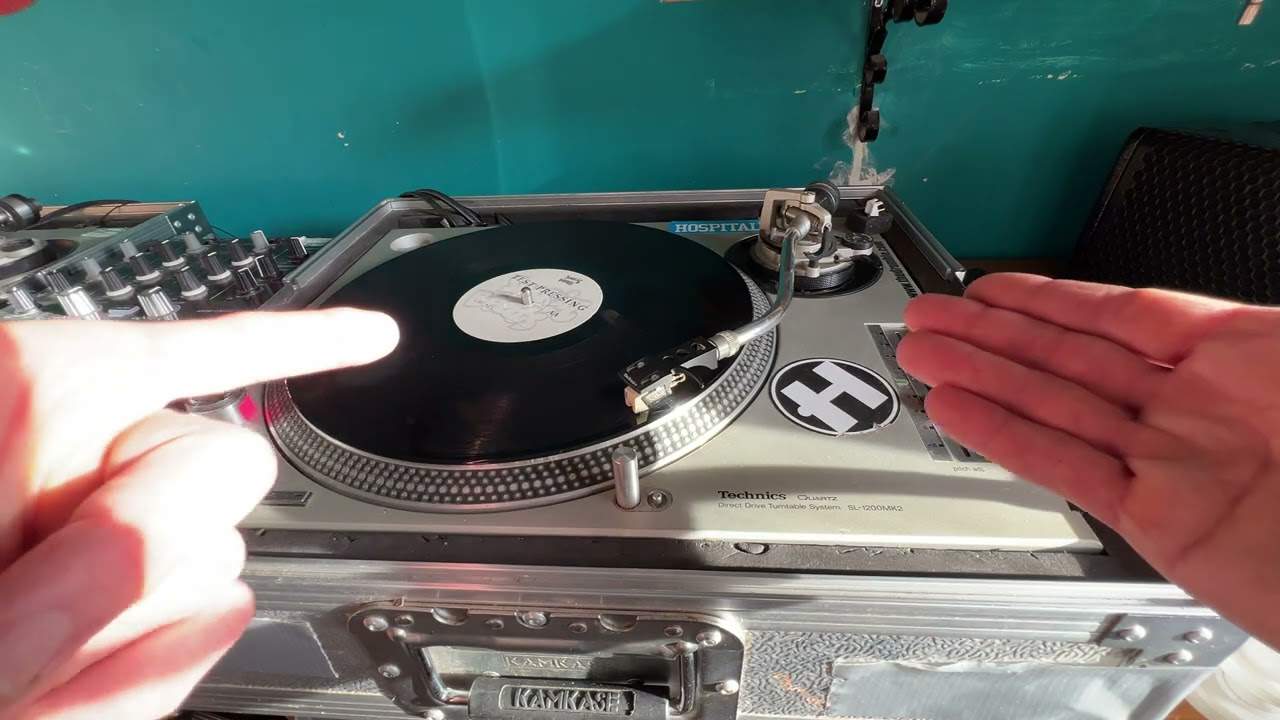
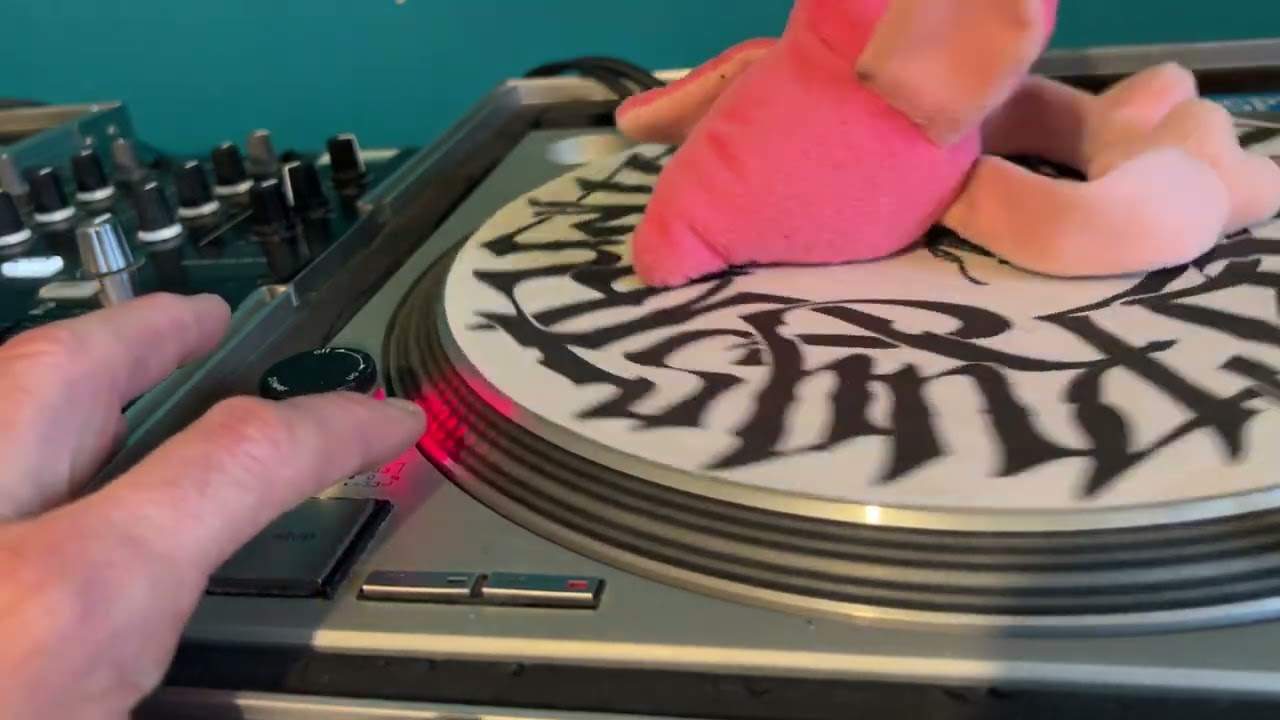
On YouTube this video is called DJ Beat Matching Lesson the "Move N Nudge" Technique Move Pitch, Nudge, Platter to Fine Tune
What this lesson teaches
A named technique, and the name is the whole method: push the pitch, nudge the platter.
The setup
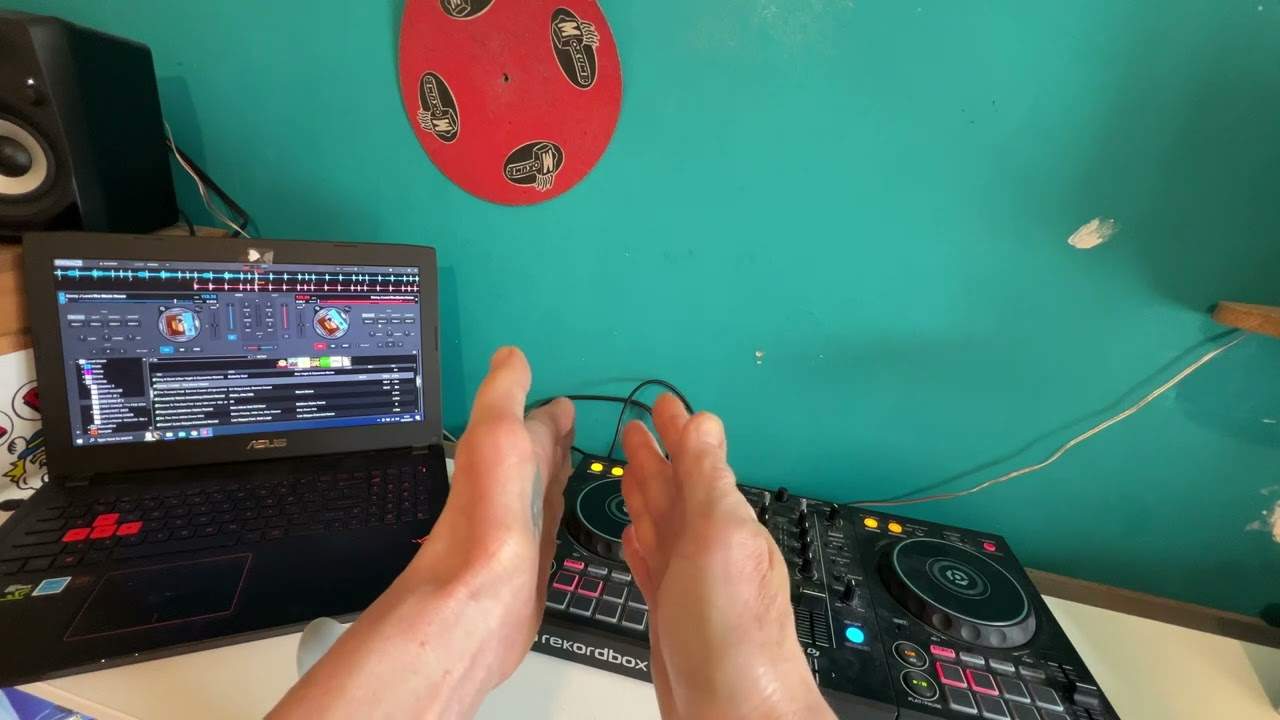
He covers the screens so he cannot see the BPM of either track, and then deliberately puts both pitch faders in random positions so he does not know where he is starting from.
That is not showing off. It is removing the possibility of solving the problem by reading numbers, which is the only way to demonstrate that the ear method works.
The demonstration of the problem first
He starts both tracks without touching the pitches at all and lets them run.
They separate quickly. The point being made is the one from the counting lessons: with different tempos, nothing stays together, and it does not take long to become obvious.
The technique
Push - a large movement of the pitch fader to get roughly there. He can hear one is much faster, so he slows it a lot.
Then listen, and push again, smaller. Still too fast; smaller again. Still too fast; smaller again.
The movements converge. Each one is a decision based on what you just heard, and each is smaller than the last - which is exactly the shape of a search.
Nudge - once the rates are close enough that they are no longer separating quickly, the platter handles the remaining position error.
Why both, in that order
Because they do different jobs, and the order is dictated by which problem goes away on its own.
A position error does not get worse by itself. A tempo error does. So you deal with the tempo first, with the pitch, and only once that is settled do you spend effort on position - otherwise you are repeatedly correcting a position that the wrong tempo keeps destroying.
Doing it blind
Worth trying his version with the displays covered, even if you normally use them.
With numbers visible, the temptation is to match the figures and assume the job is done. Covered up, you have nothing but the sound, and you find out very quickly whether you can actually hear the difference between two tempos or have been reading it off a screen.
Contents of the video
0:01 This video is hopefully going to help you with your beatmatching skill
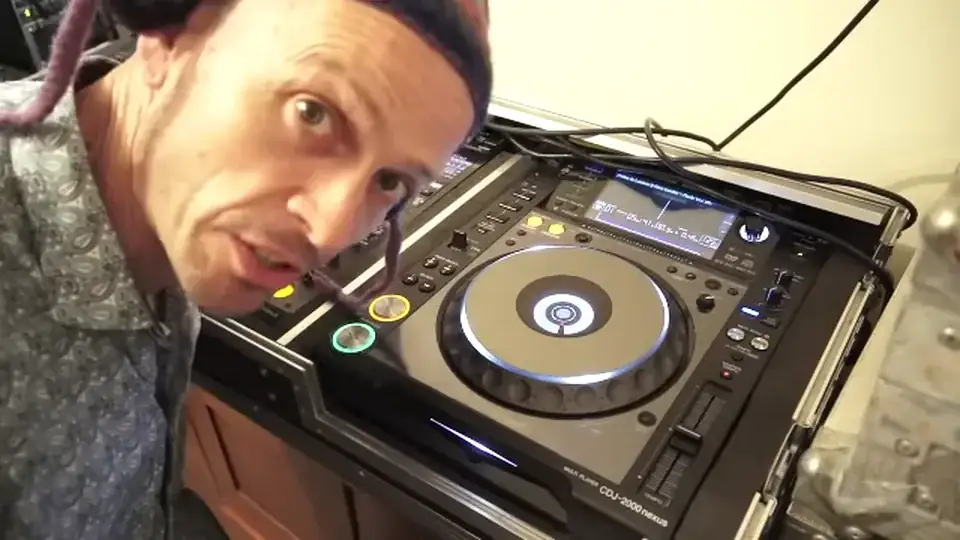
Right ladies and gentlemen, this video is hopefully going to help you with your beatmatching skills. It's called push and nudge. It's a technique that quite a few DJs use and maybe you should give it a go. Push and nudge. Push the pitch, nudge the platter. First of all, tunes I'm using is Storm Queen, Look Right Through, the MK dub. And this one here is Alan DeLenary, L-A-N-I-E-R-E. I'm dyslexic, I'm going to look at it very closely. And Miss Wonder, Ponlevoz. P-O-N-L-E-V-O-Z. There you go.
I'm going to cover up the screens. And there's good reason for that, to prove that it does work. So I'm going to do that so I can't see the BPM. That's quite important to prove a point maybe. So I think I'm pretty clear on the fact that I can't see there. Nope. Can't see the BPM at all. Right, push and nudge. Now first of all, just to prove a point as well. Let's move, I'm not going to look now. Sorry, I've got to look at you. Oh dear. Look there like that and I'm just going to put them sort of there. So they're all over the place. So what I'm going to do is I'm now going to mix this track here with this one over here. First of all, I'm going to just start this one and bring this one in. Don't touch the pitches and see how long it takes.
Before they're completely off beat.
2:08 Automatically you would of course slow it down
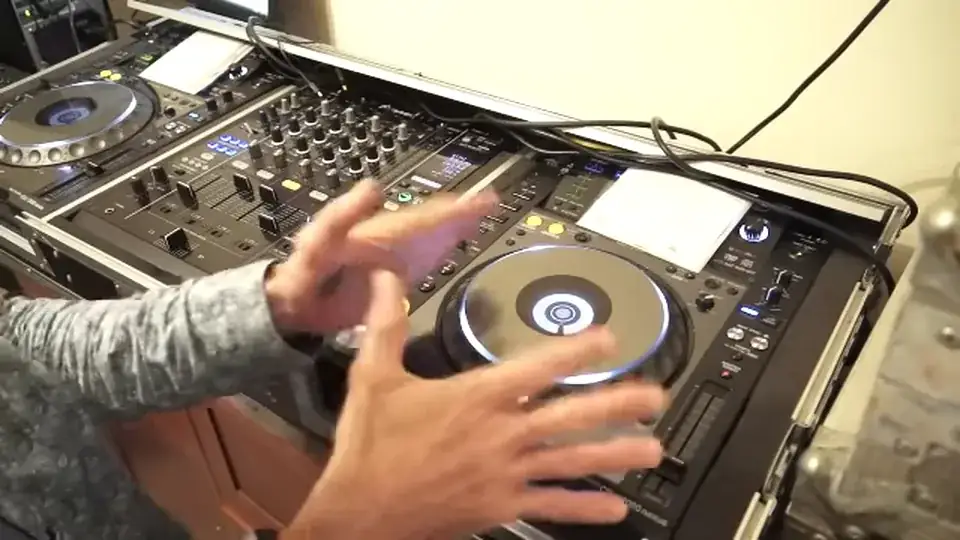
Not very long. Right, push and nudge. The straightaway we could tell, hopefully you could as well that that one was a lot faster. So automatically you would of course slow it down. So I've done quite a big push, slowed it down. Where does the nudge come in? Well first of all let's imagine we have, we've got to the stage. Where they're pretty much in beat, but they're not quite perfectly matched. And we've used our headphones. For this demonstration I'm not going to use headphones. Let's try again. Still too fast. Try again. Nearly there. Put it down a bit more. Still a bit too fast so I'm going to put it down even more. Let's try about that. Alright, now that's better. It's not too fast. But it is still too fast.
What we really need to do is find a point in this track here, the one over there, where we have a beat. So I'm going to, or when I say beat it's more of a like so. Okay? And again I'm not looking at pitches.
3:51 Bearing in mind at the moment we know that this track is too fast
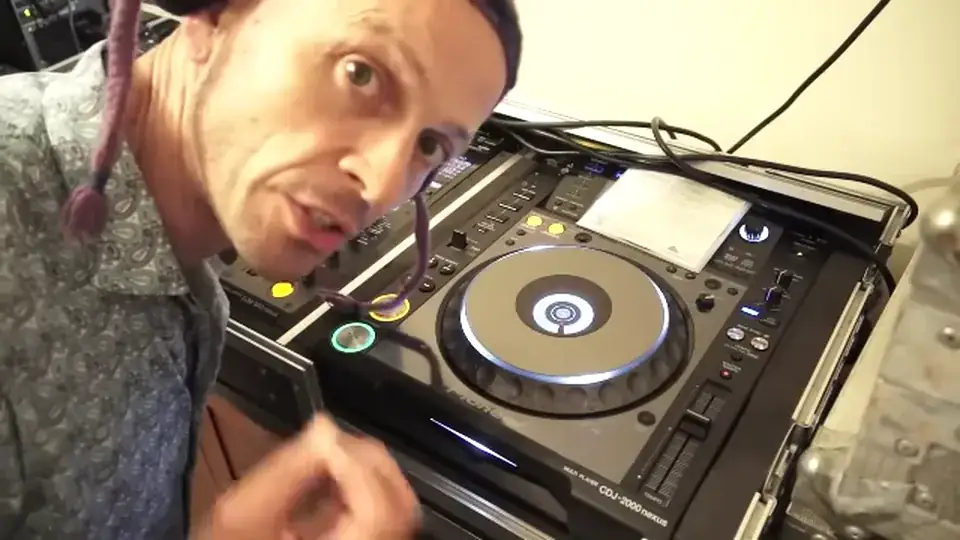
Just pause it about there. Right, push and nudge. The whole idea, and again you need to do this while you've got your headphones on. Now bearing in mind at the moment we know that this track is too fast. So I'm going to have to reduce the speed. All you need to do is video backwards and do the opposite to what I'm doing. If this track was too fast, oh sorry. Sorry, this is where sometimes I even funcuse myself. This one was too slow and you need to speed this one up. So, this is where the push and nudge comes in. So, press play. Nudge. Down a bit. Still too fast. Push down. Nudge. Nudging it. You're nearly there now. Right, again a lot of people say why don't you edit videos? Well I don't really want to because I like it to be, well I do sometimes.
All right, let's have a look. We'll put this video on no matter how far away it is but hopefully it should be pretty close. So that is 118.5. Okay. 118.6. Oh, very, very slightly off. Maybe if I'd have taken a little bit more time it would've been on but that was using no headphones and that was using the push and shove technique and I don't know what's happened there. Oh, there you go. There you can see. What's it doing now? Oh, it's all right. Pressing buttons with that lock there. So, there you go. That's been a help. And that one is dedicated to Seamus Given from Facebook who inspired me to do this video. Practice and enjoy. Thank you.
This transcript was produced automatically from the audio of the video and may contain mistakes.