 7:46
Dj help, Bring it in on One(counting a bar)
Contents of the video
0:00 What I've got now, I've got a tune called Hideaway by DeLacy
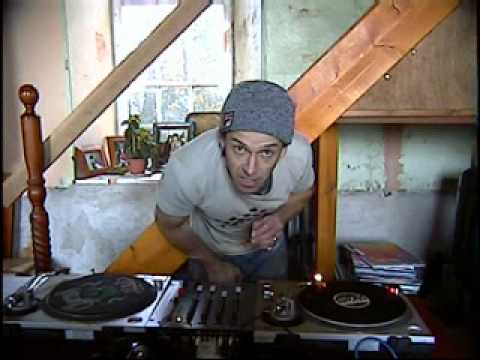
Alright folks, excuse all the paint on my hands, dodgy hat and exceedingly dodgy t-shirt but I'm busy outside. Someone's asked me, left a question, what do you mean by bringing it in on the one? Okay, now I presume what they mean is what do you mean by actually bringing it in on the one with regards to bar as in 1-1-2-3, 2-1-2-3, 3-1-2-3, 4-1-2-3. Okay, now what I've got now, I've got a tune called Hideaway by DeLacy. Very long introduction. So what I'm going to do, I'm going to actually count. I'm going to have it sped up really, really fast and I'm going to count it. I'm not going to go 1-1-2-3-2-1-2-3-3-1-2-3-4-1-2-3 because I can't count that fast. What I'll do, I'll just do 1-2-3-4. What I'll do, I'll put my fingers up with the bars and hopefully, if I've counted correctly, as soon as we get the break, we'll be back into one. Now that's the first thing we're going to do.
2:48 Let's say I wanted to bring this record in at a break
So here's the start, this is what it sounds like. Loads of breaks, we're not going to actually count the bars, we're just going to make sure the bars are in time. So, right, straight in. And what is the one? Let's class this precise break here as one, okay? 1, 2, 3, 2, 1, 2, 3, 3, 1, 2, 3, 4, 1, 2, 3, 1, 1, 2, 3, 2, 1, 2, 3. 3, 1, 2, 3, 4, 1, 2, 3. 2, 1, 2, 3, 3, 1, 2, 3, 4, 1, 2, 3. Okay, now then, we could go on and on and on there. Now, why do I say bringing it in at the 1? Let's say I wanted to bring this record in at a break. Now what I would do, I would count through 1, 1, 2, 3, 2, 1, 2, 3, 3, 1, 2, 3, 4, 1, 2, 3 until I get to 1 again. During the course of that record, if I count the bars, quite often when you're learning to mix, the best place to bring the record in is at the 1. In other words, when you count the bars, 1, as in 1-1-2-3, 2-1-2-3, 3-1-2-3, 4-1-2-3. What we'll do, we'll wang through the record, just put it anywhere. OK, put it here now, I'm going to listen to it, OK? Find a certain place, ready for some sort of break. Maybe here.
There's a break, okay? Let's class that as one. One, one, two, three, two, one, two, three, three, one, two, three, four, one, two, three, one, one, two, three, two, one, two, three, three, one, two, three, four, one, two, three. There you go. Okay, so now think about it. We had a break, we had two bars, came into vocals. So if I wanted to mix this record... We'll try another part of the record.
5:21 Basically it's all about counting those bars
Okay, basically it's all about counting those bars. Right, what we'll do, we'll take that one off quickly and we'll find something. Sorry, I've got records and stuff all over the place here. Right, we've got this one which is a bit of a fast track actually. We count the break, okay? 1, 2, 3, 3, 1, 2, 3, 4, 1, 2, 3. One, one, two, three. Two, one, two, three. Three, one, two, three. Four, one, two, three. One, one, two, three. Two, one, two, three. Three, one, two, three. Four, one, two, three. One, one, two, three. Two, one, two, three. Three, one, two, three. Four, one, two, three. Okay, we had to change there, didn't we? We noticed a change. Now we'll carry on counting. Okay, so this is it. Basically what do I mean by bringing it in at the one?
Go through your records, alright? Here's an idea for you. I want you to find your favourite record. I want you to count the bars at the beginning, count how many bars the vocals are, count how many bars the breaks are, how many bars instrumental break, how many bars the vocals are. Now on that basis you can work out exactly the strategy, how they made that record up. And if you go in depth again, you can pick that particular record that you've broken up, pick another one up that they mixed both together with, They mix really well together, should I say. And then utilise the breaks in each one. Use the bars. Remember to bring it in at 1, the beginning of the vocals, maybe the end of the vocals, the beginning of the break, the end of the break. Believe me, if you do that, you cannot go wrong. OK, speak to you soon. Bye bye.
This transcript was produced automatically from the audio of the video and may contain mistakes.