 7:52
Dj help, using the pitch part two[www.djtutor.com 20th Jan
Contents of the video
0:00 Doing a mix, third one
G'day folks and welcome to 2007. And excuse the Archie Meghans and Bloomers behind me, but it's the only way I can get the camera to focus. On the pitch control here now, part two, I have done a video on this one before, and this is in three sections. First of all talking about it, second one is doing a mix, third one is drawing diagrams on scruffy little bits of paper, courtesy of my daughter's pens. Right, now the philosophy behind of course the pitch control is basically keeping it in beat. Now if you imagine two clocks and they're identical clocks They're not joined together, even if they start off at the same time and they're going tick at the same time and tock. Guaranteed, unless of course they're the most expensive clocks in the world and they're somehow joined so they stay together at the same time, they will eventually go off. So it'll go tick, tick, tick, tick, tick, tick, tick, tick, tick, tick, tick, tick, tick, tick, tick, tick, tick, tick, tick, tick, tick. They'll catch up again. Now a lot of DJs, what they'll do...
They'll start a mix off and it'll be in beat. Boom, boom. In other words, they'll count the bars correctly, it will be in beat. Together, boom, boom, boom. But eventually, if they don't keep their hands on the pitch control or watch the speed of the record, what will happen? Eventually, it'll go off. It'll start to go, do-doom, do-doom, do-doom. Then what happens, and think about it, this is possibly where you may be going wrong. Eventually, the bass beat will catch up with the hi-hat. So as in 1, 1, 2, 3, 2, 1, 2, 3. One, the bass beat. One, two, three, two. So boom, boom, boom. The bass beats. Eventually what happens is the record that's either speeding up or slowing down, the bass beat will catch it with a hi-hat beat at this point.
It can only happen sometimes, more often than not it will happen and that is the bass beat will then, the DJ mixing will think crikey I'll bring it back into the bass beat but what they do is they bring it back into the following bass beat, okay? The one either after the first bass beat where it should be or the one before. Now at that point then they'll start keeping it in beat but what you'll find is it's at the wrong timing, it's in the wrong place, okay? Now then, again, you've always seen me do this, moving the pitch control quite a lot, OK? And then I get slowly closer and closer and closer. I'll explain that in the middle, in a little bit, with regards to diagram. But first of all, what I'm going to do is a bit of a mix, and you'll see me moving the pitch control, smaller and smaller movements until eventually it's roughly about the right place. Two tracks I'm going to be using is this one here. It's a track called... Hold on, what's it called?
2:45 Remember, like a spatula
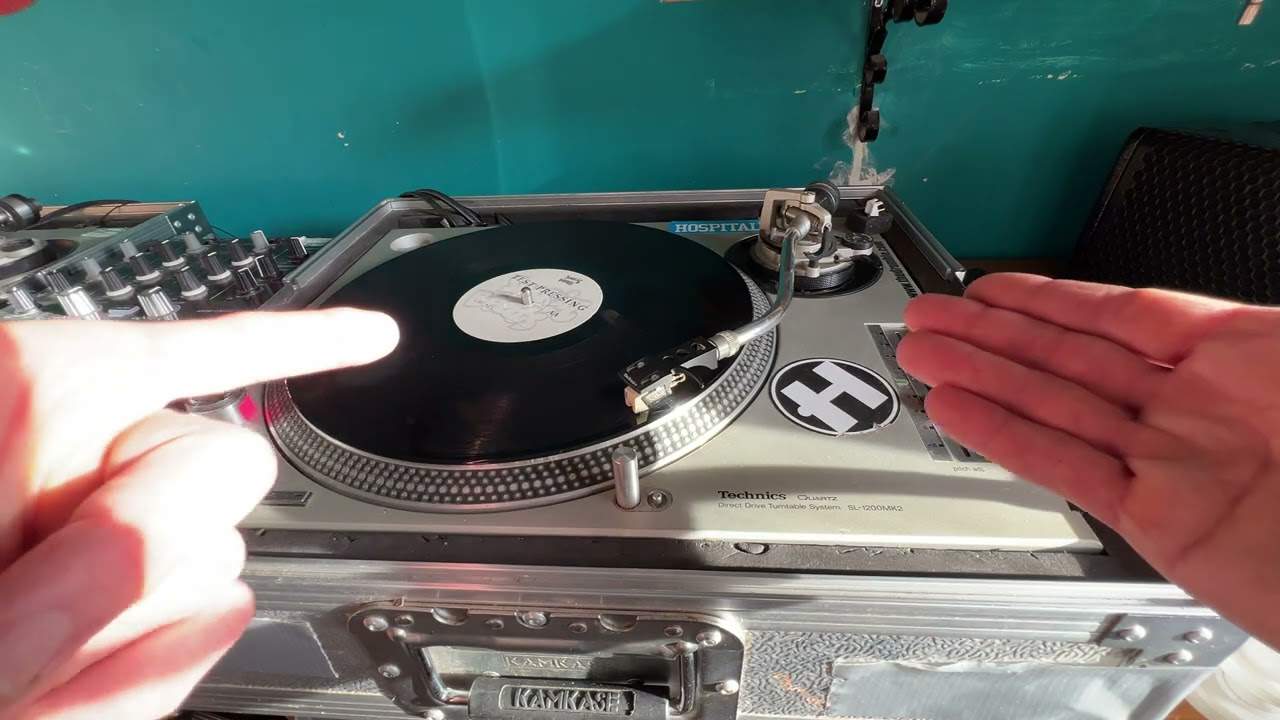
Remember, like a spatula. In your bones, beg your pardon. It's presenting Fire Island, Boyzone production, Hear No Evil. It's one of those. And then the other one, one of my favourites, it's Melissa's Dream on Hardtime Labels by Todd Terry. Bit of a classic, OK? So what I'm going to do, I'm going to just pause this now, plug the little thingy here into the side of the camera and I'll have the camera on this area here so you can see my fingers. Do their little worky thingies. I'm not talking about the actual position of the pitch control in the last mix, this is just in general. Now let's say the final position of the pitch control to mix in one record into the other is going to be at minus 3.9. Now then, you've noticed what I do, by the way, do you like my pointy thing? It's one of my son's swords.
5:31 All right now then the first
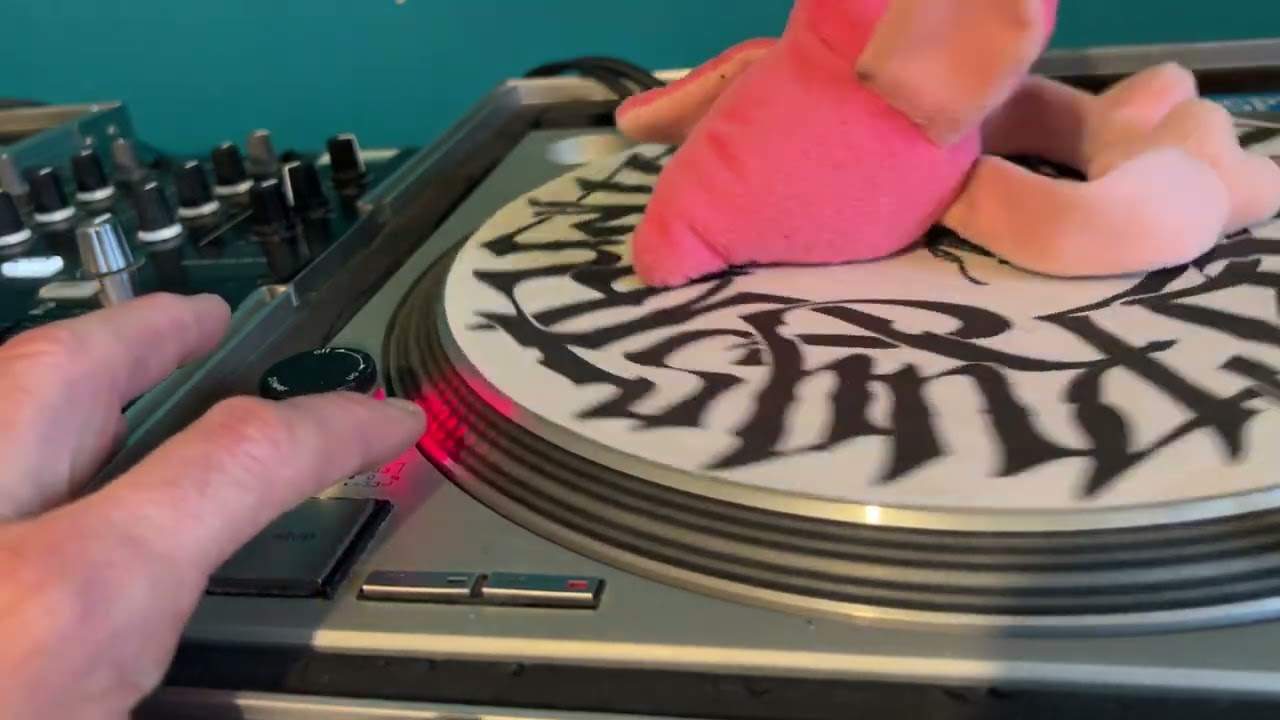
You'll notice I do a lot of this. I go down, up, down, up, down, up, down, up. But quite often my movements are quite sharp and then they get smaller and smaller and smaller and smaller and smaller until eventually they're just tiny movements like so. I'll explain why I do that. Now let's say we need to get the position of the pitch control at 3.9. is the pitch control starts off on the green light and there we go both records are going on or let's say the one record is playing and I'm mixing in the next one all right now then the first thing I'm going to do because I know straight away that the other record is slower slower than this one I've got to slow slow it down but if I slowed this one down here straight straight away down to 3.9 okay there is a very good chance
The DJ Tutor, the DJ Tutor. The minus 7 position and the minus 2, the next movement down would say only be to minus 6. And then you bring it up to 2.5 and then perhaps 4.2. And then finally, you would find that you're getting closer and closer at minus 4 and then eventually you're bringing it up 3.9. So again, if I class that now, let's say that's the position. The final position we need the pitch to be, okay? And with the pitch control could be there, there, there. It doesn't really matter. It could be there, here, here, here or here. Not really. Alright, so what we're doing is we start and we move big movements and slowly smaller and smaller, tinier and tinier movements till eventually it's almost like that, alright? Now think about it, the principle with the ticking clock.
They both tick at exactly the same time when they start off. But if you left them for long enough, eventually they go tick, tick, tick, tick, tick, tick. Same principle with this really. This is why you always see my fingers on the pitch controller 99% of the time. Because apart from the fact eventually they could go off, it's a good idea to keep your fingers on there because if they do go off, you're guaranteed of just that continual movement. Your fingers are in tune with the beat and you're keeping in time, okay? So again, don't forget that. Very important, alright? I'll speak to you soon. Practice and enjoy.
This transcript was produced automatically from the audio of the video and may contain mistakes.