 6:08
Beat, melody and bass line - hearing them apart
On YouTube this video is called Dj help, What is a beat, melody and bass line?
What this lesson teaches
He acknowledges at the start that many viewers will find this obvious and does it anyway, because plenty of people have not the absolute foggiest. He is right, and the method in it is useful even if the vocabulary is not.
The three things
The beat is the drums - the kick you count, and the hats and snares around it.
The melody is the tune: the sung or played line that makes the record that record. It lives mostly in the mid frequencies, which is why removing the mid makes a track unrecognisable while leaving it danceable.
The bassline is the moving low part underneath - not the kick drum, but the notes that go with it. His way of isolating it is the right one: turn the mid and the top down and what is left is the bassline on its own. Do that once on a record you know and you will never confuse it with the kick again.
Writing the record down
The technique worth stealing. He counts the track and marks a cross on a sheet of paper for every bar, grouping them as he goes.
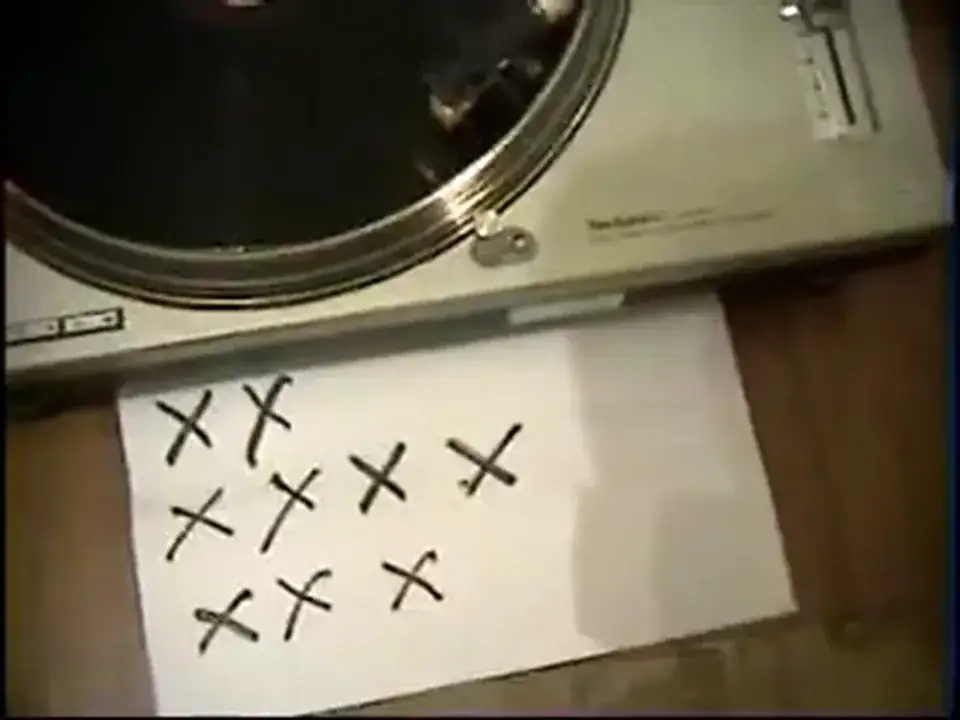
What comes out is a map: two bars of beat, then four bars of beat, then four bars of break and melody, then the bassline arrives. His summary of it is the practical one - ten bars to work with before the song proper starts.
That number is exactly what you need to plan a mix. It tells you how much runway the incoming record gives you, which decides when you have to start it.
Do this to a dozen records you play often and you will know their shapes without thinking.
Reading the vinyl
And a trick that only works on records, which is lovely.
Look at the disc under a light. The shinier the groove, the quieter the music. A loud, dense passage cuts a wider, rougher groove that scatters light; a sparse breakdown cuts a narrow, smooth one that reflects it.
So you can see the arrangement on the record before you play it. The shiny band two-thirds of the way in is the breakdown, and you can drop the needle on it without hunting.
It is the original version of looking at a waveform, and it was there for fifty years before anybody had a screen.
Contents of the video
0:01 What we'll do, we'll start off, OK, and we're going to count the bars,
Hi folks, right, someone gave a question on the basis of what is bass, what is a bassline, what is a melody, what is a beat, etc, etc. So what I'm going to do is break it all down for you in simple terms and you may be asking, well come on, we know what the melody is, we know what the bassline, the beat is, you may know that, but believe me there are a lot of people out there that haven't got the absolute foggiest, so I shall explain, alright? Bit of a classic. Most of you should, well, a few of you should know this anyway. What we'll do, we'll start off, OK, and we're going to count the bars, and while we count the bars, I should have taken the top off my pen anyway, I should know really, to begin with. Right, what we're going to do is while we count the bars, I'm going to put the crosses on this piece of paper here, OK? So as soon as it starts, and we start at one. One, one, two, three, two, one, two, three.
2:09 Crosses, OK, what I've done, they're
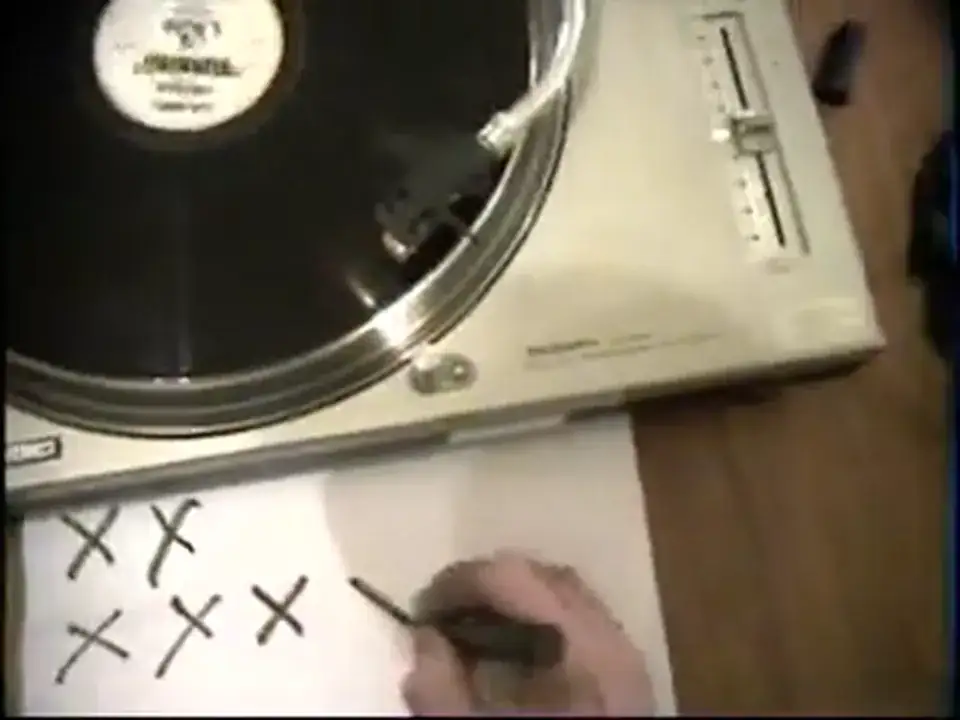
1, 2, 3, 4. 1, 2, 3. 1, 1, 2, 3, 2. 1, 2, 3, 3. 1, 2, 3. 1, 2, 3, 4. 1, 2, 3. 1, 1, 2, 3, 2. 1, 2, 3, 4, 1, 2, 3. 1, 1, 2, 3, 2, 1, 2, 3, 3, 1, 2, 3, 4, 1, 2, 3. Turn it, turn it. OK, right, basically, well, first of all, what did we have there? OK, now, if you look at the crosses, OK, what I've done, they're in sets. We had two bars, and then we had four bars of the bass beat, which is here. So we had four of those, okay? And then we had four bars of almost like a break, which was here, with nothing, okay? Bit of a melody, should I say. You've got sounds, you've got the singers in the background. That's basically, you can class that as a melody. And then you have that for four bars. And then, if we wait a little bit, you'll hear the bassline which is basically this bit here. And if you don't know what a bassline is, ladies and gentlemen, it's that funky sound you can hear. If I turn the mid and top down, you can hear the bassline a bit better.
4:33 I've got 10 bars to work with, OK?
Okay, so what I would do now on that particular record, if I wanted to section that off into bars, I would put on the front of that record, I'd put two bars here and I would just put beginning of beat. Here I would put four bars and I would put beat and say, oh what was it now? It was just the beat wasn't it? That's right. These four here I would put... The song comes in. I've got 10 bars to work with, OK? Right, let's try another one very briefly, OK? And what we'll do here is Junior Jack and Samba, which is a bit of a stonking track, actually. I mean, here... Right, there's the beat. So I just class that as beat. Here, I've got melody. OK, so this is different. We've got the beat, we've got the melody, and then break, and then bassline comes in, and then the bassline.
And there's the bass line. Again, what we were on about before, if you remember, about finding out areas where we've got quiet and loud. Here, in this particular point here, it virtually goes to nothing. The actual shinier the part of the record, the less noise or less sound is actually coming from that particular place. If I put the needle on that place there, there's virtually no sound at all. There you go. Background, basically. Gets louder and louder and louder as it starts to get darker and darker. Or the shading increases. Okay, so there you go ladies and gentlemen. As usual, you may think I waffle, but you'd be very surprised out there how much certain people don't know, but then again there are a lot of people that do know things, and hopefully people like me that can help you out, okay? Stay tuned and I'll speak to you soon. Bye-see-bye.
This transcript was produced automatically from the audio of the video and may contain mistakes.