 9:20
DJ Lenny Fontana Beat Mixing with Cdj 2000 Nexus Episode 1
Contents of the video
0:00 This is an episode of DJ Tutor
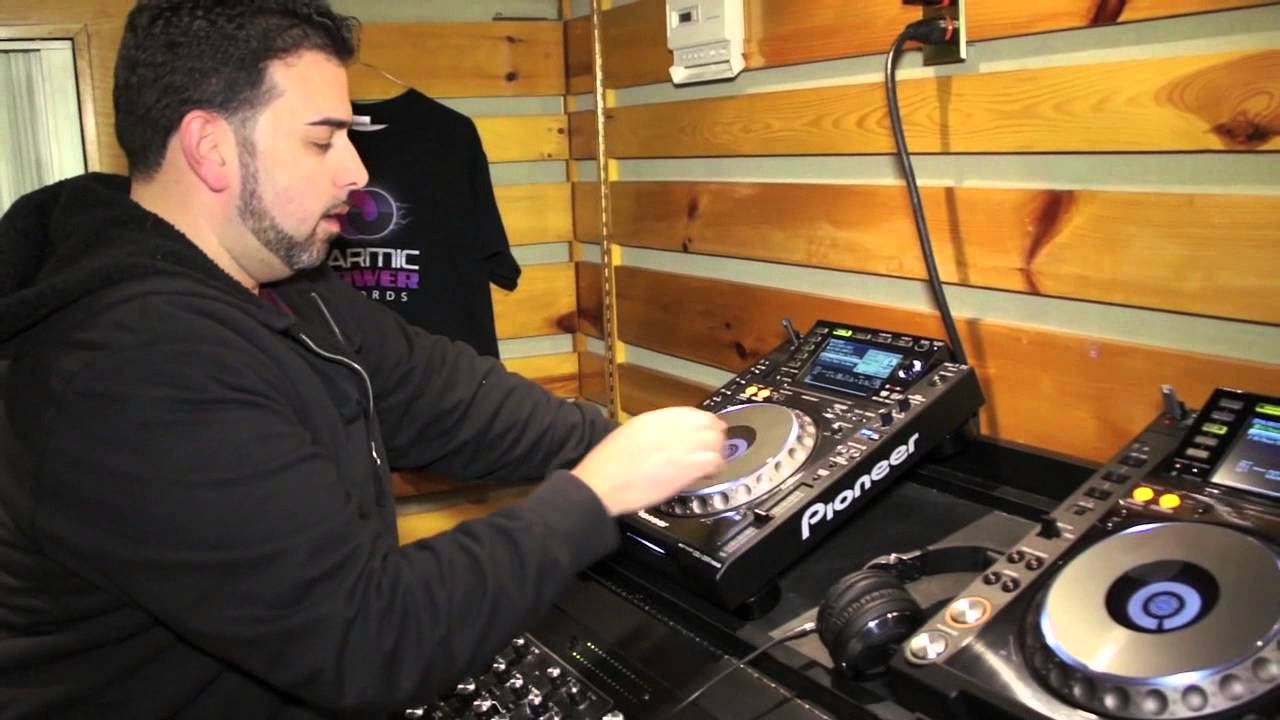
Hi, my name is Lenny Fontan and welcome to Karmic Power Records and The Lab, the studio. Come on in. This is an episode of DJ Tutor. Jonathan asked me to show the people that watch YouTube what some of us do as DJs and record producers. Right now, as you can see, my board is getting worked on. It's an old classic SSL console, 6000 EG+. What does that mean? It has E-modules with a G-plus computer. Pretty cool. It was built around 1987. Probably some of you weren't even born yet. So it's pretty cool. It's a relic. A lot of records were made on this if you look it up. It's Solid State Logic. It's a nice console. These are NS10s and these are Ted Auspergers. This is a soundproof room. This is my personal studio where I've made plenty of records. Powerhouse, What You Need for Strictly Rhythm Defected, and a lot of house records. Right now we're making some new stuff.
1:51 This is an isolator, this is to cut frequencies
I use a 12-core Mac Apple loaded up with lots of stuff. This is actually the record label Karmic. I'm using the Karmic Power. We've still got some neves and some stuff left, a lot of stuff we got rid of over the years. My Pioneer gear. I have CDJ-2000 Nexuses which are pretty up to standard. They're pretty slamming. Pioneer was very giving to me on a Remix 1000. This is my Bozak mixer that I got in 1983 I think. This is an isolator, this is to cut frequencies. This was made by Gary Stewart and DJ Tudor asked me to show the fans a lesson on beat mixing and what the CDJ-2000s do. You can physically put a USB in or a CD. We'll put a CD in first and I'll show you what that's like. You put the CD in, okay?
And it loads up, takes a moment and immediately starts to play automatically. It takes MP3s, Waves, AIFFs and AACs. That's if you want to go out with a CD book or you're doing mobile work or you're playing at a nightclub, you would have CDs. Or you could be up-to-date. And use a USB stick and put it right here where Pioneer has made it so easy, okay? And then you click USB. And what happens is it comes right up all your stuff. Take a look. It comes right up. It just so happens that I have a mix that ATFC done for us for Karmic Power and I'm able to click on it. It loads right up. Loads right, look at how fast that loads up. This is a rotary mixer. Okay? What does that mean? Rotary mixer means that it doesn't use slider pots.
This uses rotary pots. For me, it's smoother. It's an older mixer but it's an analog mixer so I happen to like it's Bosec. They started making it again reissued. This was something I got. It was one of the original Bosec mixers. Oh, anyway. What I would do is if I was starting out to play somewhere, I would set up my first cue point, shut my first pot down which would be aux 1 on this mixer or it would be CD 1, okay? I would be doing this in my headphones. I'd be checking the mix going, okay. I'd be waiting. Let's say if they said to me to start now, I would just go and we would start off, okay? I happen to like to run these in vinyl because it makes it easy for me to slow it up when I need to slow it up or tap the platter, okay?
4:45 I happen to like it without master tempo
So far, we're moving along so now the people are listening and it's like we're just getting started. I'm going to turn it up to 226, the BPM and then you could do all kinds of stuff like you can do a slip but we'll go into that later. Right now, I happen to like it without master tempo. Master tempo does is it keeps the pitch the same but changes the timing so it's what they call time stretching on the fly. It keeps the same key signature. Meaning? It never changes the pitch. If I take master tempo up, you'll hear what I mean. See what I'm saying? So now I slowed it down to 118, 117 but if I want to keep it with the same pitch so that never loses the pitch. This is your tempo or pitch control and you could set it wherever you like.
If you're coming out of another record that's faster, you would then raise your tempo to match what the other. Tempo is on the other CDJ. Right now, we're at 126. So as this is playing what I'd be doing is I'd be thinking about what my next record would be. We would go then to say if I wanted Chris Dementelis' Mess, I would load that up. The people are going crazy now. So now what I'm doing is I'm going to play it. I'm going to play it. I'm going to play it. So what I'm doing is I'm looking for the cue point. It just so happens that the kick drum is on one. So that's what I'd be hearing in the headphones, the scratching. I put this on pause and hit cue. Now that sets that when I hit the play it'll go right away and lock up.
And the way we do it is we count four 4-beats per measure. There's four beats each measure. And you'd be like 1-2-3-4. 1-2-3-4. I set this one on beat one. So if I want to match it, I'd have to make sure that this plays on beat one here. So 2-3-4. 1-2-3-4. 1-2-3-4. And then what I would do is I go like this. Check it again. Okay? 1-2-3-4. 1-2-3-4. 1-2-3-4. 1-2-3-4. 1-2-3-4. 1-2-3-4. 1-2-3-4. 1-2-3-4. 1-2-3-4. 1-2-3-4. 1-2-3-4.
7:47 I did it on purpose so you could hear without my headphones on
Now I locked it. I did it on purpose so you could hear without my headphones on. And I'm going to do what they call the transition. Getting from CDJ one to CDJ two. And that's how you do a beat mix. Matching the beats on a 4-4 time. Remember, practice and enjoy. Thank you DJ Tudor. Lenny Fontana from Karmic Records. We'll see you next time. Bye. .
This transcript was produced automatically from the audio of the video and may contain mistakes.