 5:06
Mixing musically without beatmatching
On YouTube this video is called DJ Lesson on How to Mix Music if You Can't Beat Mix to Save Your Life
What this lesson teaches
It opens with an unusually direct piece of encouragement - aimed at people so frustrated they are thinking of giving up - and then makes good on it.
The claim
You can produce smooth transitions without beatmatching. Not as a consolation prize, but as a method.
What he does
He sets a cue point at the right musical place on the incoming track - not the start, not an arbitrary bar, but the point where that record should begin for this particular transition.
Then he listens to the track that is playing, finds the moment where the new one belongs, and brings it in there.
The distinction worth keeping
His own phrasing is the clearest part of the lesson: this is where the ear comes in musically, not beatmatchingly.
Those are two separate faculties and people conflate them.
Rhythmic judgement is hearing that one record is a fraction faster than another. It is mechanical, it is learnable by drilling, and a machine can now do it for you.
Musical judgement is hearing that this record should arrive here - that the key works, that the energy follows, that the moment is right. No machine does that, no amount of drilling produces it, and it is the thing that actually distinguishes DJs from one another.
Somebody with poor rhythmic judgement and good musical judgement will be a better DJ than the reverse, and this lesson is effectively saying so.
The aside
He mentions that he does not look at the BPM counters even though it may appear that he does, preferring his ears.
Worth noting in a lesson aimed at people who cannot beatmatch: the person telling you it does not matter is somebody who can, and who chooses not to use the shortcut. That is a more credible source than somebody who never learned.
And keep practising anyway
Nothing here says stop trying. It says you do not have to stop playing while you learn - which is the difference between a skill you acquire over a couple of years and one you give up on in month three.
Contents of the video
0:01 This tutorial is all about helping people who can't beatmix to save th
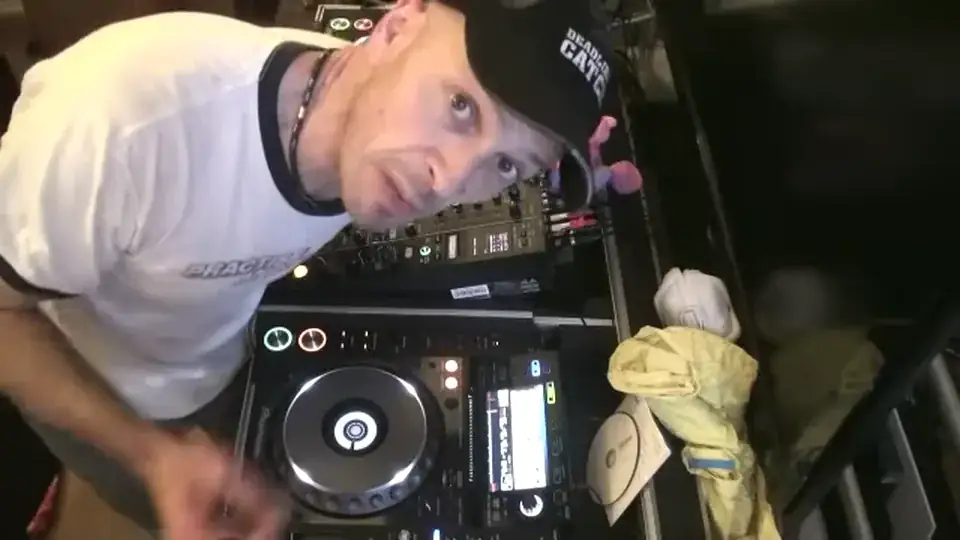
Right, ladies and gentlemen, this tutorial is all about helping people who can't beatmix to save their lives. In fact, they're probably so crap at it that they just maybe are thinking about giving up DJing. Well, if you're one of those people, don't give up because you still can mix. You still can give those smooth transitions. And I'm going to show you how. I'm going to explain in such great detail that you look and think, I can do it too. Even if you can't beatmix and you've been trying for the past 20 years. Right, so first of all, the two tracks I'm using, it doesn't really matter because I'm only going to be using small amounts of them. Now, let's play this one. Well, they're both by Pete Lefreque anyway. This one's, sorry, Busy, this one's The Goop. Right, have a listen to it.
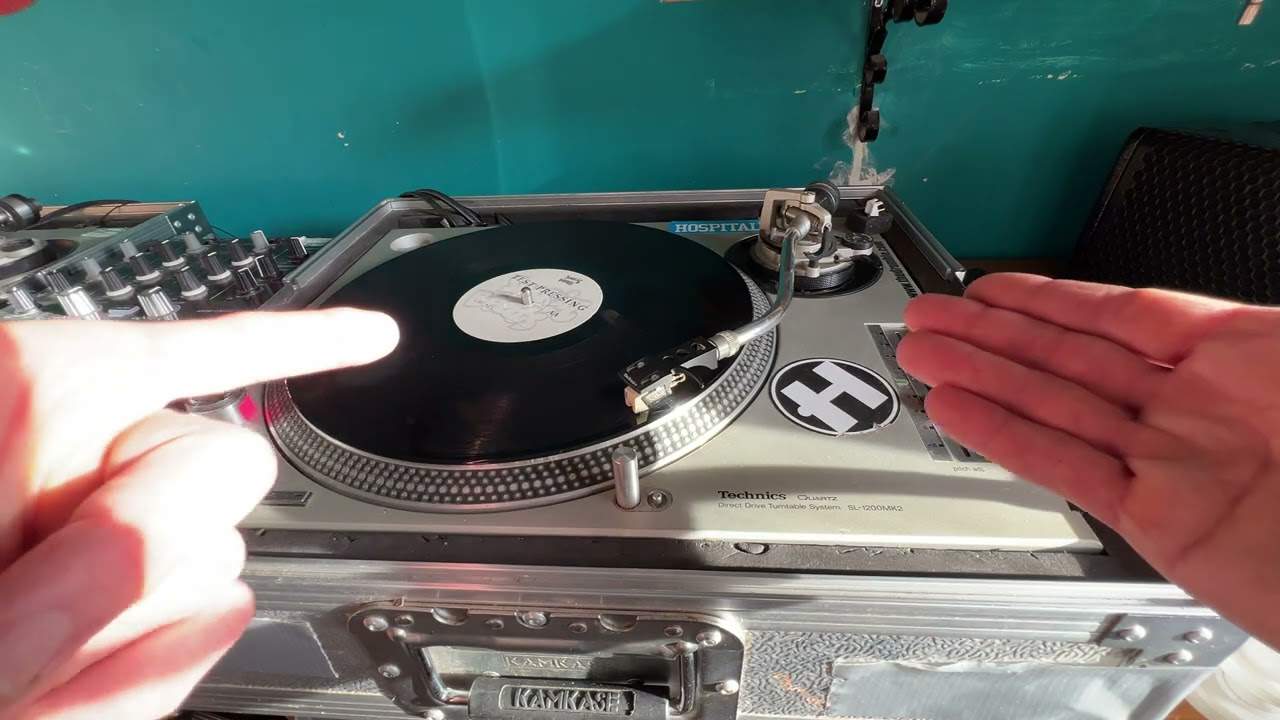
This one here. I'm going to set a cue point anyway because that's where I want to start. And anyone out there who knows what's going on, they'll probably think I've got you. Right, so let's just start this at the beginning. Let's get them in. They're pretty much sorted. 124, 124.3 and 2. So we're nearly there. And personally, quick tip for you here. I don't look at the BPM counters. You may think I do, but I don't because I like to use my ears. Right, so we've near enough got them perfectly beatmatched. So if I wanted to, I could do a smooth transition. That's not what this video is all about. This video is about helping people who can't. Now, what I've done... ...is I've set a cue point here. Right time, right place. This is where the ear comes in musically, not beatmatchingly.
OK. We have a listen.
2:10 It's called the chop
And I'm going to prove that you don't have to beatmatch here. So what we need to do is we need to listen to the track that's playing and while it's playing, of course, while it's playing out there with the public, you're then listening to this track and finding a point where you can bring this track in. It's called the chop. It's called the cut. So we're going to slice this track in. We're not going to do a smooth transition. We're going to go, boom, straight over the crossfader or up and down with the uppy-downy faders. Doesn't matter. I'm also, to prove a point, I'm going to completely change the BPM of this one here. It's not going to be 124.4. That was 124.3. So they would work together for a certain amount of time but eventually this won't be too fast so this one would start to go a little bit forward.
It would start to increase in speed or it would increase in speed from the first millisecond... But it would take a little while before the ear could start to hear it was going off. What I'm going to do, I'm going to bring that all the way up now to 129.6. I'm going to prove a point. I'm going to try and mix them in so we're going to go right back to the beginning of this one... Beginning of this one... And we'll try and mix them in and see what a disaster this sounds like.
3:27 I think I proved a point straight away there but now watch this
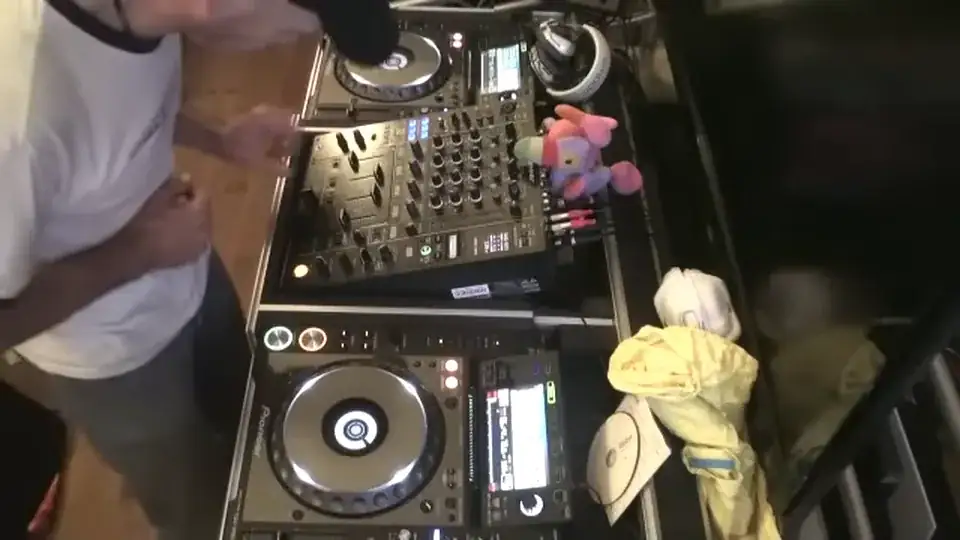
I think I proved a point straight away there but now watch this. Right. Crossfade over 2. The track on the left. And I have got this one ready at my cue point C.
There. Right. Play this one...
Now, at this point what you would be doing is listening for a time where you feel this one would come in perfectly.
And again, if you know your tunes, you'd be listening to your tunes way before the gig, at home, in the car, on the bus, iPod, iPhone... Mobile phone, anyone's phone. Make sure you pay their bill. OK.
I have given you a smooth transition. Musically, maybe it isn't beatmatched correctly but it proves you can do it. So instead of banging your head against a brick wall, packing in DJing and thinking, I can't do it... You can go for it. Practice and enjoy. I do. Thank you.
This transcript was produced automatically from the audio of the video and may contain mistakes.