 3:20
DJ Lesson. Phasing.... Take it to a new level.
Contents of the video
0:00 Another video on your 4 channel mixer making it into a 2 channel mixer
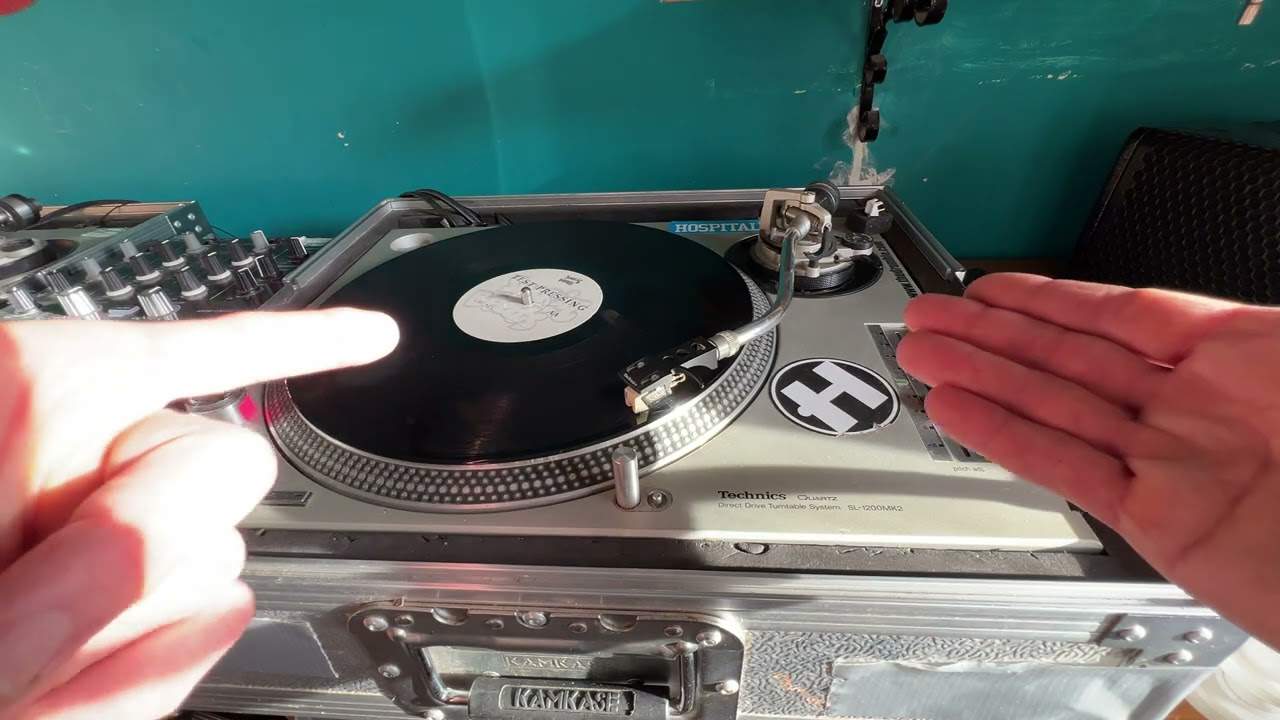
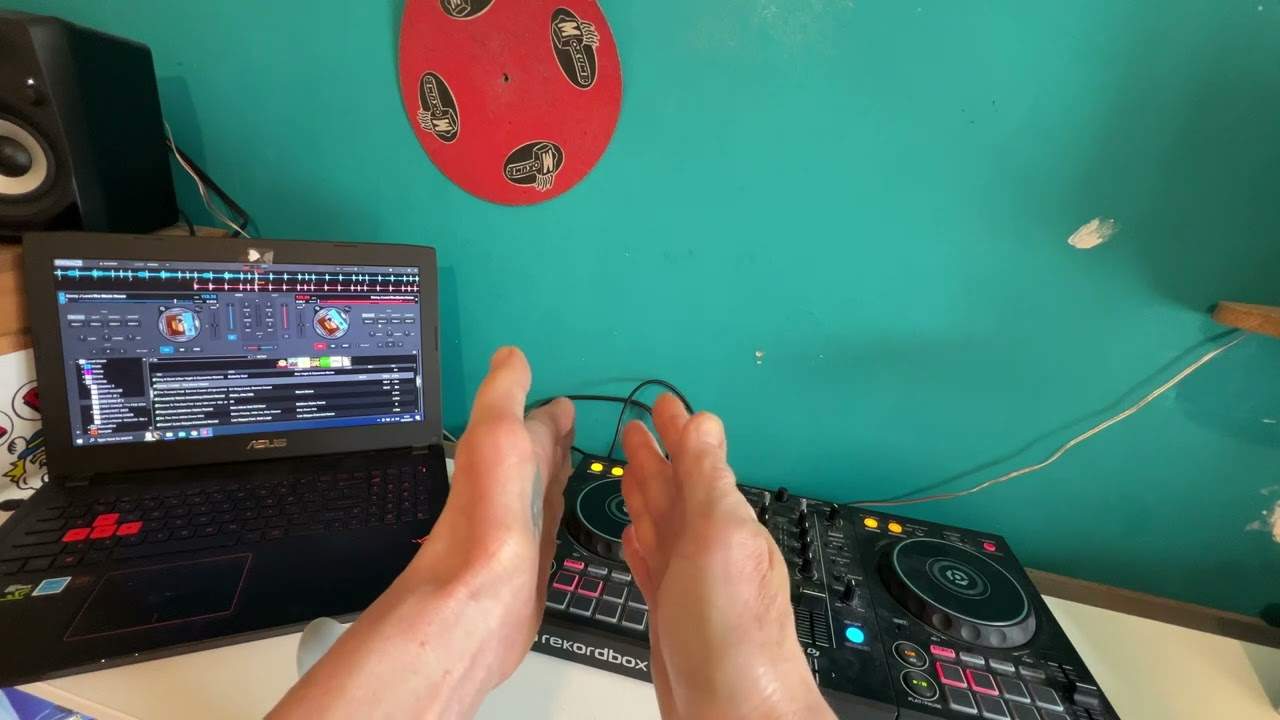
Alright guys, another video on your 4 channel mixer making it into a 2 channel mixer. Now what I want you to do as well is if you want to know what I'm all about follow the link underneath this video and it will take you to that one where you'll see exactly where I'm coming from. Now what I'm going to do now is show you how you can take this sort of idea to the next level. So imagine now we've got this track playing for example. So we've got this track happily chundling along. And we want to mix in this track here. So what happens, you will do your mix as normal. You'll bring this one to be playing, you'll bring this one in. So this one's playing. Then what you need to do is before you put this third track on, you need to just switch the wires around as described in the video underneath. Get it ready and start to mix it in. Make sure you've got the two faders up. Then while this one's playing, you need to then do exactly the same behind the mixer with this one and bring your fourth track in.
0:56 This is where it gets more interesting
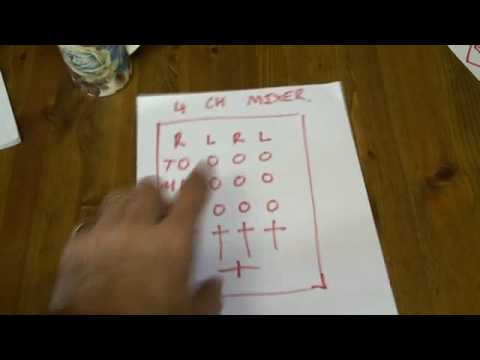
This is where it gets more interesting. What you want to do then is try and bring the fourth track in at precisely the same point as the third track, but have them the same songs. So in other words, track one, track two, track three and track three. So they're both exactly the same. Now if you can follow that I want you to look at this because this is where it would get rather exciting. Right now let's imagine there's our mixer and we have Here we've got the EQ, bass, mid and treble. If I just put B, M and T, bass, mid and treble. So we have the same track but we've now got all of these EQs on exactly the same track playing at the same time. Now imagine this, if they're going at precisely the same time and what you need to do as well is make sure that the pitches are precisely at the same point as well.
2:24 Facing on the left hand side and not on the right
Then you should start to have phasing. And phasing, in a sense, when two tracks are working perfectly together, it's almost the easiest way of describing it, is that the sound seems to cancel away from itself. It seems as though you've got no sound at all. Now imagine this. When you have two tracks phasing, you've got this weird and wonderful effect that moves from side to side and in and out of the speakers. Now think about this. Think logically here. Right, left and left. Now let's imagine if I was to take out the left channel here, reduce it completely, and reduce the right channel completely, then here and here, bass on the right and bass on the left, we would have no phasing because we've got normal right and left.
Facing on the left hand side and not on the right. Now you imagine the possibilities of then doing that, and maybe the mid have the mid only phasing on say the left and the top only phasing on the right. And then what you could do is change them around, swap them around. Again it's all about having a bit of fun and messing around. I just thought of this, see what you can think of. Practice and enjoy.
This transcript was produced automatically from the audio of the video and may contain mistakes.