 14:23
DJ Lets Make Phasing More Easy to Understand and How It Can Help with Beat Matching
Contents of the video
0:00 First of all, the tune I'm using in this tutorial is from Muted Tracks
Alright, first of all, the tune I'm using in this tutorial is from Muted Tracks. I'll give you the info. There will be info in the description as well. Don't you, it's a Mammoth in the Kitchen deep and sexy vocal mix. So, phasing. Now, in this video, I could go very in-depth here, but the way I see it is the more information I can give you, hopefully... The easier it will be for you to understand what is happening. Now, if you imagine, if you've got two tracks playing and you're trying to beatmatch them, you're desperately trying to beatmatch them, but you don't know if they're perfectly in time. You can't work out if they are in time. Now this video is going to help you immensely. Try this, you can get any track. But what you will need to do is have the same track on both decks. Now I've done a video like this before but never to this extent.
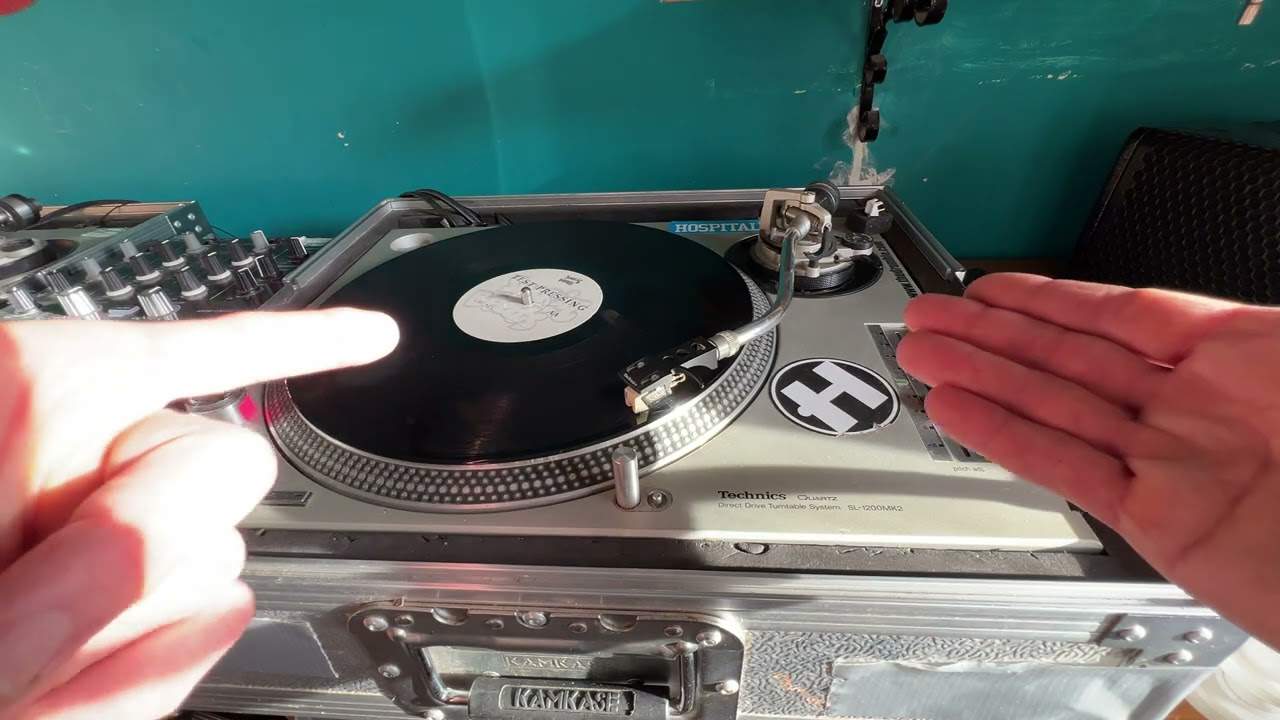
Now I love analogies. I grew up with them because they helped me. Being dyslexic, sometimes if people say here's a manual, read it and that's what you've got to do, I'd look at the manual and go... But then if someone gave me a sort of analogy, explained how the item worked in a different way, for example like a car works, and maybe put that analogy towards how a piece of machinery works. Then because I understand how the car works, that then would let me understand how the machinery works and that's how an analogy works. So I'm going to give you which I believe is an excellent analogy for phasing. Now first of all phasing of two tracks is when they're both pretty much gelled together so if you imagine my hands now
2:34 Picture mind, mind picture
You can see one hand, but believe it or not, I have got the other hand behind it. Of course you knew that anyway. Now if I start to move the hand furthest away from you, to the right or the left, you can start to see more fingers. But then if I have the hands close together, pretty much the thumbs are covering each other along with all the fingers. So straight away I'm giving a demonstration and analogy in a way of phasing. What's happening is if you imagine my four fingers now with the beats in a bar one two three four and The same track same fingers covering each other Overlapping each other then what happens is the one will cancel the other out But what happens just before that or after that? How can we take that?
Sound and make it into an analogy, which is a picture that you can have in your mind. Now if you can have that picture in your mind, and while you have that picture in your mind, you're listening to a track and you're trying to get them so you get a phasing sound, then the picture itself, hopefully, once I've shown you what to do and how to do it... We'll move in your mind while the sound is moving, so now you will have an audio change as well as in your mind a pictorial change. Now think on that. I'm going to give you a demonstration first and then I'm going to draw some images on a piece of paper that in a way hopefully may explain what's going on. So same track. Both sides, very quickly as well, I have got a mirror image on both decks. So in other words, the left-hand deck should be exactly the same as the right-hand deck. No effects, bass mid treble at 12 o'clock, the trim, same place, crossfade in the middle or we can have the through position, it doesn't matter and I'm going to press play at the same time. Now I want you to listen to that sound. That is actually the beginning of a phasing sound.
4:30 Listen to the difference when I take away one side
Now listen to the difference when I take away one side. It's almost as though it's, the sound seems to rise. Very strange. Listen. Down, up, down, up. Now then, let's draw a picture based on what we heard. Okay, so we're going to go rock climbing now. In fact, we're going to climb Mount Everest. So... My piece of paper there, and here is Mount Everest. So there it is, like that. That's Mount Everest. Hopefully you can see that. Let me just turn the... Hold on, where are we? I'm on... What am I on there now? I'm on white balance. I'm going to go to Iris. Sorry, I don't really like... Just turn that down a little bit. There you go. Right, hopefully you can see that now. A lot clearer. So there's Mount Everest.
And what we were listening to there is one side of Mount Everest. We weren't listening to the top of Mount Everest. Let's take that analogy to the sound. We were not listening to the two tracks being perfectly phased together. We were listening to them getting to being perfectly phased together. The observer from 10 miles away looking at Mount Everest, but we are looking at Mount Everest through a telescope. This is the beginning of the phasing, let's say on the west side and the ending of the phasing is on the east side. Now what we were listening to if we were looking at that as a picture, as an image. As a mountain, we would be looking through a telescope at one small segment of the beginning of the climbing of that mountain. So that's what we're looking at there. Now I'm going to go back to the decks now and we're going to change that sound. Now hopefully I'll be able to get a similar sound. I may not be able to if I start them at the same time but I'm going to try and get that similar sound. Here we go. Yeah.
7:13 Our image again
I've pretty much got it. Listen again, one down. Now let's just listen to the sound. Can you hear that sort of going lower? I'm going to bring the volumes down because I don't want to touch that. Now let's go and look at our image again. Now what's happened there is we're still looking at Mount Everest but now we've decided to look a bit lower down. So we're looking at a lower part of Mount Everest. We're looking more of a lower sound. We're almost as though we've come down on ourselves. Now, let's go back to the decks. Listen. Now we're going up. We're going up. Now, with our image, we may be here. Keep on listening and you'll get it. Let's have a listen. Now I'm going to move the jog wheel the same direction.
9:21 Your movements
When I started to move it anti-clockwise, we went down the hill. As I started moving it clockwise, we're going up. So we're getting to that peak. We're at the top. We are now at the top of that hill. Now let's have a listen and carry on moving the jog wheel the same direction. Can you hear that echo? We started here and we went down, but then we went back up and we went to the top and then we actually went back down the other side. So what has this got to... and how is this helpful? When you are listening to the phasing sound, you need to not only listen, but look at your movements. So for example, when you get that phasing sound and you move the jog wheel in one direction, That phasing sound should of course change, so long as the two tracks you are using are exactly at the same BPM. If on the other hand you hear a phasing sound and without touching the pitches the phasing sound slowly changes then the tracks are not at the same BPM. Now there's a very
Big difference, but it's very subtle. So for example, if you hear an echo while the two tracks are playing and the echo does not change in frequency. In other words, there's a millisecond between each beat. And eight bars later, there's still a millisecond. Those two tracks, believe it or not, are not out of time. They're just not in beat yet. So if you get an echo and the echo doesn't change, the two tracks are exactly at the same BPM and that's when we need to start moving it towards the hill and the other side. So hopefully this will enlighten you into what's going on when two tracks phase. Now of course this is an easy demonstration. And this is an easy exercise to do, maybe the term really should be exercise to do if you're using the same track because of course the whole track is going to phase but what if we're using different tracks and 99% of the time when you're doing a mix you're going to be using different tracks so they're not going to phase are they? Because it's all different. Now this is where the ear
12:18 Weather as well
Plays an important part. This is the ninja style of mixing. This is the part where you sit there with Zen all around you and... Sorry. What you're listening for... Be sensible. Ow! What you're listening... Sorry, my trousers are actually falling. Can you see this? Look, I haven't got a belt. I've actually got my button wrapped around the first part there. I'm so bloody skinny. Right. What you're listening... Should we talk about the weather as well? Why don't we talk about the weather? Do you know what? The economic situation in China is terrible at the moment and it's five pounds for a pound of haddock in Istanbul. Just kidding. Right, so... Pardon me. So what we're listening for... Oh God, please concentrate. Thank you. What we're listening for is the phasing sound of the kicks. Now, the more you practice this and the more you listen...
You will, okay, it's not maybe, might be, you will hear the kicks phasing. Now in house music, you're listening for the one, two, three, four. So pretty much any house style of music, it's the one, two, three, four. But hip hop, R&B, soul, trap, drum and bass, we haven't got that one, two, three, four. What you're listening for is the two and the four. The snare... And you will hear a phasing sound. You will also hear the echo if they're off beat. So, important factors to remember. When you have an echo, when you're doing a mix, if the echo does not change, they're in beat. They are both at the same BPM. You just need to then move the jog wheel slightly forward or back until the echo stops. On the other hand, if you get an echo and over time the echo does change, then that means they are definitely not at the same BPM. You have to move the pitch and of course then you can jog using the jog wheel. If you get that phasing sound
Then it's up to you to change maybe the frequency of that phasing sound by going up and down the hill, right? I hope that's been a help. Practice and enjoy and a big shout out to Muted Tracks. Nice one, thank you.
This transcript was produced automatically from the audio of the video and may contain mistakes.