 15:37
Teaching yourself to beat match
On YouTube this video is called DJ Mixing Lesson A few ideas on teaching yourself how to beat match by Ellaskins the DJ Tutor
What this lesson teaches
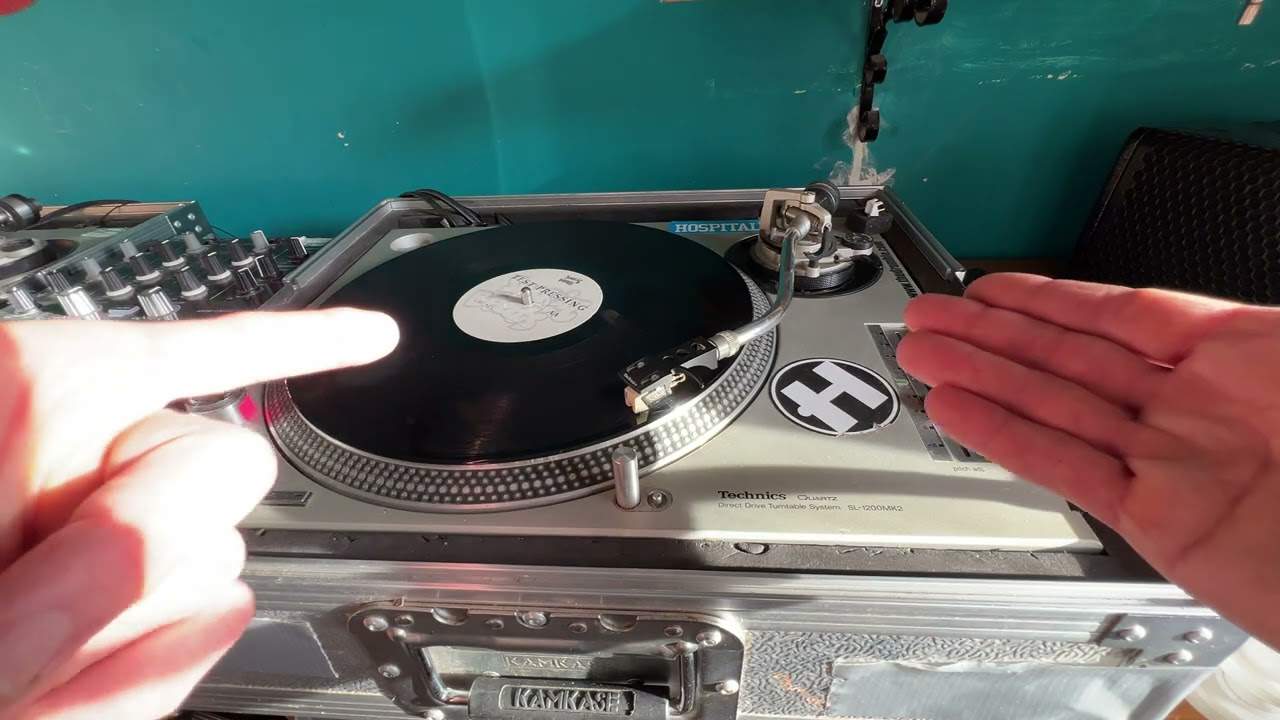
A deliberately stripped-back session: black card over both BPM displays, no headphones, and whatever comes to hand on the decks.
Why remove things
Each thing you take away is one fewer place to hide.
With the display covered you cannot match numbers. Without headphones you cannot prepare in private - every adjustment happens in the open. Choosing tracks at random removes the comfort of pairs you already know work.
What is left is the skill itself, and whether you have it.
Acapellas have timing
He pulls out two acapellas and makes the observation the lesson is really about: even though there is no beat, there is still timing.
A vocal performance was recorded over music. The singer or rapper was following that music, so the pulse is still in the delivery - in where the consonants land, where phrases start, where breaths fall. You can count it, and once you have found it you can place a beat underneath.
Finding it takes a moment at first and becomes instant with practice.
And rappers move around deliberately
The complication, and he is right to raise it.
Sometimes every syllable sits precisely on the grid, and the acapella is as easy to lock to as a drum machine.
Sometimes the delivery is deliberately loose - behind the beat, ahead of it, wobbling around it. That is a performance choice and it is what gives a rapper their feel.
So an acapella's timing is real but elastic, and you have to decide what you are locking to. Usually it is the underlying pulse the performance is moving around, not the syllables themselves - and hearing that pulse through a performance that is deliberately avoiding it is a genuinely advanced listening skill.
Working without editing
He says he is not going to edit the video, and does not. Takes that do not work stay in.
That is worth more than a polished demonstration. You see what the process actually involves: trying something, finding it does not suit, and moving on - which is what an hour of practice looks like for everybody.
Contents of the video
0:00 One is you can jump into an elevator and press the up button
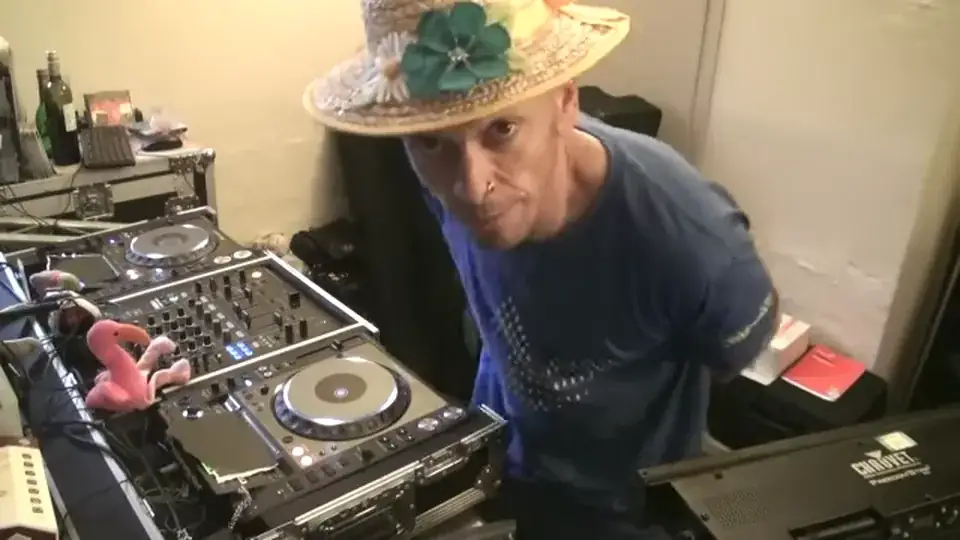
Morning ladies and gentlemen, this particular video is all about trying to take yourself to the next level. You can do that in many ways. One is you can jump into an elevator and press the up button. Alternatively what you could do is you could be on a rather tall building and just jump off it because either way you'll go up or down. I choose to go up. Yeah. Right, so what I'm going to do now is I'm going to mix no headphones and random selection of tunes.
What I have done as well is pieces of black or white, doesn't matter, but you can't, you're not supposed to be able to see through them. I put them on the players like so, so now I cannot see the BPM, so I've got no excuse. Well I have because I can't see. And also no headphones. So what we'll do, we'll, yeah, anything, right, try here, what have we got here?
Alright, okay so we've got two acapellas, so we'll try the two acapellas and then we'll bung a track in over this.
Now straight away, alright, if you hear that one, you're going to love, so what I would do, and what you should do, is first of all maybe listen to the acapella because even though there's no beat there is still timing in that acapella. So I need to first work out where the timing is. Of course if you are used to this, the timing should come in instantaneously anyway but if you're not, it may take a little bit of time. So for the people who say it would normally take a bit of time, I'll explain. Two, three, two, three, four. Okay.
2:23 Maybe we won't use that but I'm not going to edit this video, whatever
One of those acapellas where it's got loads going on but hopefully you get the general idea. Okay, maybe we won't use that but I'm not going to edit this video, whatever.
Okay, little bit more interesting but back again.
What's happening there is with rap, with acapellas. Same thing really. There is timing and there isn't. What will happen sometimes with an acapella is that the DJ will keep time but they'll be sort of off-time. They'll almost like, sort of like make it very wobbly.
Or sometimes they'll go . So every single almost letter syllable is in time. Now this is where you have to use your ears and try and find the points, the precise points where it is on the one, two, three, and four. If you can work that out then you're almost there, which is what I tried to do here. Well, what I pretty much did. So alright let's say for example we've done an acapella and we've got this guy here.
4:38 Straight away I thought
Okay, throw it in. Okay so what happened there? I was listening, I played rap track over there, played this one and as soon as it started it was completely off-beat. There was almost, no there wasn't any correct time signature with this one and with the other one. So straight away I thought. There's got to be one thing wrong. This one here has either got to be a lot faster or a lot slower. It was actually a lot faster. So what I had to do is speed that one up and slow this one down. Now again, no headphones. What I'm trying to do. I'm trying to you know use more of this sense instead of here etc. Alright? So in other words use my ears more instead of my eyes. So we'll play this one. And we'll do this. Again I'm just going to go turn and press down.
7:53 I speeded it up a little bit but it needs to be faster again
So I've got a foggiest where I am now. Let's try again. Okay, now we're sort of on the same kind of time signature because this one is quite fast. Pretty much the same. Here we go let's try, let's try. What I'm doing now is I'm going to form a loop with this one here. So we've got a nice loop, we've got an introduction and then we'll bung something from this side over on that side. So we've got that first one. Here's a question for you. You heard that, I'm going to play it again and I want you to be honest with yourself and tell me whether you think that one even though I played a tiny amount of it was faster or slower than that one over there. So turn it up a little bit. Have a listen. Here we go. Which one?
Faster or slower? What I'm going to do is speed it up. About there. Now let's try it. It was slower. I speeded it up a little bit but it needs to be faster again. Let's try again. Here we go. We're going to do exactly the same thing with the other side. Now again, this is demonstration tutorial but also getting a few tips from it. Hopefully you are anyway. Okay let's try again. I'm going to try one more time. Really the main reason for doing this video is to get you to try and push yourself. This is what it's about. It's pushing yourself. It's taking you out of that stupid little comfort zone where you've got your nice cushions around you, a small little PA system and fluffy eardrums and you're thinking yeah I'm happy with doing what I'm doing.
10:29 They are thinking you know what?
No! Because there are people out there doing far better, far worse of course but far better and better because they are pushing themselves. They are thinking you know what? I'm not going to stop now. I'm going to do another half an hour or no I'm not going to make it easy and look at the BPM. I'm going to not look at the BPM. I'm going to use more of my inside energy and my inside thought patterns instead of like oh look, oh it's so easy because everything can be done for me these days. Yes but no because you should do shit. Right so we'll try one more. Let's have a look. Okay just pause that. Now again, have a listen Neil. One, two, three, four. Two things we can do here. One is, three cough. One is I could find the first beat which is or the other one I could somehow which can be done bring the beginning of the track in before the count of one because that Neil starts before the count of one.
13:06 One, two, three, four
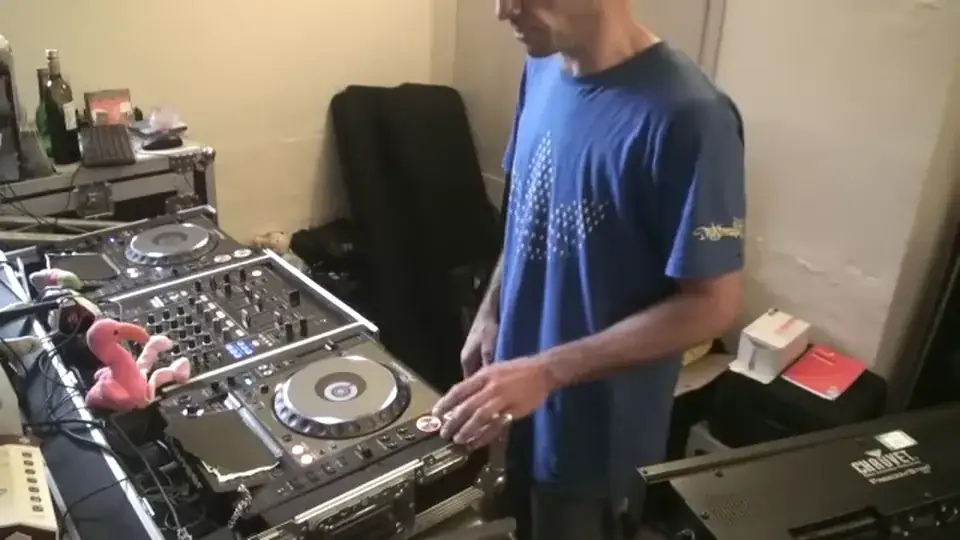
So have the whole track from right from the beginning. First of all I'll just start it off from the first beat. Here we go. Okay you get the general idea there. What I'm going to do now is put it back two. So I have to. Now this is quite a tough one because the beginning of that it doesn't start with three, four. One, two, three. So one, two, three, four. No it doesn't even start on the three. One, two, three. One, two, three. One, two, three. One, oh god bloody hell. One, two, three, four. One, two, three, four. One, two, three, four. Yeah it's almost in between the three and the four. This is going to be a tough one but if I spent time doing this I could get it perfectly. So what I'm going to try and do here is bring it in roughly around about the time where it should come in but I'm going to quickly swivel about with the pitch to get that bang straight in on the count of one.
Now the first beat might not be perfectly in. But if you're fast at this by the second beat or even before the second beat's come in it should be in time. So we'll give that a go now, here we go. OK bit of a rant. I've nearly kept you there for a quarter of an hour, I do apologise. Bit of a random video but again it's about practice. It's about pushing yourself. OK push, push, push. Here's a tip for you as well. You want to work in a nightclub? Do you want to work in a nightclub? Have you been to the manager or the owner or... Someone at the nightclub gone hello I'm a DJ can I work at your club and they've gone no. Well if they say no don't walk away and think that's it, try again. Ask again and again and ask again and give them a video, give them a CD, give them something and then ask again and again and again.
Don't be a pain in the arse just be persistent. One day they could slap you across the face and say if you come here again I'm going to stick a rather large shotgun up your backside. Alternatively you could go, you know what I've had enough of you. I'll give you a shot and let's see what happens. Practice and enjoy. Thank you.
This transcript was produced automatically from the audio of the video and may contain mistakes.