 7:46
Beatmatching with off beats
On YouTube this video is called DJ Tutorial Beat Matching with off beats.
What this lesson teaches
A beatmatching drill where the goal is to stay off beat, and the logic behind it is exact.
The reasoning
Two tracks at the same tempo keep whatever offset they started with. The gap between the beats is fixed, forever, whether that gap is zero or half a beat.
Two tracks at different tempos cannot hold any offset. The gap grows or shrinks continuously.
So: if you can hold a constant offset, the tempos are identical. Holding them steadily off beat proves the match just as well as holding them on beat - and it is harder, because the pleasant click of alignment is no longer there to tell you when you have arrived.
His example is the arithmetic: 120 against 120 and the beats stay where they are, even if they are not together. 120 against 121 and they slide.
The exercise
Match the tempos, then deliberately set the two records apart - half a beat, say - and keep them there.
What you are now listening to is the gap, and your only job is to stop it moving. Any creep in either direction is a tempo error, and you correct it with the pitch.
Why it is such good training
Because it isolates the diagnostic from the beatmatch course - the one where a constant gap means the tempos match and a changing gap means they do not.
In ordinary practice you use that test for a few seconds and then the tracks lock together and you stop thinking about it. Here you are using it continuously for the whole exercise. You are doing nothing except watching the gap, which is the single most useful thing a beatmatching ear can do.
Start with two copies
His suggested first stage: use the same track on both decks, because then you know for certain that centred pitch faders mean identical tempos. Any drift you hear is definitely your doing.
Once you can hold a stable offset with two copies of one record, do it with two different records and find out whether you can still hear it.
And it is a real technique
Worth noting that a deliberate, stable offset is not only an exercise - it is also what an offbeat drop is, and holding one is what makes it sound intentional rather than like a mistake.
Contents of the video
0:01 Certain subjects that I've done

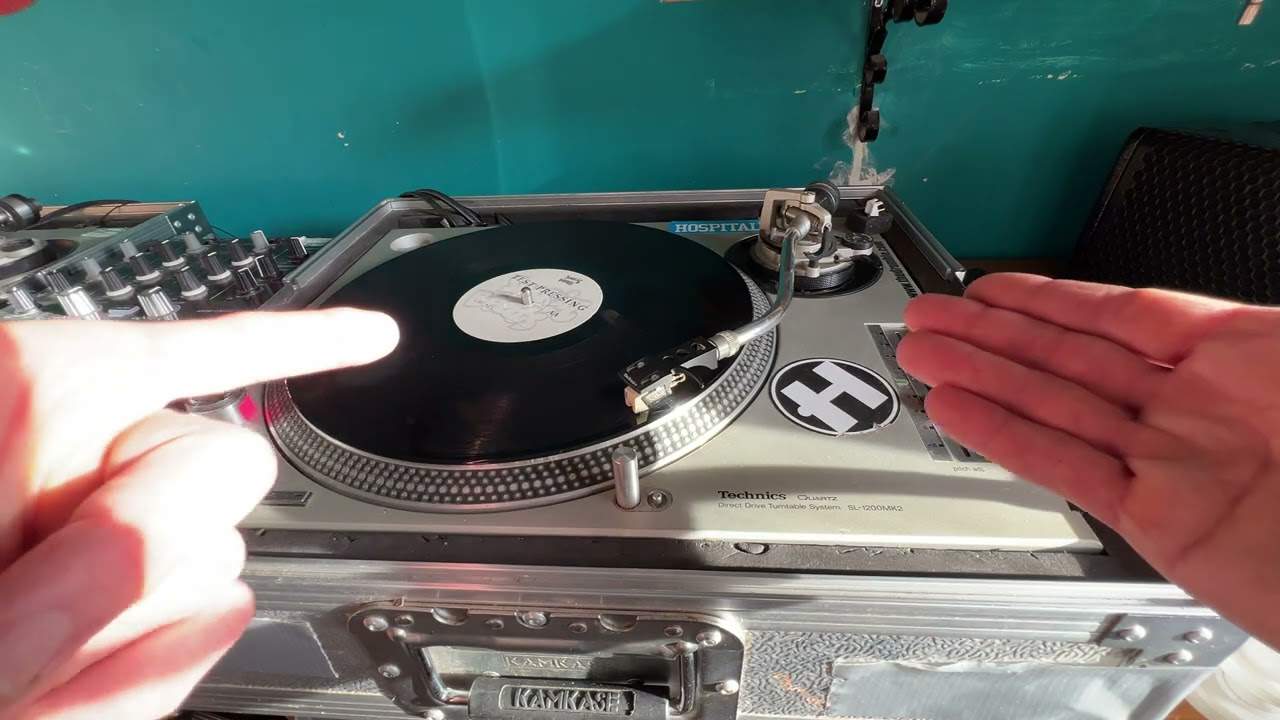
Alright guys, another beatmatching tutorial. Now first of all I've done quite a few of these and occasionally what I will do is cover certain subjects that I've done in previous videos but every video has its own little twist. Now in this one, with reference to beatmatching, what I'm going to do is in a sense explain how to almost try and keep the beat offbeat as opposed to onbeat. If you think about it, if you can actually keep them synced while they're slightly off, if you can do that, then theoretically it should be able to train your ear to keeping them on beat. Because if you think about it, let's imagine they're both working together perfectly, beats are both perfect together like that. If you can keep them like that, then you're beatmatching. What am I on about? Well let's imagine this one's at 120 BPM and for example this one's at 120...
Sorry, start again. This is at 120 BPM. This one here is at 121 BPM. Now what will happen, it will slowly do this, like that, and eventually go past. If this one's at 120 and this one's at 120, it should do that, that, that, like so. It won't move. In other words, the tracks are playing and it'll be there. There, it'll be here, etc. If this one's at 120 BPM and this is at 121 BPM, while the tracks are playing, the beats are going to be doing this, slowly moving. So of course logically, if let's say 120 BPM, this guy, and this is at 120 BPM, even if they're slightly off beat, if they're exactly the same speed, they will stay at that point. Now I'll explain. By the way...
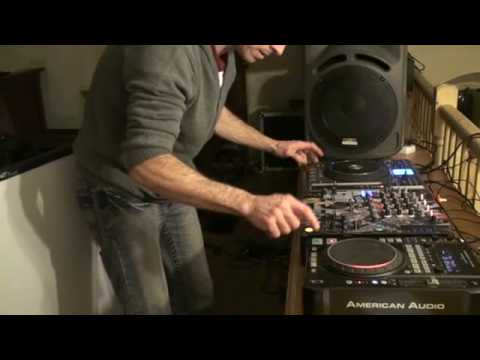
As ever, I love this track. It's Enzyme Black, a track entitled Take It. Now let's have a listen to this guy here. Now of course again, on a lot of modern day CD players you can actually see the BPM. Now again logically if you're using the same track then theoretically if it's in the centre position on the pitch control should be perfect anyway. So maybe this is stage one. You could use the same track because you know if you've got the same track, it's recorded the same, same speed etc. Then when the pitches are both at the centre position, theoretically
3:26 Straight away we've got phasing
It should be perfect anyway. So maybe this is stage one, because all you really need to do at that point is start that one, let's say like so, a split second later start this one, so they will be slightly off beat. But because centre position, they will stay at that precise point where you started them. So in other words, if you started this one two milliseconds after that one, it should stay two milliseconds etc. The next stage or the next level It's to get two completely different tracks, so you do have to change the pitches very slightly. For example, that one over there could be 120 BPM, this one could be 119 BPM. So of course you'd have to speed this one up. That's where you've got to be a little bit more cleverer. Right, okay, so what I'm going to do is I'm going to first of all set this guy here so we're at the centre point on this one, we're at the centre point on this one. Now if I hit them both at the same time...
Straight away we've got phasing. Now basically what's happening is the way phasing works, both tracks are cancelling each other out. So if I take one away, no phasing. Bring another one in, phasing. Take that one out, no phasing. Go back to the beginning. Now what I'm going to do now is, as I said earlier, I'm going to start this one and start this one a few milliseconds or thereabouts afterwards.
4:54 We want to use these and not these
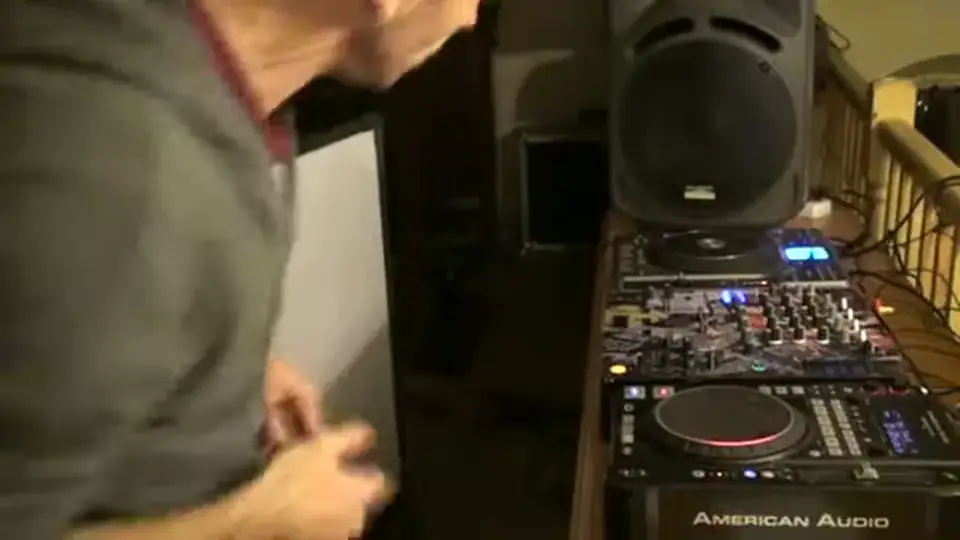
Now, can you hear that echo? Now, that's one of the worst sounds a DJ can have when they're trying to beatmix. But, if the echo stays the same, in a sense, you're beatmatching. So, the whole idea of this is to try and train your ear to listen to the gaps in between the two beats and try and keep them at a constant. Now, it's all well and good When the pitches are dead centre when you're using the same track, but imagine doing this, if you just change the pitches, you just slow them down a little bit. You don't necessarily look. Because again, you see, you could move this one down to, let's say for example, if you move that to, say, well, this one's got actual BPM. But let's imagine we move it a third of a percent. Then of course logically we could look at that one and...
Put that one down a third of a percent, but we don't want to do that. We want to use these and not these. So I'm just going to put the pitch there on that one and leave that one like that. Dead center again. Is it dead center? Yeah. Now what I'm going to do is I'm going to start them off and what I'm going to try and do is get an echo, but keep the echo at a constant. So here we go. Two, three, four. Now can you hear that? Got the echo. For me, there's an irony to it. It's so difficult because I'm so used to trying to get them perfect. So, alright, now this particular sort of tutorial or demonstration could like be French if you're like German and you can't understand French. Or it could be like Chinese if you're Indian and you haven't got the foggiest out who understand Chinese. But for some people there could be a certain amount of logic here.
If there isn't, it doesn't really matter. But the whole idea is to almost listen for that offbeat and try and keep the continuity. So in other words, beat here on the one track, beat here on the other track. If you can keep them like that all the way through the tracks that are playing, or let's say the beginning of a track, then what you're actually doing is you are beatmatching because they're staying the same. In other words, what we're trying to get is that gap there. There's that one beat, there's the gap. The gap is staying exactly the same. Now it's another angle into beatmatching. I hope it's been a help. Practice and enjoy. Let's give it another go. In fact what I'm going to do, I'm just going to do a bit of phasing. Now let's put that dead centre, that dead centre, and well, let's have a mess around.
This transcript was produced automatically from the audio of the video and may contain mistakes.