Where to bring a track in, and why there
On YouTube this video is called DJ TUTORIAL.How / Where to bring a toon in.
What this lesson teaches
A short lesson that turns counting into a decision.
Count from the break
He finds the break in the playing track and starts counting from there rather than from the beginning of the record.
That is a small change with a big effect. Counting from the start tells you where you are in the track. Counting from the break tells you how long you have until it ends - which is the number you actually need.
Blocks of blocks
His description of what you find is the clearest in the course. Count four. Then another four, and another, and another - and those four fours group into a block. Then four more blocks group again.
Blocks of blocks of fours, and he puts it at 99.9 recurring per cent of modern dance music.
The decision
Here is the useful part, and it is a genuine choice rather than a rule.
You might bring the new track in at the break - the obvious move, since the playing track has thinned out and there is room.
Or you might bring it in as the break finishes, when the beat comes back.
He prefers the second, and the reasoning is sound: the new track then arrives with the energy rather than during the lull. The room gets the resolution it was waiting for, and the resolution happens to be your next record.
Which you choose depends on the two tracks and the moment. What matters is knowing it is a choice.
Preparing for it
To mix on the end of a break you have to know when the break ends - so count it before you are in the mix. Note how many bars the break runs, and then you can start the incoming track at the right distance without having to listen and react.
He does exactly that: makes a note of the length, then starts the second record so it lands as the beat returns.
And the EQ while you wait
During the overlap he pulls the bass down on the incoming track, leaving mid and high, and keeps counting.
That is the standard move and it is what makes mixing across a break possible at all - the new record can be present and audible without its bassline competing with anything.
Contents of the video
0:00 I have delved on this particular subject a couple of times before
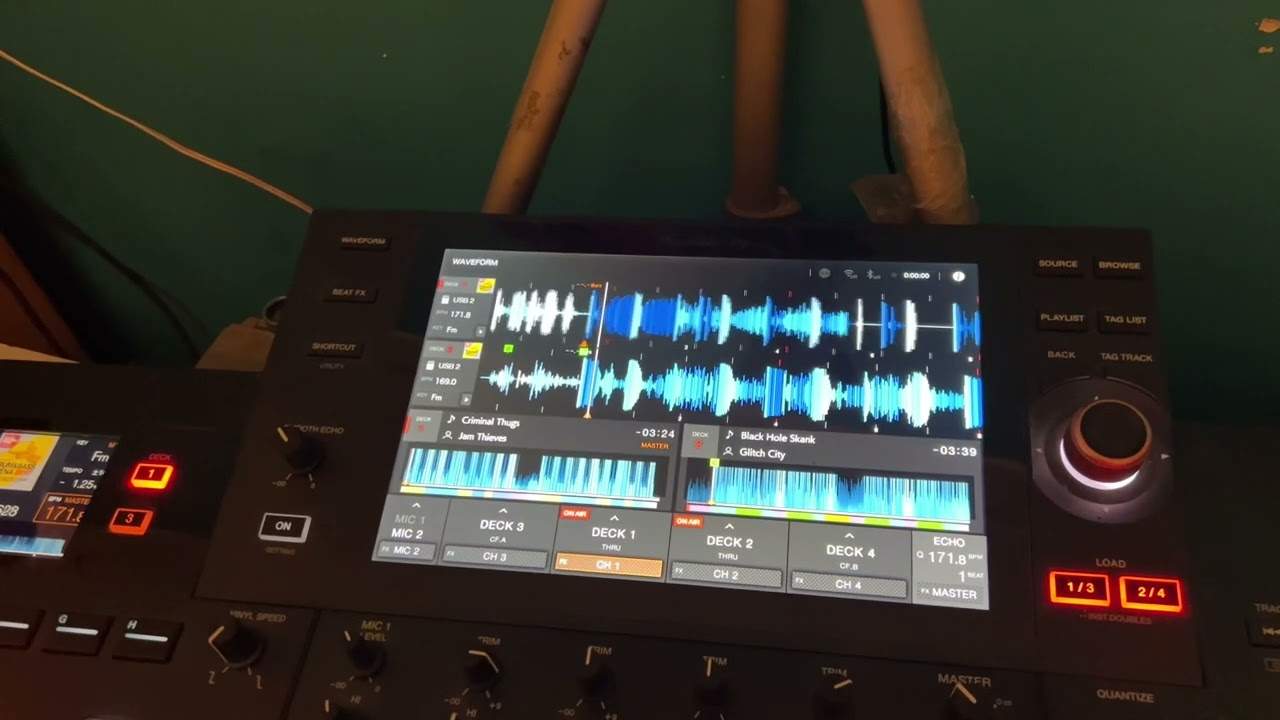
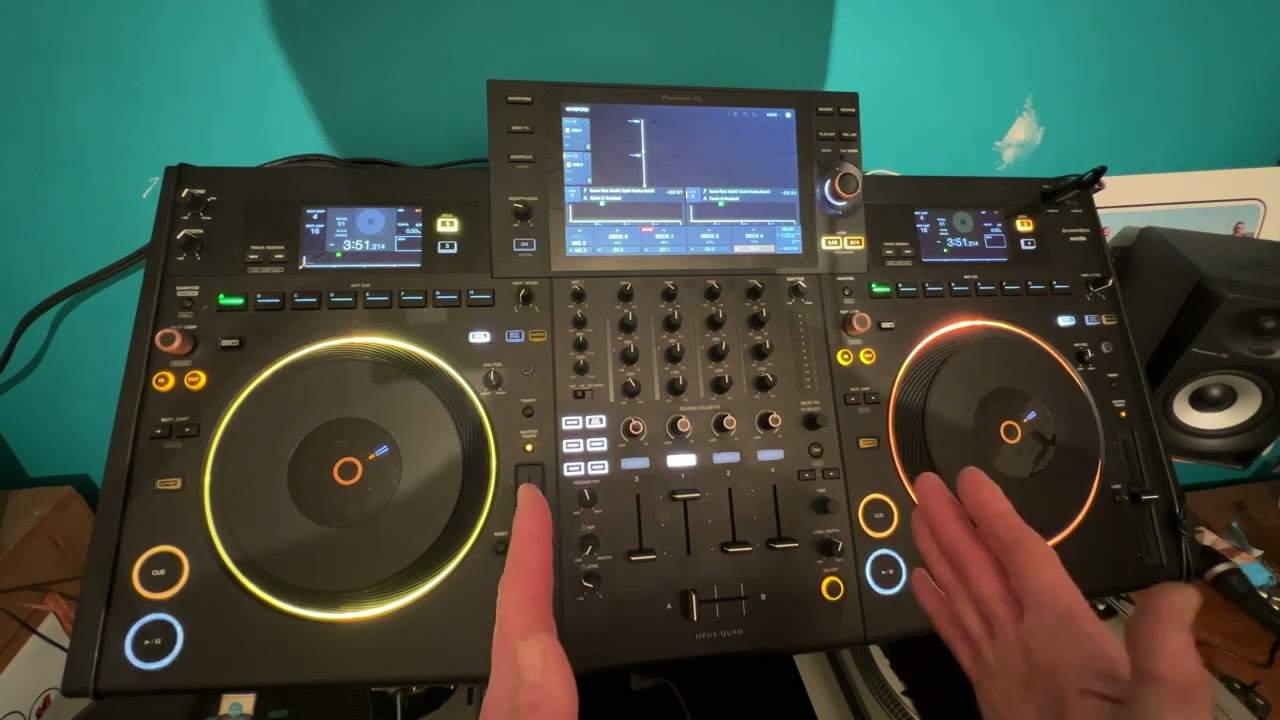
Alright folks, this particular video is all about where to bring the second track into the first one. Now I have delved on this particular subject a couple of times before. First off, you've got one track over there, you're bringing this one in and it sounds fine but maybe you haven't brought it in at the right place. So that's what this particular video is all about. So, first of all let's play this track. By the way look to the side of the video for the names. I'm going to press Q on there now. What I'm going to do now is eat this biscuit. Now, I'm going to press play again and I'm going to start the count from that break. Where's the break? I'll show you. There. I'm going to start the count.
1:38 You could count another four, another, another and another, and you go
From that place, here we go. Alright. If you count like that, you may find that your tunes have got what's known as structure. In other words, it's almost like you've got a count of four here, you've got one here and one here and one here. And then you can actually block those four together as sort of a unit. And then you could maybe count four again, another four, another four and another four, and you've all of a sudden got another block. And then you could count another four, another four, another four, another four, another block. Then you could count another four, another, another and another, and you got another four. But if you actually look and you carry on doing this, you may find that you've got blocks of blocks of fours. And that's what will happen with 99.9 recurring percent of modern day dance music. It's all formatted. So, for example now, if I was going to bring this particular track in, what I could do, I could actually start this one off at that break.
3:34 Bars, finishes
There may be no need for me at all to actually start to play this one in the mix when the break starts. But what might be an idea is as soon as the break finishes and we come back into the beat here, I can actually bring this one in. Alternatively what I could do, I could listen to the break, I could make note prior to even doing this mix of how many bars we've got and know exactly when the break... Finishes here to bring this one in, which is what I'm going to do now. Here we go. Now what I'm going to do as well, I'm going to take the bass down on this one here so it's just got mid and high. Again all the time I'm counting. So I've got the volume up here. Let's say you want to take your mix from a good mix to a fantastic mix. What I suggest you do is, first of all, you choose all the tracks that will work well together. Secondly, what you need to do then is you need to listen and start counting the bars. And almost, if you think about it, let's say for example this one here has got 16 bars before it finishes.
Then maybe you need to listen to the beginning of this and then count 16 bars forward and see what happens on the 17th bar. So in other words, this one, 16 bars before it finishes, this one, 16 bars and then on the 17th bar you get vocals. So, 16 bars, start this one at 16 bars as soon as this one finishes and on the 17th bar, bosh, this one straight in. So in a sense what you're doing now is you're not just bunging tracks on and hoping for the best, you're actually starting to construct your mix so it takes it from a good one to a pretty good one. And I'll say practice and enjoy, I'm going to have another hobnob, thank you.
This transcript was produced automatically from the audio of the video and may contain mistakes.