 16:04
Easy Beginner DJ Phrase Mixing Lesson BY Ellaskins the DJ Tutor
Contents of the video
0:00 This video is for the complete and utter beginner DJ
Alright guys, this video is for the complete and utter beginner DJ. In this video we're going to be doing some phrase mixing. Now phrase mixing is quite possibly one of the most important parts of making a good set. Putting a good set together, the tracks could be in key, they could be the same genre, same style, but if you don't phrase mix correctly then the mix isn't going to work perfectly. It's a little bit like walking into a restaurant, seeing some wonderful food spread all over a table and it tastes like shit. It may look good, it may be very pleasing to the eye, but it's not pleasing to the palate. So you have a good set laid out in front of you, track 1, 2, 3, 4 and 5, but when you put it together, out of phrase, it's not that good for the ears.
Right, I've got a track here by a very good friend of mine, Mr Kenny Hectic. Track entitled There Was Faith. I will put info on Mr Kenny Hectic in the description of the video. I'm not sure when this track is released, so you could be watching this a year's time. It's probably released. If you're watching it right now today here, when I've made it, then you never know, it might not be. But stop picking your nose. Okay, so phrase mixing. Now first of all, I have got the same track on both sides, so I'd like you to do that as well.
2:02 These blocks, point beginning, headphones
I've got the same track in the center position. So think about it, we're using the same track, excuse me, the pitch is in the same center position, which means that they should be exactly at the same speed. So let's have a listen. Okay, when you hear that sound and the way of describing that sound, it's a bit like listening to something through a pipe. In fact, what I want you to do now, I want you to, if you can, get your iPhone or, I don't know, your gramophone, whatever you've got. And if you do have some form of pipe, even if it's like a cylinder, a small cylinder, even a toilet roll, put your phone in one end, put your ear around about the other, well, close to the other end and have a listen.
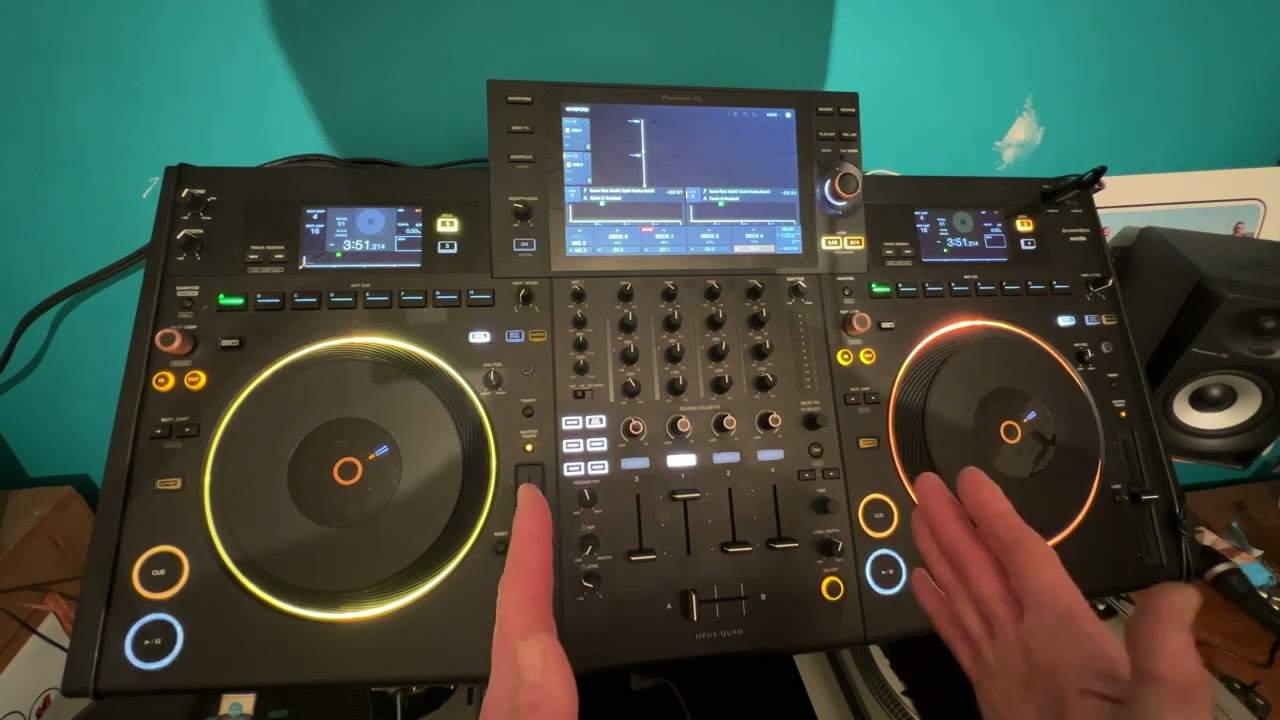
And you'll get this sort of cylindrical kind of echo. That's what's happening here because the two tracks are playing together and they're doing what's known as phasing. Now that is the sound that we are listening to. That's what we are going to be listening for. So in a way, not only is this demonstration stroke tutorial about phrase mixing, it's also about listening to that sound that you want to hear when you have two tracks beat matched perfectly. Now you'll also notice, you should do, that I don't have any headphones in. There are the headphones unplugged. Go away, headphones. I'm not going to throw them. We're not going to use any headphones because what we want to do is we want to listen to the PA.
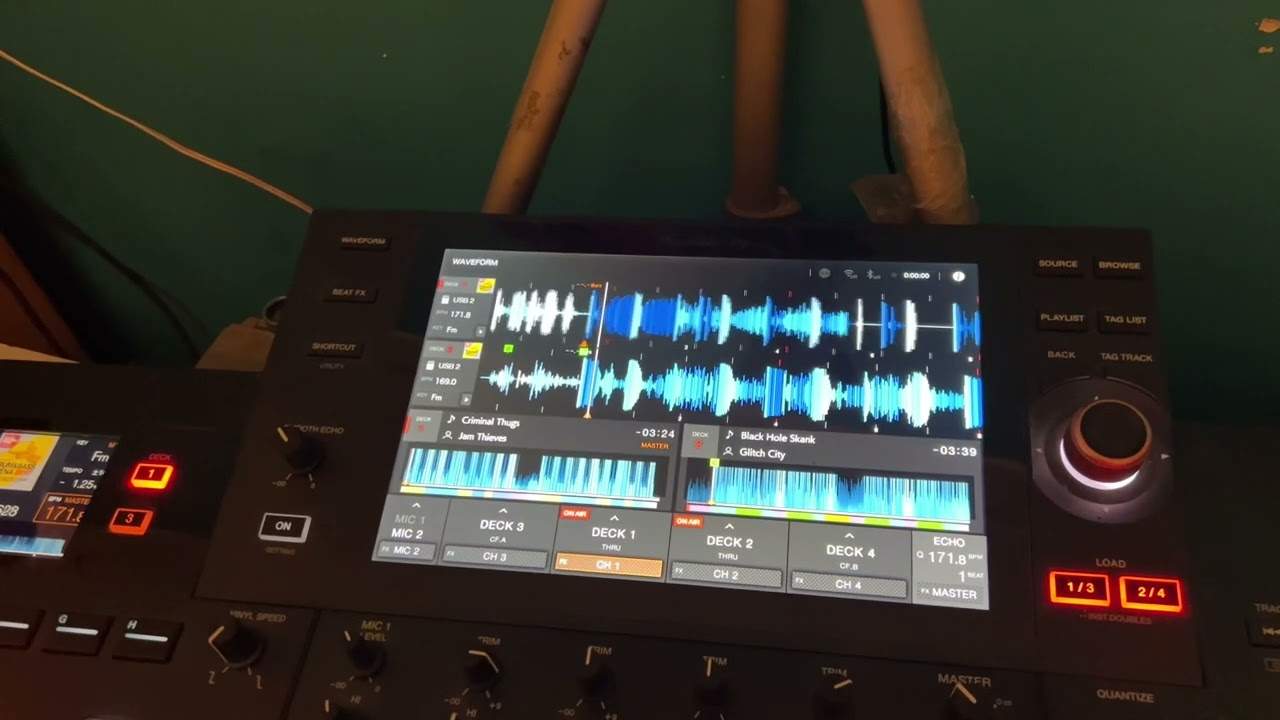
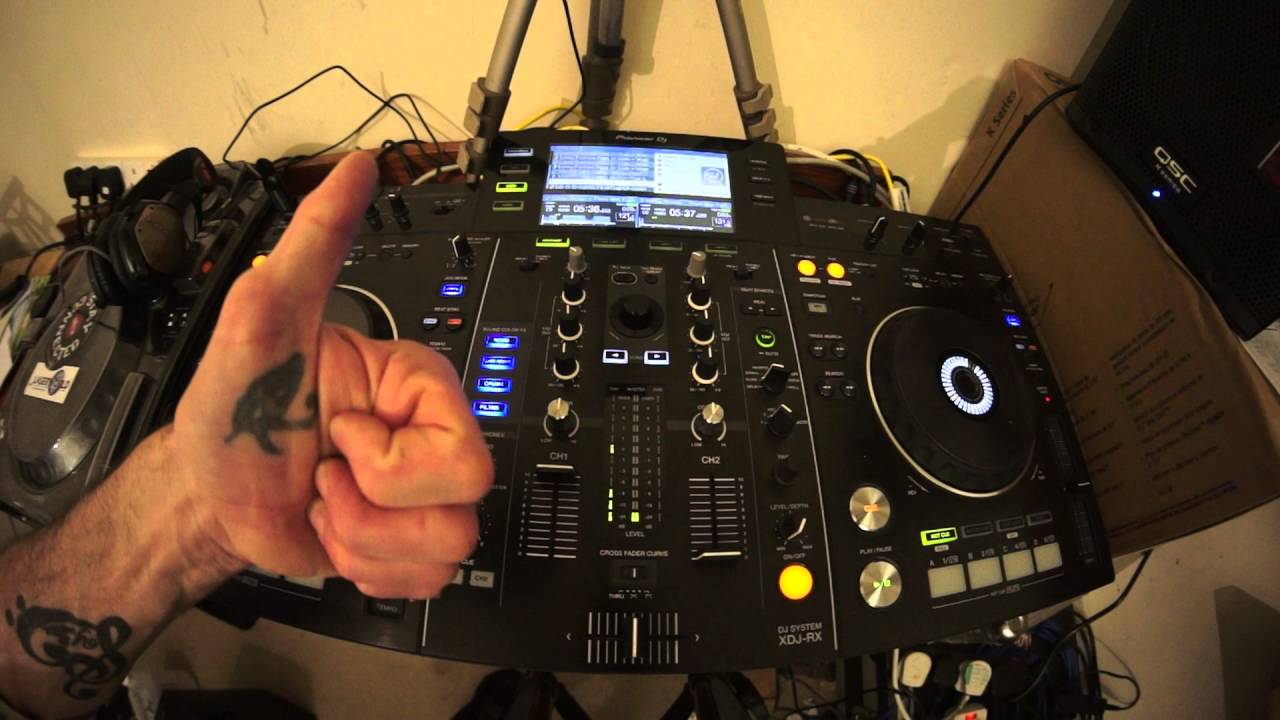
We do not want to have to... Listen to headphones and PA and so on and so on. That's only going to make matters a little bit more confusing. So if you can see here on the wave format, by the way, this track has not been put through record box. We have peaks and troughs. Now what I'm going to do, I'm going to go to a trough. I'm going to go to a quiet bit. So skip it forward a bit, set a cue point there. OK, so what I did very quickly there is I set a cue point at the beginning of the break. Not only did I set a cue point at the beginning of a break, I also set the cue point at the beginning of the next phrase. Now if you'd like to now make the screen a little bit bigger, you should be able to see that these blocks somehow seem to be the same kind of size.
Maybe some slightly longer, slightly bigger, should I say? But they do seem to be... There seems to be some form of structure in this track. Now that is telling me straight away visually, that these blocks, it's highly likely, these blocks will have the same amount of time inside these blocks. They will have the same amount of bars and hopefully that also will determine the size of phrases as well. Because a phrase in music is not only eight bars. It's not only 16, 32 or 24. A phrase could be any of those. It depends on how the track is constructed. It depends on how the track is constructed in the first place. So what I'm going to do, I'm going to start counting from that point just there. See how many bars there are in that break.
Here we go. 1, 1, 2, 3, 2, 2, 3, 3, 1, 2, 3, 4, 1, 2, 3, 5, 1, 2, 3, 6, 1, 2, 3, 7, 1, 2, 3, 8, 1, 2, 3. Now I'm gonna pause it there. Now I don't know if you can see that white line, but I'm gonna do that break. So as a beginner, let's say it's a good idea to count the whole lot. But as someone who's maybe doing this for quite a while, but still needs a little bit more insight, you should be able to work out that line is roughly halfway through. We've gone, we've counted eight bars. It is more than likely 99.9% probable that there will be another eight bars there, which means that little gap there is 16. So what I'm going to do now is I'm gonna go to the beginning of the track and I'm going to now count from the beginning.
6:08 We'll do that again or we'll count at the beginning
We have an area there that's quite low, and then it peaks there. So I'm gonna count that beginning, the beginning of the track and see how many bars we've got up until we get to where the wave format gets higher. So we'll do that again or we'll count at the beginning. Sorry, I'll stop. We'll start counting from the beginning. Start counting. I can't shut up. I've got to do this. Sorry, no, not you then. Oh, sorry, fine. Okay, so one, one, two, three, two, one, two, three. Sheep, one, two, three. Ham, one, two, three. Legs, one, two, three. Bananas, one, two, three. Apples, one, two, three. Oranges, one, two, three. Guess what? Halfway through that was eight bars. Now then, let's start doing some phrase mixing. Okay, so what I'm going to do,
Beginning of this track here, same track, start from the beginning. Now, I'm going to go to my cue point that I set earlier on. There.
I'm gonna bring it back a little bit. All I'm going to do now is I'm going to start the beginning of the Kenny Hectic track at the beginning of that break. So if I've worked this out correctly, as soon as the break finishes, we should start with the peak on... I don't know. The only reason I'm pointing to this side is because we don't have the... We don't have much of the wave format on the right-hand side. So as soon as we finish the break here, we should of course start with the peak but on the right-hand side. So all I need to do is press play here. I'm pressing down here just to keep myself in time. Sorry, I missed my timing there. Can you hear that sound as well?
It's only the high... But that is the sound we're listening for that's that kind of hollow echo-y sound.
OK, we're getting to that peak.
Bang! There we go. Straight in. A perfect phrase mix. Now, let's do the same. Now you'll notice we have got a cue point set on the right-hand side as well. So I'm just going to carry on doing the same. Left-hand side, bring into the right-hand side. Can you hear that rising sound?
8:59 We've got a big echo
Now that's off. So... Clockwise or anti-clockwise?
The sound is even more off. We've got a big echo. Let's try the other way. The echo's getting less.
Now we've got that sound again. That's the sound we're listening for. There we go again. Cue that up. And we'll do exactly the same thing again. Now, this may seem very monotonous but believe me this is potentially one of the best ways of practising end-off
In time, in phrase, in key, everything. See? Completely off!
So try the other way. Can you hear how those claps are getting closer together? You don't want to get clapped by the way. Terrible!
There we go again.
So let's bring the volume down.
I do like this track actually. Very much so. Alright, let's have a listen to the end of the track now. So I'm going to go to around about... Where are we now? We're at the last 40 odd seconds. Let's go round about to the last minute.
Listen for a change.
Right, did you hear that change? Now again, when you hear a definite kind of change in the track here for example
Now that will be When I say will be it's more than likely that is going to be again a new phrase. Now the rule of thumb is of course it does depend on the actual BPM of the track but around about the last minute we're entering the last couple of phrases of the track or should I say the last 32 bars pretty much of the track. Now, we've pretty much worked out that from the beginning of the track to where it peaks we have 16 bars and then from where it peaks to the break we have another 16 bars so I would hazard a guess that where I have set my cue point at the end of this track here one minute eight seconds that's possibly we'll have a listen in a bit going to be the last couple of phrases of the track. Let's have a listen if it is
And that is 32 bars and the beginning is 32 bars if we start the beginning of the track on the right hand side at this point as this one finishes we should come into the break on the track on the right hand side so first of all let's have a listen to the left hand side see how many bars we've got left as follows so let's just press play
13:36 Direction
28 29 30 31 32 OK so there we go we have pretty much sorted a perfect beginning and end phrase mix so just to go over what I said earlier on the beginning of this track excuse me 16 bars 16 bars comes in with the break end of the track 16 bars as soon as this finishes we'll come in with the break there end of so let's go back a little bit
That's ready to start we don't want that so if you're not sure about which way to move the platter try one way first
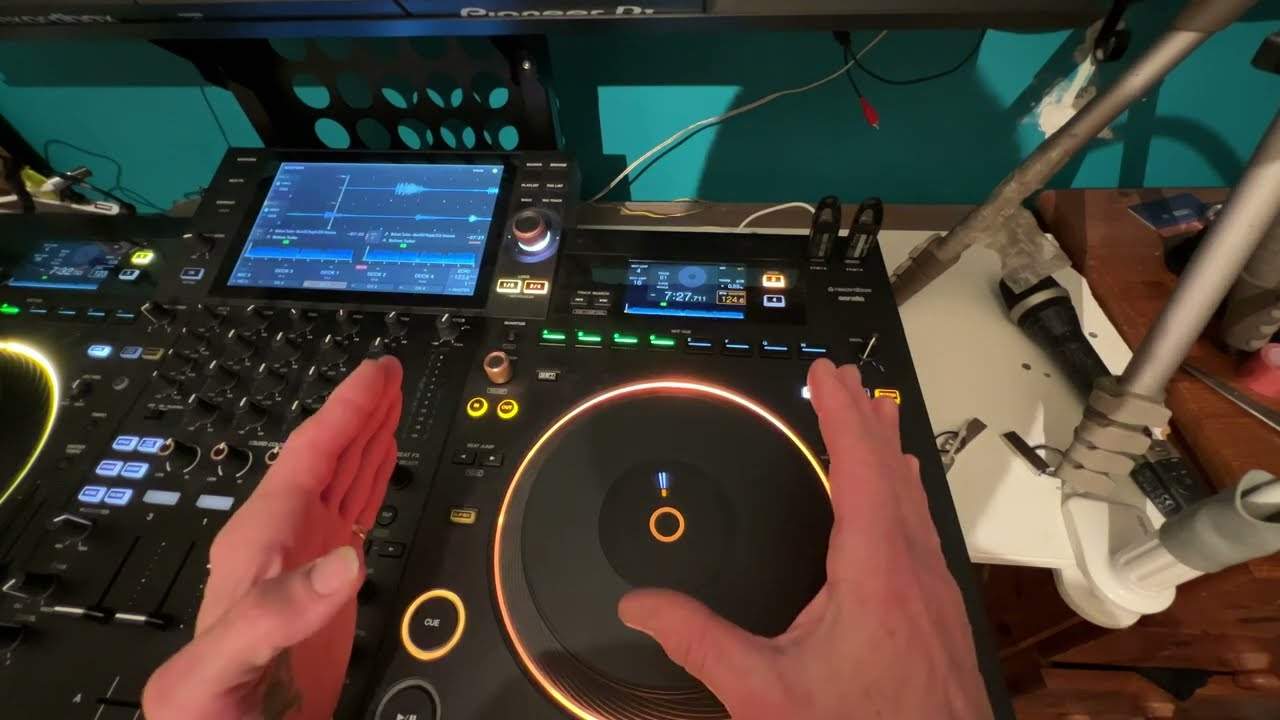
Now that echo's disappeared which means we're going in the right direction if that echo seems to change and get worse then you're going in the wrong direction you need to move the jog wheel the other direction don't forget no need to touch the pitch because you're already there we go we've got that phasing sound we've got that sort of echoey sound not echo but we've got that sort of like cylindrical sound that you would have if you were listening to music through a pipe still playing together
There finished that side and that side straight in with the break alright once again thank you very much indeed to Mr Kenny Hectic for letting me use his tracks this one here there was faith love this cut stay tuned for more wacky videos like this but again you know these are demonstration tutorial videos alright practice and enjoy and don't forget check out all the info in the description thank you
This transcript was produced automatically from the audio of the video and may contain mistakes.