 5:28
Counting the BPM of any kind of music
On YouTube this video is called How to count the BPM of all types of music
What this lesson teaches
A manual method for something your equipment will usually do for you, and the argument for learning it anyway is the interesting part.
The method
Pitch fader dead centre - this matters, or you are measuring the tempo you have set rather than the track's own.
Start the record. Get a stopwatch, and on a kick drum, start it and count that kick as one. Count every kick for thirty seconds, then double it.
He counts 68 in thirty seconds. Sixty and sixty is 120, eight and eight is sixteen: 136 BPM.
Thirty seconds rather than a full minute because counting for a minute without losing your place is harder than it sounds, and the doubling costs you nothing.
Why it is worth knowing the number
This is the part that justifies the exercise, and it is about removing a decision from the worst possible moment.
Suppose the record playing is 130 and the one you are about to bring in is 136. You already know the pitch has to come down. Before the record is on the deck, before you have heard them together, before anything is at stake.
Without that, your first move is a guess - and if you guess wrong, the tracks separate faster while you work out that you have made things worse.
The exercise
His suggestion: go through your favourite records, count each one, and write the number on the sleeve.
That is an afternoon of dull work and it produces something genuinely useful - a collection where you know, at a glance, what will sit next to what.
Where it does not work
He is careful about this and it matters. The method assumes the gap between kicks is constant, which is true of anything made with a drum machine - roughly, music from the eighties onwards.
It is not true of live drumming, or of old disco and sixties records made before the machines existed. A human drummer pushes and relaxes, so there is no single BPM to find. Count thirty seconds in one place and thirty in another and you will get different answers, and both will be right.
That is the same limitation that makes those records hard to beat-grid in software, and the reason an ear beats a readout on anything old.
Contents of the video
0:00 Quite a few people have asked me, how do you mix?
Okay, ladies and gentlemen, quite a few people have asked me, how do you mix? So what I'm going to do now is my interpretation, this is only my interpretation of the first lesson in how to mix. In other words, if you haven't got the foggiest, this is the first thing you need to know. First thing is BPM, beats per minute, okay, that's what it stands for. How do you count beats per minute in a record? Quite often you will find the new mixers will automatically do it for you. Some of them, there's a little button, you press the button. In time with the music, it will give you BPM. If you can't, or sorry, if you haven't got that facility, I will show you how to do it and then what is the principle behind the knowledge of BPM. Okay, right, BPM, beats per minute. What I'm going to do for you now, we have a record here on this deck. Very important, you have your pitch control.
1:44 Let's say for example now, okay, I've got a record here
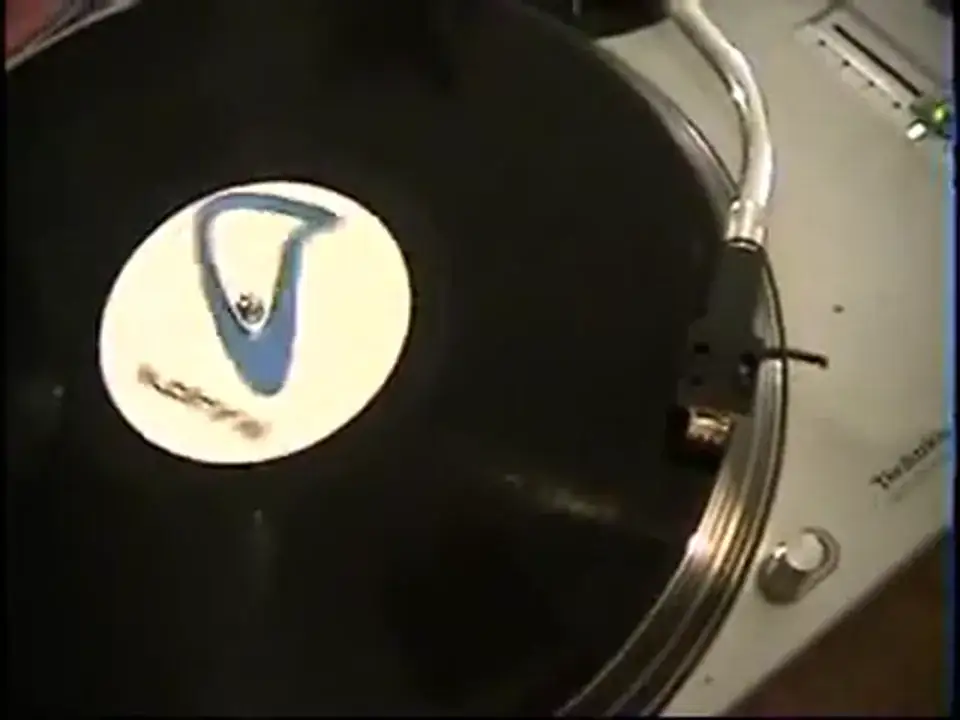
BPM beats per minute. In other words, every time I hear a bass kick, I will count that bass kick I have finished a time on a watch, stopwatch, whatever you've got, of one minute. That's your BPM. I'm going to do 30 seconds, then we're going to double that amount of bass kicks we hear, or the amount of beats we hear, and then we will have the BPM. OK, so we'll start there. Now I need to look at my watch as well, so the camera may wobble a little bit. OK, so I'm looking at my watch now, coming onto quarter, and... 1, 2, 3, 4, 5, 6, 7, 8, 9, 10, 11, 12, 13, 14, 15, 16, 17, 18, 19, 20, 21, 22, 23, 24, 25, 26, 27, 28 Okay, 68. 60 and 60 is 120. 8 and 8 is 16. 136 BPM, okay. Why do we need to know that? Right, let's say for example now, okay, I've got a record here. Should have done this earlier but there you go. Let's take the record out, try to, with one hand, it's rather difficult. Right, let's say for example now this record here is playing. Now I know roughly that record there is 130 BPM. Now let's say this record's playing, you're in the mix, this one's playing, volume up, bang bang away, it's playing, okay.
3:45 I'll explain again what you do
That is 130. This one, what did we say this one? This was 136 BPM, OK? Now then, straight away, if I'm going to bring this record in, I haven't got to think, to begin with, does the pitch control go higher or lower? If I know this record is 136 BPM, it needs to go slower, even before I put it on the turntable, OK? Well, slow down the record. As it slows down the record, it is actually slowing the beats per minute. So here it's 136, there it could be 130, there it could be 125, there it could be 120, there it could be 115, okay? That, ladies and gentlemen, is the first principle of beats per minute and mixing. Okay? An idea for you. Your favourite records. Instead of chucking a record on and wobbling about all over the place, why don't you count your beats per minute on each record? I'll explain again what you do. You start the record, make sure it's dead centre here.
On your watch, whatever. While you are looking at that 30 second period, you can't count 30 seconds because you're actually counting the times you hear that bass kick. Again, you listen. 1, 2, 3, 4, 5, 6, 7. You count how many beats you've got there. In 30 seconds, once you reach that amount, then you double it. That is your beats per minute, okay? The only time, okay, two times, the only time this principle will not work is in live music where you have a live band and the drummer quite often will be out slightly, okay? Also in old school disco and 60s etc. quite often then they did not have machines that manufactured the beat making them perfect but generally you will find in modern day music
80s and 90s to present day, the beats are virtually the same timing in between the kicks. That's how you get your beats per minute ladies and gentlemen. Lesson 1 for the total and utter beginner on learning how to mix. I hope I've been a help. Thank you very much.
This transcript was produced automatically from the audio of the video and may contain mistakes.