 13:37
Intermediate Beat Matching Lesson for the DJ in Full HD
Contents of the video
0:00 Finally what you've been waiting for, a good beatmatching tutorial in
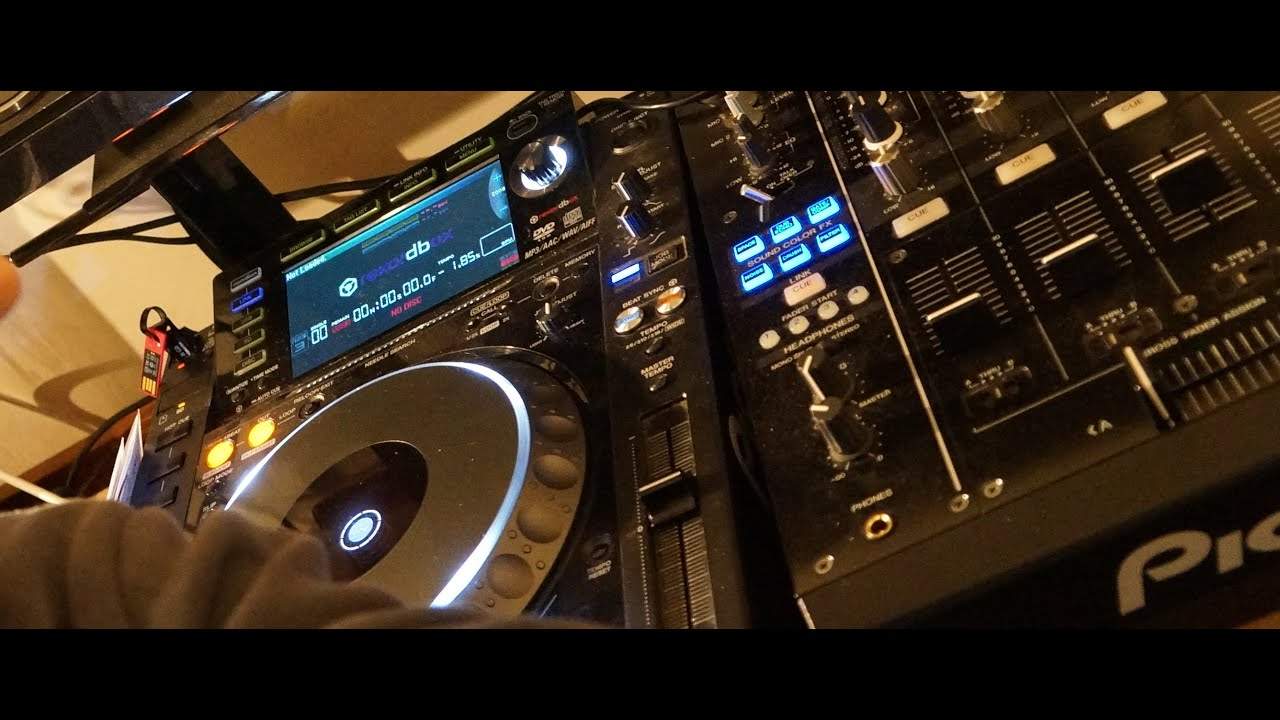
Alright guys, finally what you've been waiting for, a good beatmatching tutorial in full HD. So, you can not only see a lot clearer, but more importantly you can see the readout here on the screens. That's what we need to concentrate on. Track I'm using by the way is by a very good friend of mine, Mr Lenny Fontana, a track entitled Raise Your Hands featuring D-Train. So, what I've got is I've got exactly the same mix of the Raise Your Hand track. Hands, sorry, on both sides of the mixer, on both CD players. Now again what I'm going to do is I'm going to beatmatch this side here into the other side. Firstly you're probably thinking well that's relatively easy because you'll be able to see the readouts and also if you can't see the readouts you'll be able to see where the pitch is so
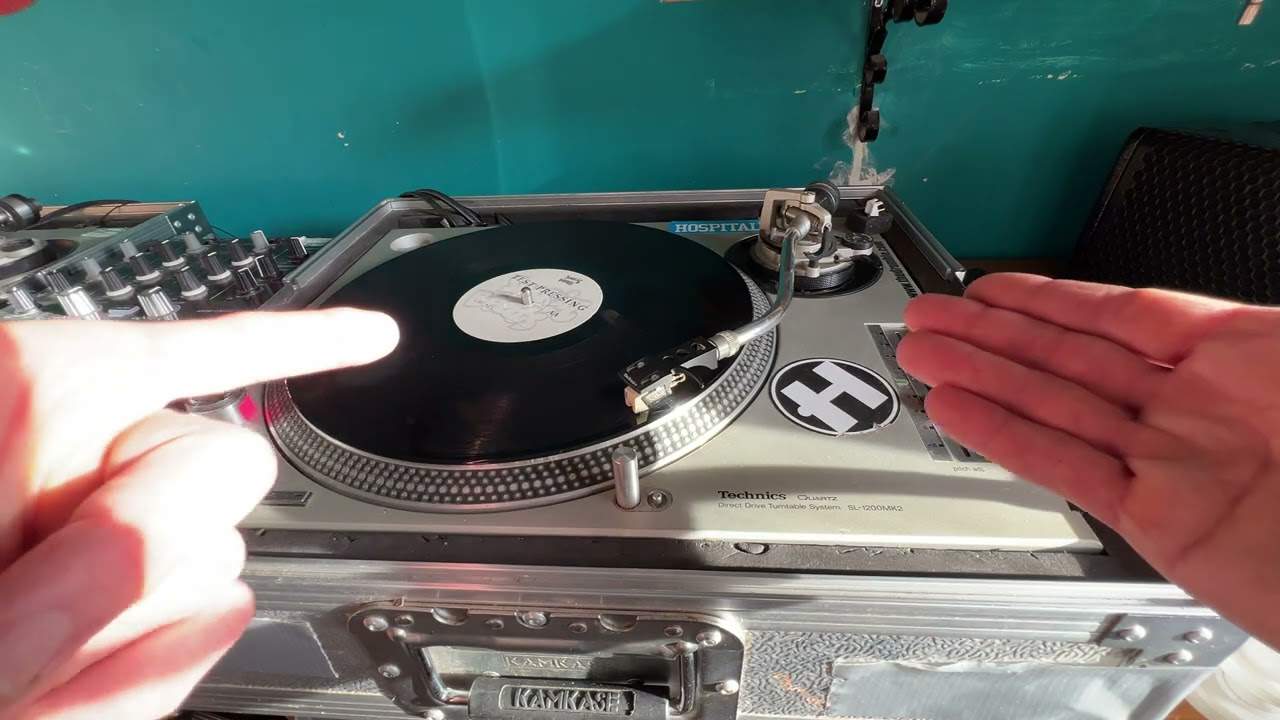
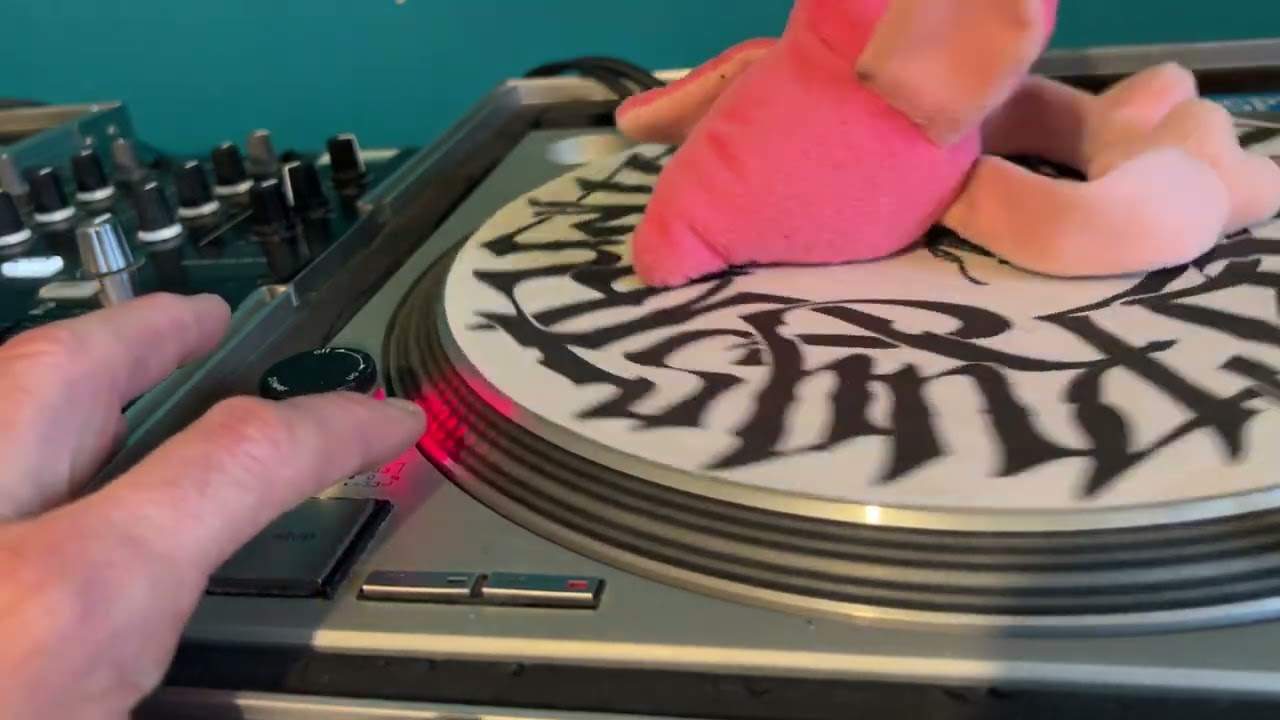
If the pitch on the right hand side is just below the zero, then all you've got to do is pretty much match it in the same place, which is fair enough. But I need to make it slightly more difficult for myself, which you need to as well. So I don't know if you can see here, a little icon there, you can see that highlighted in red, that's telling me that this pitch is set to plus or minus 10%. What that means is that if the track is, for example, 120 BPM, if you move the pitch all the way down to the minus position, it will reduce the speed by 10%. If you bring it up to the top, it'll increase it by 10%. It's just out of shot. There you go. Up to the top by 10%. Exactly the same on the other side.
But what I'm going to do now, I don't know if you can see that's highlighted in red, I'm now going to change that to green which is plus or minus six percent. So I have to now match them perfectly but the place where the pitch will be positioned will be different on both sides because Now, the one over there is plus or minus 6%. So if you don't know exactly the philosophy behind that, then I will try and do a future video, but I'm sure a lot of you will understand. Alright, the next thing I'm going to do is I'm going to cover up the screens. So we're going to do this, well, live-ish. It will be live because... I'm not going to edit it. So now I can't physically see the BPM readouts, so what I'm going to try and do is get them matched up as best as I can. So I'm going to set that one to, I don't know, about there. Okay, so we'll put that there, press play. I'm not using any headphones, so what I'm going to do is talk you through what I'm doing and also what I'm trying to listen for.
2:49 As well, if I just bring
Okay, I've also got, just to show you as well, if I just bring the camera back sort of to about there, I've got the crossfade in the centre position and I'm just going to start the track on the right-hand side over again. Right, we can clearly hear they're off. Let's move this pitch or the jog wheel anti-clockwise. Now what was happening there, I'm going to stop that, I need to explain what was happening is that the beats were definitely going off, but as I moved that anti-clockwise they seem to catch up again. Now that tells me one thing, is that this pitch, this turntable with exactly the same track as the other side is going too fast. So of course I would need to move the pitch down. I can't just put it anywhere, it's not as simple as that. Let's do the opposite now, let's press play on both of them again. Let's move this...
Clockwise and let's hear the difference in sound so press play they're going off see even more all right listen to that sound that is what you do not want let's do the first position or we'll do the first experiment again where i moved it anti-clockwise and we'll have a listen going off also towards the latter part of me moving the jog wheel anti-clockwise Did you hear a point where the sound seemed to have a peak? It's almost as though I was using a filter effect and I was just moving that filter very slightly, trying to give it a high-end effect. Now that is the sound that we are listening for. It's a lot easier to do this. And also a lot easier to get that sound when you're mixing exactly the same tracks because what's happening, it's called phasing. The two tracks are almost cancelling each other out. They're overlapping each other to the extent that one of them is making the other one disappear and of course because they're the same tracks they're both disappearing. So that's the sound we're listening for. Now what I'm going to do now is I know now that this turntable on the left hand side is too fast.
5:39 I know that because I've moved it anti-clockwise and it's caught up
I know that because I've moved it anti-clockwise and it's caught up. I've moved it clockwise and it's gone even worse. So just for an experiment, I'm going to move the pitch down very slightly, start the procedure again, press play, off we go. Okay, still going off. Let's try anti-clockwise. Back in beat near enough. But at least I'm going the right direction. Let's try the same again. Clockwise. Even worse. Anti-clockwise. Leave it there.
Going off, anti-clockwise. Alright so I know as well as you should know that I'm moving that pitch now in the right direction because when we first started the procedure by moving the jog wheel anti-clockwise that was telling me the track needed to slow down which in turn the pitch can move two ways towards me plus We'll speed it up, minus we'll slow it down. So we don't want to speed the pitch up, move the pitch towards us. We want to move it away from us. If we moved it towards us then we'd be defeating the whole object of trying to slow the track down. Now it's still out, we know it's still out because we're still getting that echo effect. It's known as a train wreck. So I'm going to move the pitch down again slightly. I've moved it, there's quite a few marks here. I've moved it say two marks.
From each of those lines is around about two millimeters so it's about four millimeters but this really is a rough way of doing it when we come to the nitty-gritty of fine tuning it that's when it gets a little bit more technical so let's press play on both of the tracks same track of course off we go again right i'm going to stop it right there i want you to listen what we have here we have that high echoey sort of phasing sound Keeping together for quite a while. It wasn't perfect. Well, it could have been. I don't know. I haven't looked. But it was damn near on the mark. It was very, very close. It didn't move away from that sound. We had that same kind of sound for quite a while there. So let's press play again on both of them and have a listen. Now we've still got a double kick. I'm going to move this anti-clockwise. OK, I'm going to listen to those kicks.
8:41 The kicks are getting further away
Alright, this is interesting because now what's happening is by moving this anti-clockwise the opposite is happening. The kicks are getting further away. Now prior to that, the last time I did this, the kicks were getting further away but they were getting further away while the pitch was a little bit closer to me which tells me that this track was still too... Fast. I moved that about 4mm and I then moved the jog wheel anti-clockwise but what we had, we had the opposite to what we had when we first did the experiment. When we first did the experiment I moved it anti-clockwise and it stayed in time. Now I'm moving it anti-clockwise and it's actually going out of time. That tells me that I moved the pitch too far
So I'm now going to bring it a little bit towards me. But again, there's no point bringing it back to the position it was before because we knew at that point it would be still out of time. Alright, so let's try again. Both tracks playing at the same time. Perfect example of what I'd like you to listen to. Now, I want you to imagine and I want you to play back that part of the video. I want you to imagine that you're at the bottom of a hill and you're climbing that hill and then you're going to the other side of that hill. What that is, is that the kicks are coming together, they're getting perfectly matched but there's too much momentum so it's going the other side of the hill. So you're almost as though you're going up and down. That's what's happening here. We're close. We are very close because...
10:47 I'm not going to move the jog wheel now
Earlier on, we heard that sort of high-end sound, but it didn't last very long. Now, it's almost as though we've got a phasing, as though it's coming in and it's going out. Well, that's what we need to listen for. Now, I'm not going to move the jog wheel now. What I'm going to do, I'm going to bring the pitch very slightly towards me. You probably won't even see it move, but I'm going to bring it... Oh, too much. That much. Right. Let's try that again. Both of the tracks at the same time. They're going off. I'm going to do an experiment. I'm going to try and move the jog wheel anti-clockwise. Yeah, as I thought it was going in again. So I may have moved that too much. I'm going to now move that back slightly, very slightly. As I'm moving the pitch, I'm also nudging the jog wheel. Okay, we've got that phasing sound again. I think we're nearly on the mark. Let's have a look. 123. Look at that. Let's just take this off. 123.
You know that I could have cheated at all because the video wasn't edited so this is proof that it can be done by just using your ears and also spending time working with the pitch and the jog wheel. I would say the most important factor is to, you see a lot of DJs, I mean I do this quite a bit. I'll move the pitch like that. But when you watch my movements, they're not like that all the time. What's happening is they're slowly getting smaller and smaller until eventually I'm on the mark. Now this kind of move really is the equivalent of someone doing that, and then this, that, then that, and so on. So I'm not doing the movements on the jog wheel. All I'm doing is the slight movements here till eventually it's almost as though you're just...
Thank you for watching.
This transcript was produced automatically from the audio of the video and may contain mistakes.