 16:00
Mixing Old School Disco Is Not as Easy as You Think!
Contents of the video
0:00 First things first, I'm not using headphones
Right, first things first, I'm not using headphones. This video is really for demonstration purposes only. We've got a bunch of old school tunes here. Now these are like classic tracks. We've got Archie Bell and the Dells, we've got Bibi Humphries, we've got Chris Cuvass, Esther Williams, First Choice, Geraldine Hunt and Teddy Pendergrass. OK, so I mean, you know, we're delving into the classic tracks here. And if you listen to, I mean, I'm not going to be playing all of the tracks, of course, but if you listen to parts of some of the tracks, you may think, I just, where have I heard that before? Like, how come I know that sound? It's very likely they have taken a part of some of the tracks you're listening to or one of the tracks you're going to listen to and put it into.
A modern day sound. They've taken a sample of that track and added it to a hip hop tune, a house tune and so on. OK, so Archie Bell and the Drifters.
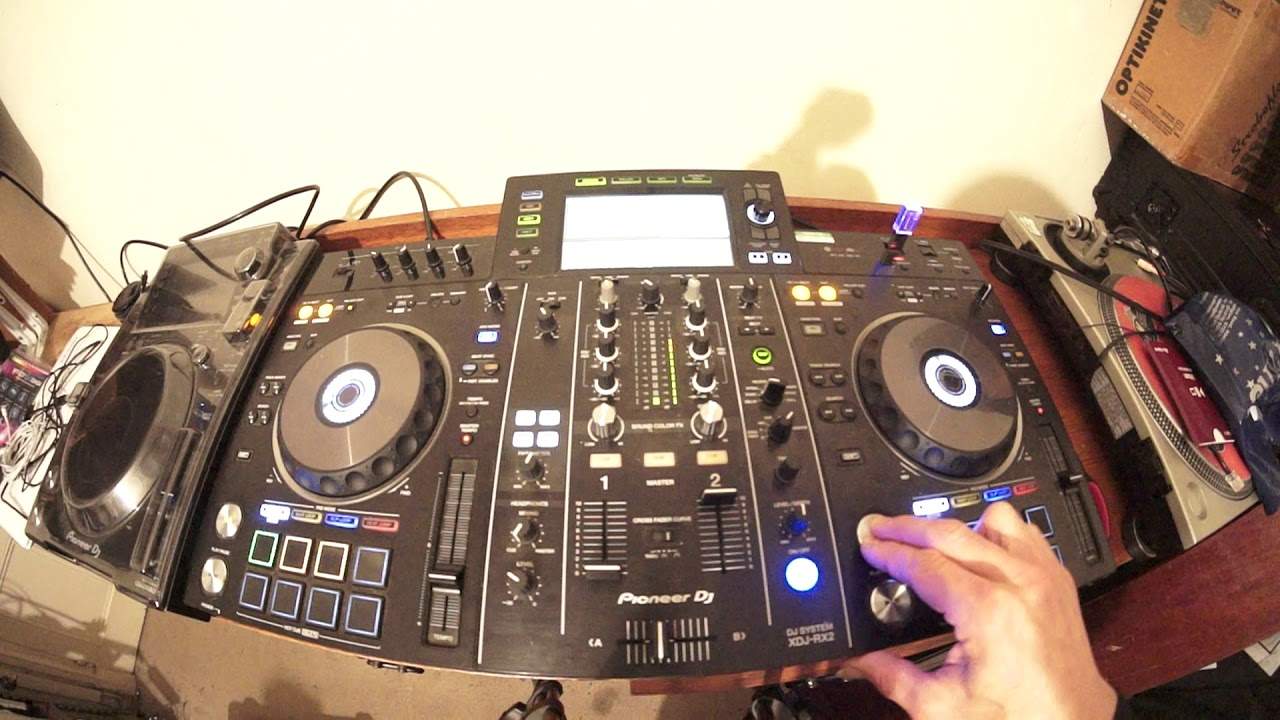
Now, I'm not going to touch the pitch. Leave it where it is. OK, just pause that. Let's have a listen to this is Bobby Humphries' Baby You Don't Know. OK, so what I'm going to do here is I'm going to do what's called a basic chop from one. Boom, straight to the other. I'm going to, let's just press play again. Firstly, make sure that my levels are the same. So without listening to Bobby Humphries, I'm going to press play and I'm looking at the LEDs now on the controller. I'm using the XDJ-RX2 and I can see that the LEDs on Baby Don't You Know are slightly higher than Bobby Humphries'. So, I can either turn Bobby Humphries' up or turn Baby You Don't Know down. I'm going to turn Baby You Don't Know down very slightly.
3:13 You must have heard that sample
Now that, you know, you don't have to worry completely on something like this. It's not the be all and end all but for example if you do have one LED say tapping in 0dB and the other one plus 9 up to 12 and then you do form a transition. You're going to get a very big difference in sound. Okay, straight snap from one to the other. What I try to do is wait for the end of a phrase with Archie Bell and the Drells and then go straight into Baby You Don't Know. So that kind of transition is what we call a chop. You're chopping from one tune to the other. Okay, let's cue that up. Let's just have a listen to Teddy Pendergrass here. You can't hide. From yourself. Now this sample. Oh, okay. Now you must have heard that sample.
Wow. Yeah, okay. Now you see maybe I won't use that one because we've gone sort of from slow to fast, fast to slow. Now these sorts of, or would I say this kind of playlist, this set, I wouldn't recommend you do it because you're going fast, slow, fast, slow, fast, slow. Ideally if you're going to be doing transitions like this you want to keep about the same kind of BPM. One of the worst things in the world to do is go from a fast song to a slow one then to a fast one again, then to a slow one, then to a fast and slow one and so on. Try and maybe keep to sort of similar BPM. It doesn't have to be all at 120 when you're forming transitions like this. Okay, so let's have just first choice love thing. All right.
5:23 We've got Baby Don't You Know On
So what I'm going to do here is I'm going to set a hot cue. Let's do a loop. Okay, this is where we can add new school into the old. I'm going to form two loops though because we've got that sort of introduction to the drum pattern and it might work, it might not but I'm going to do it like this. I'm going to do another loop anyway. So let's just get out of that. All right, again not using headphones. So we've got Baby Don't You Know On. Okay, that did sound very off then because what you have to remember this is paramount to mixing old school is not all of them but most of the old school tunes that you hear especially from the 50s and 60s many from the 70s quite a few from the 80s and so-so from the 90s. They're actually, believe it or not
All made with real people playing real instruments. So what you would what you're going to have to expect is that the BPM is going to fluctuate in old school tracks. So at the beginning of the track if you see it's 120 don't then think that halfway through it's still going to be 120 because if you've got a proper drummer hitting those drums he or she may start to play. He or she may start playing the drums slightly faster or very slightly slower. Okay, so bear that in mind when you're forming a transition like this where you're adding let's say a loop over a track so
Maybe there bring it in there something like that. Again don't take this as gospel. Okay, so what did I do? I formed a loop from First Choice Love Fang played the loop over Baby Don't You Know and then brought in the beginning using the hot cue. You see this is where old school meets new because we're playing old school tunes but because of modern day technology we can make it our own. It's just, it's so much fun so much fun!
8:35 This by the way this tune here is just to die for seriously
Okay, let's just pause that. This by the way this tune here is just to die for seriously. Okay, let's have a listen to this not that one just played that now again you know maybe we can add a loop here in fact I don't think I'm even going to use that tune it's a little bit too housey I'm going to try and keep it old school here okay right typical example of a track that seems to start in a peculiar manner you know if you think about it in terms of counting your bars and phrases
Digga digga digga one, two, three, four one so one so one, two, three, four one, two, three, one sorry one one, two, three, four one, two, three okay digga digga digga one, two, three, four one, two one, two, three, four digga digga digga digga one, two one, two, three listen let's just make sure they're in beat first okay alright so what I'm going to do here is I've got my loops with Love Fang So let's imagine now
That we are playing the track Okay, so we're playing this I don't even think
13:21 Fight feeling, bass, time taken
That cue point was exactly Okay, so with a bit of practice that probably would have worked but I hope you get the general idea. Okay so now we've got a tune here entitled I'll Be Your Pleasure. Okay just cue that one up. Okay again it doesn't start on the 1 and 1 2 3 4, 1 2 3 4, 1 2 3 4, 1 2 3 4, no and the and, 1 2 3 4, 1 2 3 4, 1 2, what was it on the 3, 1 2 3 4, yeah I know on the and 1 2 3 4, 1 2 3 4, 1 2 3 4, 1 2, oh blimey. Sometimes even myself if I'm counting I can't do it but if I just like press it without counting it just comes in. Okay so let's have a listen to that. To I'll Be Your Pleasure and we're going to bring in Can't Fight The Feeling okay which is Geraldine Hunt. Let's just go a bit further into the tune, again there's a lot going on here you know
One of the worst things in the world to do with the transition is when you've got a song with a lot going on and another track with maybe not a lot going on but it's gonna have an actual build. You don't want to add too much, you know it's a little bit like having this wonderful cake. It looks good pleasing to the eye but then you just want to add more topping you're gonna spoil it. Okay let's go towards the end okay again elements have disappeared now we're going on with the bass line there maybe take the bass out when we bring it in there okay yeah so we've waited till the end of I'll Be Your Pleasure. Can't Fight The Feeling. I took the bass out below and then of course with the bass from Can't Fight The Feeling
It complemented the other track as it just left the mix okay now again don't take this as gospel all right when you're mixing the likes of hip-hop, R&B, modern day house you've got relatively good steady BPM. Old school. It's all over the place. Can't Fight The Feeling. It's all over the place. Time must be taken more time has to be taken on your transitions okay hope this is a help practice and enjoy.
This transcript was produced automatically from the audio of the video and may contain mistakes.