 6:43
Placing marks on your Vinyl. WHY?
Contents of the video
0:00 They'll have loads of black lines in the centre of the vinyl
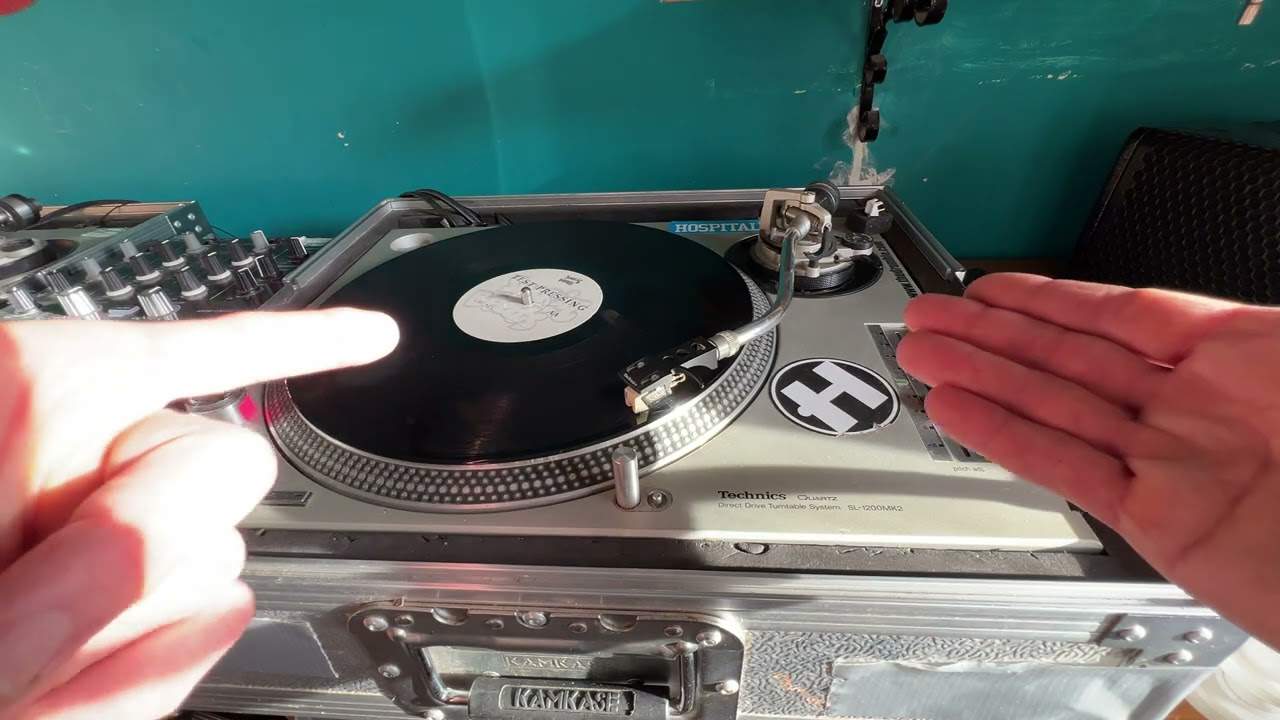
Alright folks, people are always asking me about stickers on vinyl, where to put marks on vinyl, enabling that particular person to find the right place to put the needle. Now first of all before I explain, a lot of people are wondering what I'm on about. Well basically what you find is a lot of turntabless DJs, scratch DJs, We'll have lots of stickers around the vinyl, even on the vinyl. They'll have loads of black lines in the centre of the vinyl. Well, first of all, what are they for? Well, in a sense, they're almost the equivalent of, let's say, cue points on a CD player. Well, some CD players, what you can do is you can set cue points. So basically, if you hit that button, you will go to the precise point where you originally made the cue point recording.
1:50 The reason being is think about it logically
A scratch turntable is DJ. What they'll do is they'll put the needle on the record and they will find a certain tiny sample that they want to use continually. So, instead of, let's say, running through the record, finding that sample, having a go, taking it off and then looking and thinking, where the heck is it? They know roughly where it is, but it would take quite a while to find that precise point. What they will do, needle on the record, find the beginning of that sample. Let's say it's like that. At that point, what they'll do is they'll take a very close look at precisely the point where the stylite, the diamond, the needle is, and then they will gently slip. A very small piece of sticky paper just underneath the cartridge, but precisely next to the needle itself. Now quite often you'll find a DJ will use almost like a half moon shaped piece of paper. The reason being is think about it logically. There's the half moon piece of paper like that. Now let's say if the DJ accidentally put the needle on the record
Here, the groove beforehand. What will happen is it'll skip up onto that point. Or if it's this side, move it back, it skips up. So this side, bring the record that way, it skips up. That side, it skips up. Now again, it may take a little bit of time to do that, but you'll get it eventually. Now also, why do DJs put lots of lines on the centre of the record? Well quite often... It's a similar sort of thing. It enables the DJ to find certain points. So, for example, you could have, let's say, a scratch sample like the fresh sound where it says, ah, this is really fresh or this is fresh, something like that. So what you may find is, of course, as the record turns, you've got, ah, this is fresh. So what the DJ will do, they'll have a line say, ah, this is fresh, like so. But let's say you're a house DJ.
Well, how can putting lines on your vinyl help you? I'll show you. OK, here we go. A couple of things. First of all, the turntable I'm using is the Technics SL-1200 Mark II and the track is D-sign, it's on deconstruction and it's a track entitled In Brackets I've Just Gotta and then Close Brackets Run Away. Bit of a classic tune. Let's have a listen to it first. Just set that to the centre position.
3:45 First beat, sticker, start
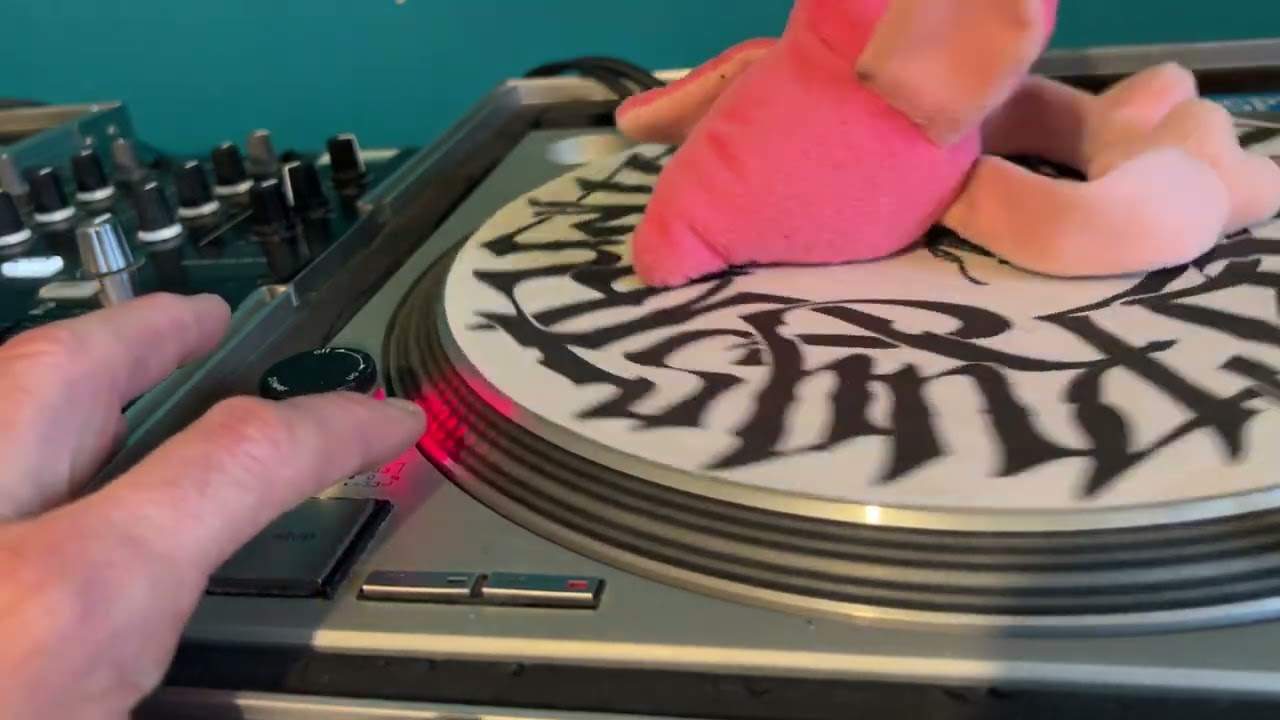
While we're doing this, you can have the pitch anywhere, it doesn't matter. What I'll do as well, I'll put the title and artist in the description for you as well. Right, now if you don't want to start drawing all over the centre of the record, what you can do if you want to, make sure they're the correct stickers, but you can buy white stickers that you can remove. So in other words, if you want to keep that nice and clear, buy the stickers and then before you start making marks... Place a sticker where you're going to make the relevant mark, and then put the mark on the sticker, and then of course logically you can pull the sticker off. You've still got a clear centre. Okay, so what I'm going to do now, I've got the vinyl turntable on the mixer, the volume is up, but the power isn't on, so now I can move this manually with my finger. Here we go. Now what I'm going to do is find the precise point where I've got that first beat. There.
What I'm going to do now is I'm going to now draw a line there. Now, you're probably thinking, well what's the point in doing that? Because at the end of the day, you've got to put the needle on the record and you've got to find the beginning anyway. But let's say you're in a hurry and a rush. Now this will take a little bit of time but after a while you'll get used to listening and used to watching and used to noticing what is going on. So for example, what I would do, I'd put the needle on the record and...
Now, with time, you'll notice and you will watch that line and you'll automatically, instinctively think, yeah, nearly, next, next, bang, that's where it is. That's where the beginning first beat is. But also, another good use for putting a line on the record is some tracks may have an introduction. They may have one or two beats before you have that first initial one, as in 1, 2, 3, 4, 1... So again, on that basis, let's say you do have quite an introduction. It's a good idea to put a mark on your record or, like I said earlier, on a piece of paper. That will enable you to know that that precise point is the count of one, which is of course the timing where you need to start bringing the track in. Little bit of a help here. Now if you've done any videos on, let's say, marking your records or you've got any more advice, etc.
Bung video responses, bung comments, practice and enjoy.
This transcript was produced automatically from the audio of the video and may contain mistakes.