 9:08
Structure of hip hop , in brief, www.djtutor.com 20th jan 07
Contents of the video
0:00 Hip-hop and the structure of hip-hop
Today I'm talking through the headphone, so a bit nutty. But in this one we're going to talk about hip-hop and the structure of hip-hop. Right, what is it? First of all, techno is fast, about 130, 140, even faster sometimes BPM. House you're looking at about 120 up to 125, 130. Hip-hop is 100 or thereabouts BPM, sometimes a bit slower, sometimes a bit faster. is almost a bit like breaks, breakbeat. Hip-hop is a slowed down version of drum and bass, okay? Quite often what you can do, you can actually mix a hip-hop song into a drum and bass song. Why? Basically because it's half the speed of the drum and bass song, okay? Hip-hop, if we actually cut it all up into sections, lots of melody, lots of bass lines, lots of things going on, and more importantly what you'll have is a guy
Quite often, who is the rapper? The MC. Now what is rapping? What is MCing? To put it down into its basic, it's basically some guy rhyming. And where did it originate? People think that it actually originated in the 70s, some guy started rapping. But actually how it happened and started was way back sort of 40s or 50s perhaps, whereby you would have some guy in a church or chapel. And you've seen the preachers, what they do, they go, Hallelujah! Listen brothers! Here what I say, I'm here today to teach you the way. Okay, think about it. A lot better than that though. That is actual rapping and probably what someone did, excuse me, is they incorporated that into a record, okay? And then what happened is possibly MCs and rappers, well when I say MCs and rappers, people from the late 70s then decided to put that towards music and add beats, of course.
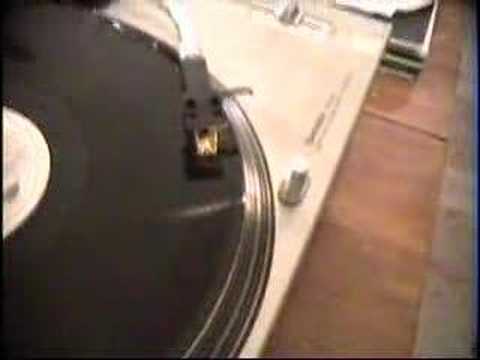
We'll do, first off, we've got here a bit of a funky tune for you, Cypress Hill, When the Shit Goes Down. Alright, break it up. It came straight in with a beat, bassline and a tiny bit of melody. You can hear that when the rap comes in. Again, it's very formatted. And also, what I want to show you, you can also almost see, you can see on here, a corkscrew effect.
2:39 Can you see lines almost moving along the record?
Can you see lines almost moving along the record? Identically the same distance apart, perfect all the way through. Now this guy here, basically what you could class, what you could say, if you counted the bars, the chorus would be, say, four bars, the instrumental break would be, say, four or eight bars, and the actual main vocals or main rap would be four bars. Again, this particular hip-hop tune is very formatted, okay? So this one is an ideal thing for mixing in, whereas this guy can throw this one in. Hold on, I got it right earlier on. Now this one here is Swizz Beatz. Swizz Beatz featuring Bounty Killer and Guilty. This is the instrumental break, okay? Now again, right, instrumental break. A lot of hip-hop records will have a rap version and they'll have an instrumental break version.
Now the instrumental break, quite often it's there for the DJ to have two copies so we can mix the instrumental with the vocal version. And also you'll have what's known as acapella. The acapella is basically all of the vocals you can hear but with no beat, no melody and no bassline. Spin back. Right, you watch this if we listen to that spin back.
4:49 All they've done, they've taken a record and spun it back
Okay, all they've done, they've taken a record and spun it back. Now also, we had a break. Now what's happened is the producer has cut everything off. Right, now if we go back, and we'll start counting the bars from a certain place. Hold on, a bit further back than that. Probably when she starts, right, 1, 1, 2, 3, 2, 1, 2, 3, 3, 1, 2, 3, 4, 1, 2, 3. There you go. It came in, it came in. Now then, what happened? The producer who's done that has basically just cut every single sound off and then brought it straight back in. We're not at the right place, it's always been there. He's just cut the volume away. Now you can do that as well, check it out, right? Here's a good idea for you when you're doing hip hop. Now watch this. Phono, right? If I mess around with it just any time, it sounds rubbish. That sounds bad. Now you have a listen now.
7:06 Techno chugs along quite happily, quite fast
Okay, let's see if we've got... Here's the acapella. So a lot of DJs will use this acapella, if they have two copies of this, what they'll do, they'll use the acapella for scratching and then have the other record on and scratch over it. Right, the structure of hip-hop, very completely different, well, completely actually. Different to techno. Techno chugs along quite happily, quite fast. Hip-hop a lot slower. What you find with hip-hop records quite often, you will have an LP version, you will have maybe a remix, you will have maybe a clean version, which of course quite often they have swearing so they will take away the swearing for the clean version. Why do they have that? Because then that is formatted for radio. They will have the explicit version, which has all the ifs, buts and whys in there, the swearing. And also you'll have an acapella. So then the acapella of one song, you can like cut into the other. Think about it. If one track is playing, you can cut the acapella in. Alright, I'll give you an example. Okay, what we'll do... Remember, I'm not using headphones, so it might be a bit difficult. In fact... Right, instrumental there, okay?
Let's get it poppin'. Let's get it poppin'. Yo. Yo. Yo. Yo. Yo. Yo. Yo. Yo. Yo. Yo. Yo. If you've got any more questions, give us a shout, okay? Again, I am no expert. I'm just...
This transcript was produced automatically from the audio of the video and may contain mistakes.