 7:10
Study the format of techno,for the new DJ
Contents of the video
0:00 Electronica type of music called techno
Alright folks, today we're going to look at electronica type of music called techno. Techno is exceedingly formatted, it's always made with a drum machine and 100% of the time if it starts at 140 BPM it will finish at 140 BPM. It's one of the ideal sorts of music to start to learn to mix with because... Basically, as I said, if it starts at 140 BPM, it'll finish at 140 BPM, so you know it will not speed up or it will not slow down. A lot of people have been asking me the tunes I've been playing what the actual names are, so what I will do now is every time I play a new record, I'll tell you what it is. This is on Relief Records from America, which is one of my favourite labels. It's called Snap Mode.
Radium Files EP, and the track we're going to be listening to is De Chicago Para Tokyo. The number of this record is RR2018. Okay, right, here we go. Let's start it off, sorry, from the beginning. Right now then, again, count the bars yourself, okay, and listen. Okay, what have we got? We're starting off basically straight away, drums in, and you've got that hi-hat sound. You've got that, sorry.
2:26 Was say six bars, two bars
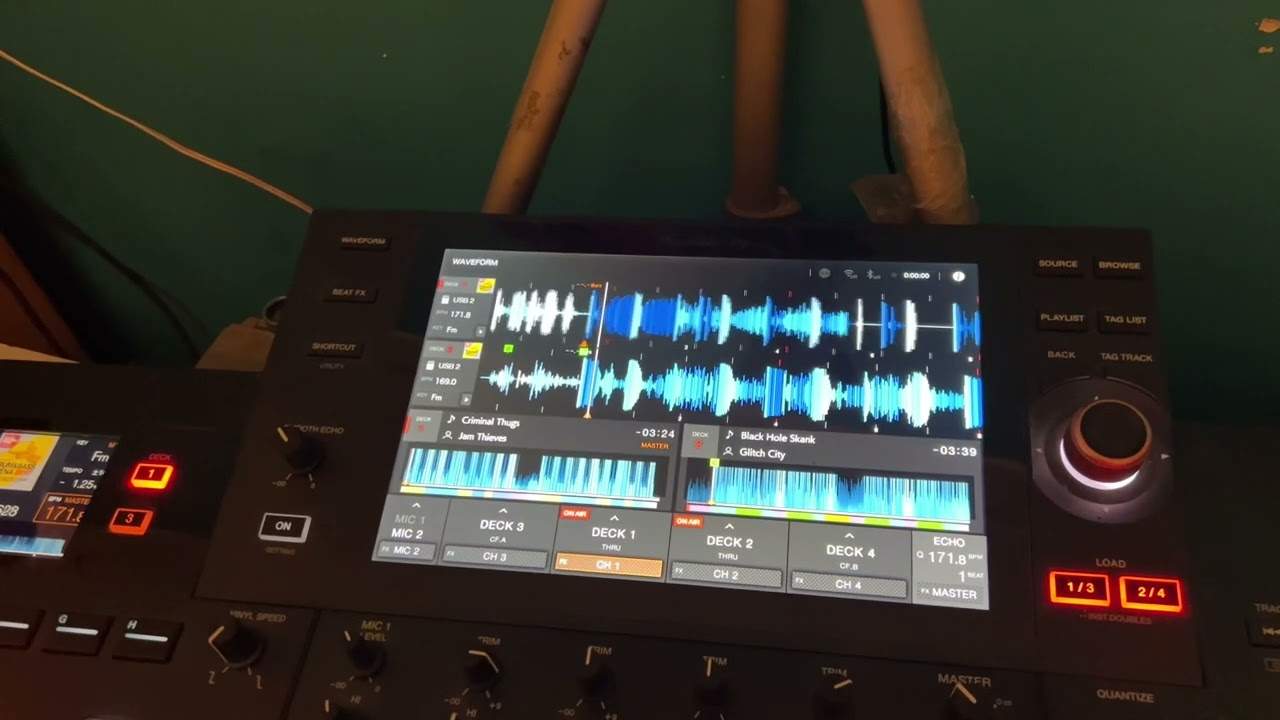
Now I'm looking and I can see just about where my finger is now, a break coming up. Okay, there you go. Now in the background you've got a very, very slight bass sound. Okay, now after that break we've now got congas, more percussion. And that's what you find with techno. Quite often with techno... It is just percussion, very, very minimalistic melody and with techno, virtually no vocals. Okay, we're coming up to another break here. Now, in between, if you look, you've got shiny bits and dark bits, okay? If you actually just pulled all this record apart... You would find that maybe the beginning was four bars, the first break was two, the second part was say six bars, two bars for another break, and then you know the next part, four bars. Okay then we've got a bit more, we have that sound there. Basically this is how it goes all the way through. Very simple. Lots of sounds, lots of percussion.
Very little melody. A good starting point for a DJ who wants to learn to mix, a good way of learning to mix is using techno electronica. Bit of a twisted sound there which is what people like. Another break. See drums have gone but they've kept that twisted sound in and they'll bring the drums back in.
Okay, another break. Now with the end, like I've said, with a lot of electronica music, things will start to disappear, which is ideal for the DJ to mix in the next song. Now at this point, you'd be thinking about bringing your next song in. There you go, you've got a bit of phasing there and it will end like this. Alright, we'll stop it there. As it starts, it will start with just a basic beat, boom, boom. And then you'll get like the hi-hat, you'll get a bit of melody, bassline, etc. And then quite often it will finish like that, it'll just disappear almost as it started. Okay, now if we look at this guy here, my dodgy drawings here. Right, electronica, techno, beat, okay, four or eight bars. Beat and bassline, four or eight bars. Now in between these guys here as well, as we did...
4:38 You never know the breaks there could be two bars
Have with that song, that track, we had a small gap here with a break. So you never know the breaks there could be two bars. Beat, bassline, melody. Right, not here, omit the vocals. We didn't have any. But we had almost the beginning, the middle of the track and then it broke back down again. Now in a lot of electronica, especially techno, this is how it's formatted. It almost builds up to that peak. Okay, and then it goes back down again, alright? Now a lot of DJs, what they will do, at this point here, they'll start to bring the next record in. Okay? Because think about it, you've got not much going on here, and you've got not much going on at the beginning. So, at these two points, it's a good idea for the beginner DJ to mess around and start to learn to mix. Bring this point here...
When the record is finishing, your next record, mix it in at the start of the second record, mix in at the end of the first record. Now a lot of professional DJs who've been at this for ages will mix it in perhaps here, here, here, here, anywhere because they know the record so well that they can mix it in at any point. Therefore what's happening, you're no longer a DJ who just mixes one record into the other. You're actually becoming a musician because you are listening to the sounds and you're using the sounds from one record and incorporating those sounds into the next record, okay? And now again with regards mixing there are two major, and believe me they are just as big as each other, two major facts with mixing, okay? You have to be able to mix the beats correctly.
That is a must, OK? The last thing the crowd want is that g-dunk, g-dunk, g-dunk sound. But just as important is what's known as the key, OK? If the sound isn't correct, in other words, if you're mixing in one wrong key into another one, it will sound terrible, OK? We will discuss that in the future, but this is my basic interpretation of... Talking about techno. I hope you've enjoyed that one. If you do have any comments, constructive or negative, then you know you can put them down. I don't mind, OK? If you just want to slag me off, that's fine, but if you have any comments, you can stick them underneath. Thank you very much for listening. Bye-bye.
This transcript was produced automatically from the audio of the video and may contain mistakes.