 10:37
Phrase and vocal mixing together
On YouTube this video is called The Best Beginner DJ Phrase and Vocal Mixing Lesson Ever
What this lesson teaches
A drill rather than a demonstration, and it is genuinely clever.
The setup
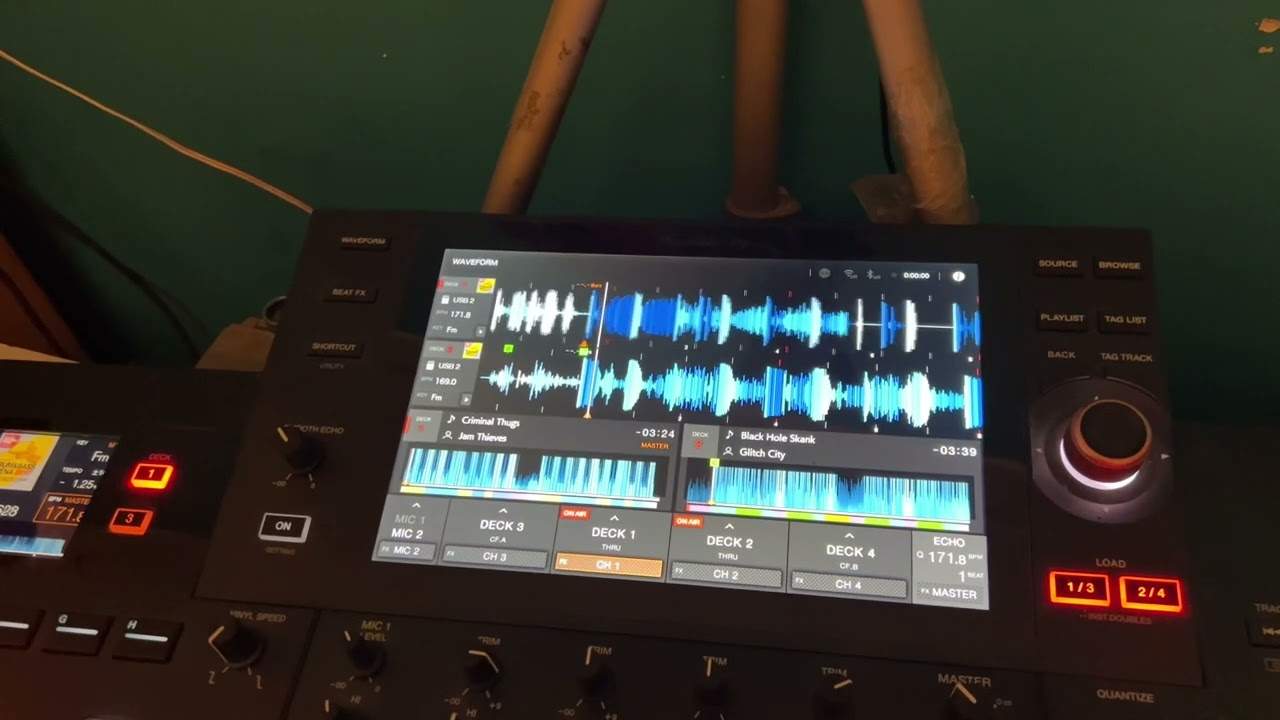
Two versions of the same record: the instrumental mix on the left, the original mix with vocals on the right.
That is the key. Both versions were built from the same arrangement, so they have identical structure, identical length and identical tempo. Start them together at the same pitch and they will stay locked for the whole track with no intervention at all.
The exercise
Use the crossfader to edit the vocal in and out.
Slide to the vocal side for the chorus, back to the instrumental for a while, over again for a verse. You are cutting between a version with singing and a version without, over music that never moves.
Why this is such good practice
Because of what it removes and what it leaves.
Removed: beatmatching, because the two cannot drift. Tempo, because it is the same tempo. Key, because it is the same key. Phrasing, because the two tracks are in the same place at all times.
Left: the timing of the cut, and the musical judgement about where a vocal should start and stop.
That is normally the hardest thing to practise, because it is buried under everything else. Here it is the only thing left.
And his other point is not trivial: it is fun, which matters for an exercise you are meant to do for hours. You are effectively remixing a record in real time, and the results are immediately satisfying in a way that nudging two kick drums together is not.
Where to find the material
Most dance releases carry an instrumental or dub alongside the vocal mix, precisely so DJs can do this. If you buy a record and it has three or four versions on it, that is what they are for.
On the equipment
His aside about the entry-level controller is worth repeating, because people are embarrassed by cheap gear. He has played very big gigs on small controllers and they have never let him down. A controller at this price is not a toy to be outgrown - it is a complete instrument with a smaller surface.
Contents of the video
0:00 Here, please don't think for one
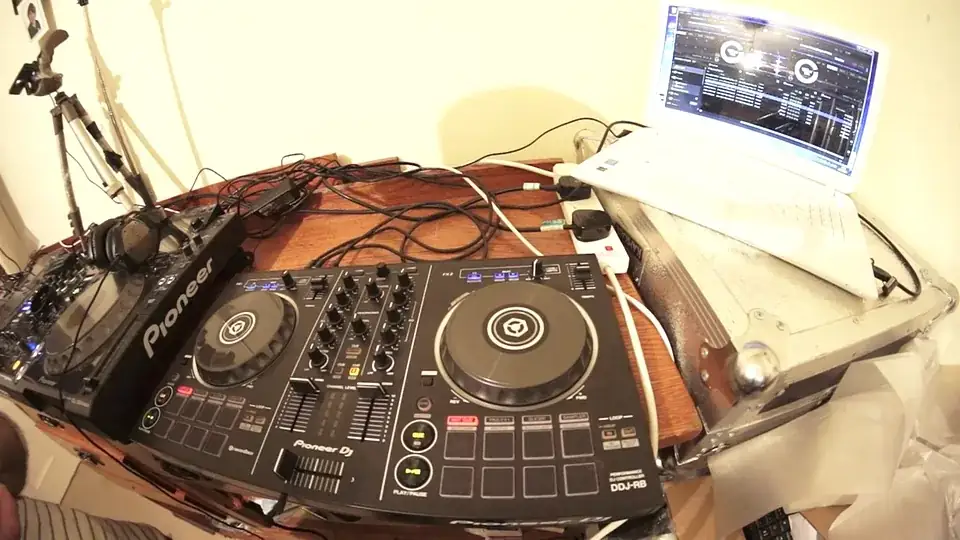
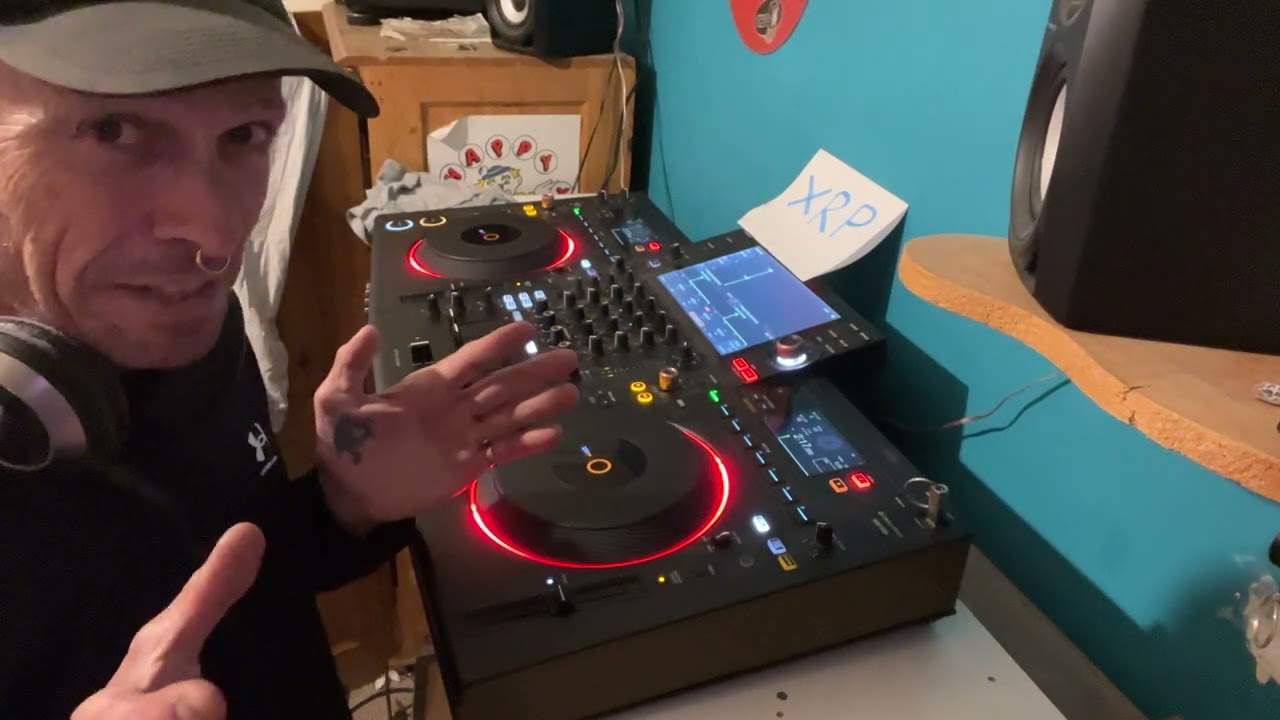
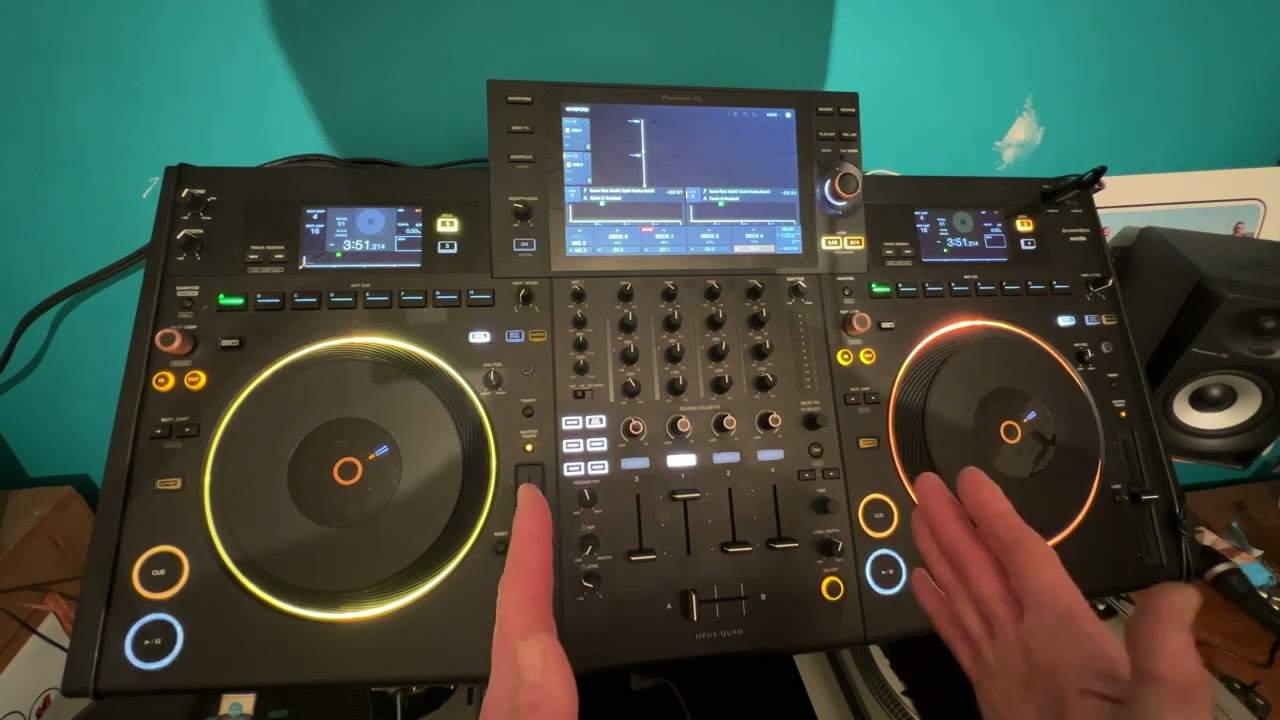
Right guys, you have in front of you the DDJ-RB from Pioneer. It's one of their entry level controllers but what I have to explain here, please don't think for one second that this is a toy. It's something that you're going to buy for like your 8 year old son and then eventually when they become sort of 10, 11, 12 maybe get them a set of CDJs. Not at all. I have used the Pioneer Wego, practically all the Wego series apart from the four yet at gigs, professional gigs and they have never let me down. Now the RB if we look at both sides it's almost like the beginnings of the footprint for the Nexus series. You know we have our touch sensitive platter We have hot cues, we have effects, we have pitch, we have filter as well, low, mid and high, and trim, headphone level, master level, and we can add effects. So it is an all-in-one controller that can pretty much do anything for the bedroom DJ up to say the DJ on the road who wants to do some gigs. I'm not going to say small gigs because I have done...
1:48 I have got exactly the same track on both sides with one difference
Very big gigs using small controllers like this. Practice video for phrase mixing and I truly believe it's possibly one of the best, not so much demonstrations but one of the best sort of tutorials for yourself because it's great on learning how to phrase mix. It's very easy to understand and watch and listen to and it's a great way of experimenting With a track and you going from one track to the other. I will explain. I have got exactly the same track on both sides with one difference. On the left hand side, I have on his mind the instrumental mix. On the right hand side, on his mind, the original mix. Now here's the key. If you're going to do something like this, you need to make sure that you're using
The same track on both sides, but the same track has the same structure, except for the instrumental does not have the vocals and the original mix has the vocals. So what we're going to do in this demonstration is we are going to start the tracks at the same time We're going to have the pitch at the same position, so both tracks will be exactly the same speed. And then we're going to use the crossfade and we're going to edit in the vocals. Now not only is this a great way of practicing, also it's a lot of fun as well because the original mix will have the chorus verse chorus verse as it was made in the track. Slice in part of the chorus, slice in part of the verse over the instrumental track. So if we have a listen to the instrumental, press play. Okay, using the mouse on or the touchpad on the laptop now. I'm just going to zip forward. See, we're going through the track. Okay, I'm going to cue that back to the beginning. Now I move the crossfade over to the right-hand side and on the right-hand side now I am able to...
Listen to the original mix that has vocals exactly the same. Let's skip through the track. I mean, you could even use this track as well. Great practice. OK, so all I'm going to do now is I'm going to move my crossfade to the left. I'm going to put my headphones on. Now, this is what I'm going to do. You can do it slightly differently if you want to. I'm going to press play on... Both of the decks at the same time, but because the crossfade is on the left, that means that you will not be able to hear the track on the right, which is the original mix, but I have cued up that on my headphones. So even though I'm going to press play on both sides at the same time, maybe the right hand side, maybe slightly too soon, slightly after.
5:12 Things precisely and concisely so everyone
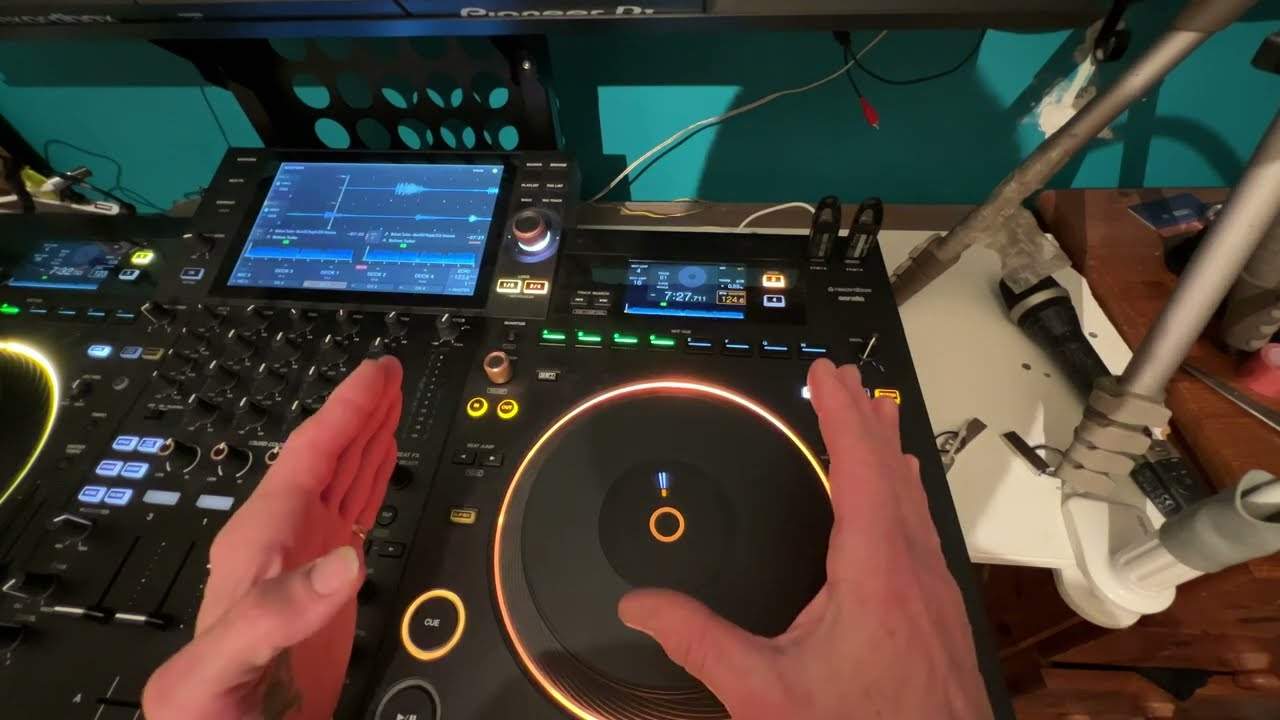
The one on the left. So using this technique, first of all, with monitoring one side on your headphones means that if you are slightly out of time, you can bring the deck in perfectly in beat. Now this is really important as well. And yes, I am trying to explain things precisely and concisely so everyone can understand why are you moving, going to move the platter and not the pitch. Well, if you have set the pitches on both decks at the centre point, then they will be in perfect BPM. There is no need to move the pitch. All you need to do is move the jog wheel to either jog it forward, snip it a little bit forward or reverse it. If you move it forward and you seem to feel and hear as though that echo is increasing, then you would have moved the jog wheel in the wrong direction.
Clockwise, you're bringing the track slightly forward. Anti-clockwise, backwards. So if you do feel after moving it forwards that the echo is increased then you need to move the jog wheel backwards. If or anti-clockwise. If you're moving it anti-clockwise and you can hear the echo increase, that means you've moved it the wrong way which means you have to move it clockwise. Alright? It's about practice and enjoy. Here we go.
7:32 For the people who can't see
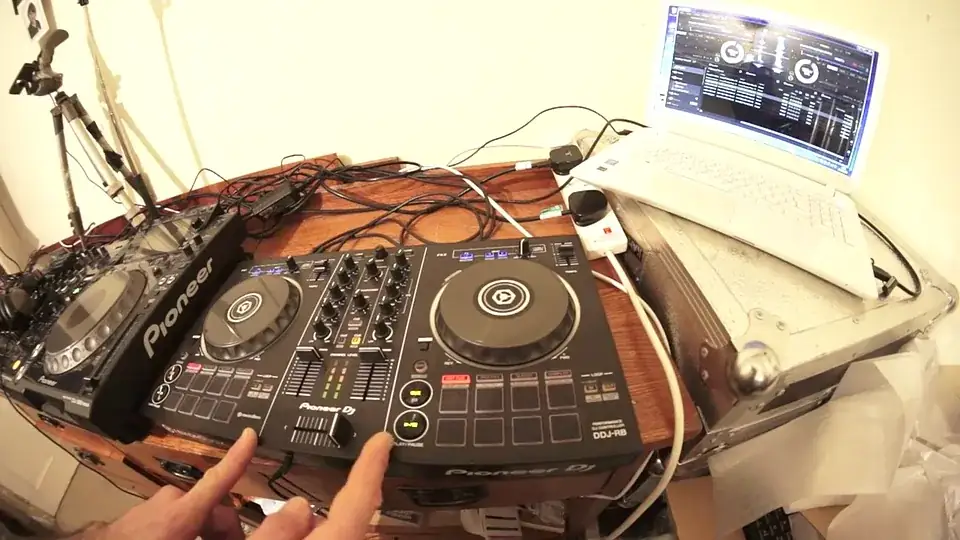
Okay, that should be perfect time. And now I can take my headphones off. Let's turn it up a bit. We can hear them phasing. If we want to now, we can have a bit of fun maybe using the filter. Back over to the instrumental. Now again, both tracks are playing exactly the same. Everything is the same structure except for vocals on the right-hand side. We're not coming into the vocals yet. Now we are. See? Left hand side, no vocals whatsoever. All I'm doing now for the part, so I can explain for the people who can't see at all or partially sighted, I'm now moving the crossfade from one deck to the other. Moving the filter, back over to the instrumental. Let's high pass the original side. Okay, bit of a spin back on the right hand side. So, alright, now the practice here.
Is not really beatmatching it. The practice here is you understanding how the construction of tracks are made. It's about the phrasing, now also the vocals if we go back to the original mix I'm just going to skip through maybe to you know a third of the way through listen to how the vocals are constructed how the phrasing of the vocals is constructed Chorus, verse, chorus, verse. Maybe you might want to start off by just moving the crossfade over so you can get the chorus. Take it back and then back to the chorus again. So it's about listening to the track, following this video and understanding how the construction of the vocals works in tracks or this track will help you understand how vocals work
In pretty much every track, it's about phrasing. Remember? Bars. 1, 2, 3, 4. 1, 2, 3, 4. And phrases. The phrase could be 8 4s, 16 4s or even just 4 4s. Alright? I hope that's been a help. Check out the link in the description. There'll be a couple. One to the DDJ-RB from Pioneer and the other one to, of course, the Karmic Power tune here. On His Mind by Mr Lenny Fontana. Practice and enjoy, thank you.
This transcript was produced automatically from the audio of the video and may contain mistakes.