 5:21
The structure of dance music, in Lego
On YouTube this video is called The structure of Dance music in Lego?Thanks to SILVIALAIN,
What this lesson teaches
A model made of Lego, borrowed without permission, and it is a genuinely good piece of teaching.

The scale
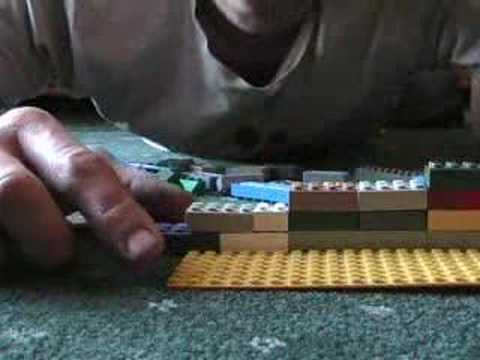
Each stud is one bar - a count of four. Four studs together make a phrase, counted 1-1-2-3, 2-1-2-3, 3-1-2-3, 4-1-2-3.
So a brick laid along the baseplate is a stretch of time, and its length tells you how long.
The colours
Each layer of the arrangement gets a colour: grey for the beat, yellow for the bassline, red for the melody, green for the vocals.
So you build upwards as the record builds. A single grey brick at the start - just drums. Grey plus yellow - the bassline has arrived. Grey, yellow and red - the melody. All four - the full track with the vocal on top.
The skyline
Lay those along the plate in order and you get a shape: rising at the start as the layers come in, dipping where things drop away, running flat where the record is holding on a beat, rising again after the breakdown.
That shape is the structure of the record, and you can point at the part you mean.
What varies and what does not
His important caveat: each track is different in its lengths, not in its shape.
The beat alone might run for one phrase or eight. The full vocal section might be four phrases or ten. What stays constant is the general pattern of building up, stripping back, building again - and that the lengths are always whole phrases.
Why the model is worth the Lego
Because it shows two things at once that beginners usually learn separately.
Along the plate is time, which is what counting measures. Up from the plate is density, which is what you hear when a breakdown arrives.
A waveform on a screen is exactly these two axes, and most people stare at one for months without consciously separating them. Build the thing once out of bricks and you will read every waveform differently afterwards.
Contents of the video
0:00 Piece of Lego
Alright folks, I'm going to do a bit of a tutorial for you now on the structure of dance music using my son's Lego. Don't tell him. First of all, let's have a look at a piece of Lego. You can see there you've got eight circles on the top but let's just pretend that we're only going to be looking at four like that. Now imagine each one of those circles is a bar and we count a bar as follows. One, two, three, four. But we've got four of them. So we count that as a phrase. 1-1-2-3, 2-1-2-3, 3-1-2-3, 4-1-2-3. 1-1-2-3, 2-1-2-3, 3-1-2-3, 4-1-2-3. Now imagine that there is the beginning of our track and that is let's say just the beat for example. All of a sudden we're going to have a beat continuing on and maybe on top of that we'll have the bass line.
We have beat here, but we have bassline on top with the beat. But then let's say we carry on and we have the beat, we have the bassline, but also we have the melody like so. And then let's say we have the beat, the bassline, and also we have the melody, I'm going to use two bricks, but then here maybe we have vocals like so. So we've built up. Now, each track is not the same because perhaps we would have the actual beginning, the beat, let's say for one phrase, for two, for three or even four phrases. Maybe five, six, seven or eight phrases. Maybe the beat and bassline for two phrases. Maybe beat, bassline and melody for six or four phrases. Maybe beat, bassline, melody and vocals maybe for ten phrases but
What we will end up with is something that looks a little bit like this. Now if you imagine, we're just building now, again I haven't got, forget the colours now, alright, forget the fact that the grey is the beat, the yellow is the actual bassline, the red is the melody and the green is the vocals, just forget that. We're just building now this structure and this is near enough what it will look like.
2:28 Along maybe
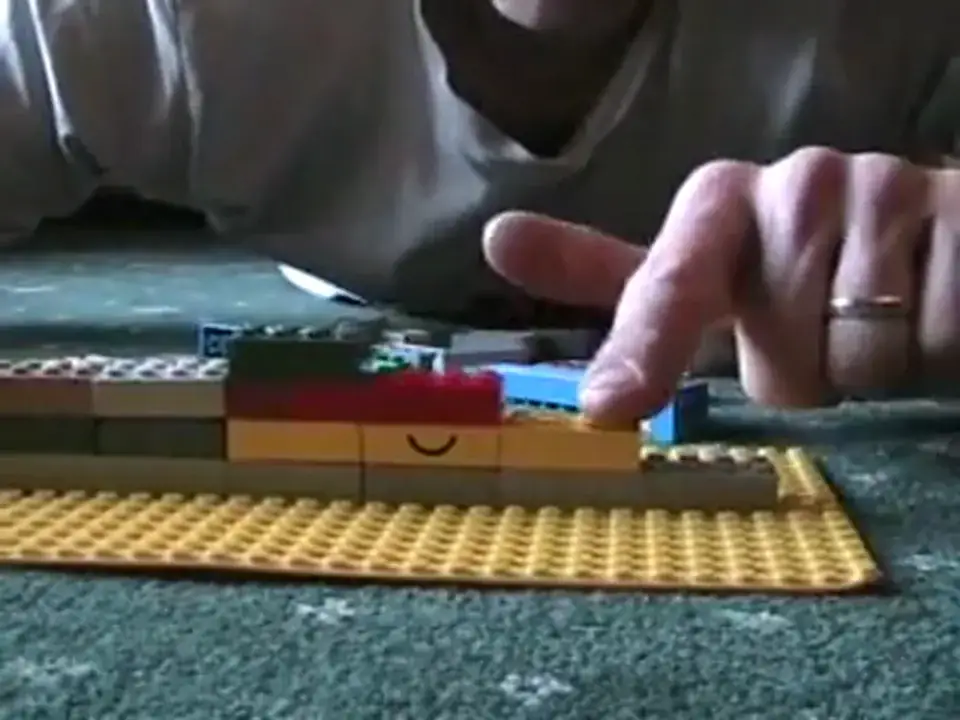
Now what's happening along here is we've got the beginning, it's building, it's getting higher and we're dipping down and we're moving along, we're going down again and maybe at this point here where we need a bit more of a platform, we are just smoothly running along maybe with just the beat and then we'll start off again and we'll have more and more like so. So at this point here This could be the instrumental break for example, or maybe we're back to almost as though how we started with just the actual beat. Now I want you now to look at the beginning again. There you go, there's the beginning. What I'm going to do now, I'm going to take that like so, and I am going to pretend to make an end of a track. So in other words, again, let's have a look. We've got all of these things happening.
3:30 These kids are clever with these Legos
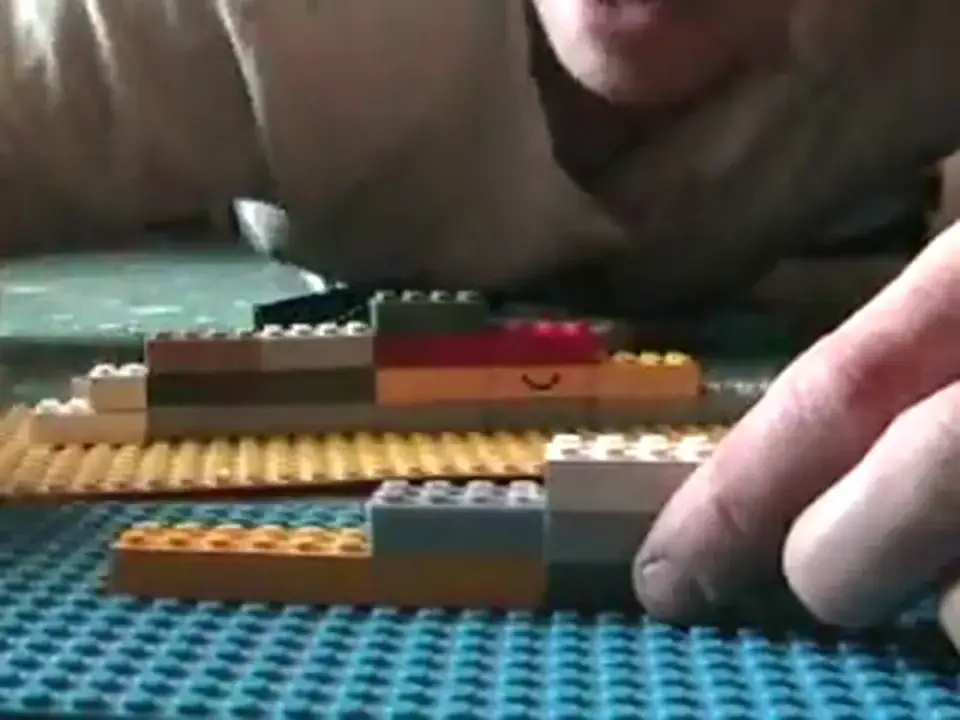
But slowly things are starting to disappear like that. Let's just move that over a little bit. Can we get that off? These kids are clever with these Legos. This Lego, I'll tell you now. Right, we'll move that over like that. Right, now then, that there is the end, OK? And that is the beginning. Now possibly you can see how dance music is structured because if I tilt those... Like that, against the camera. Hopefully you can see that that would fit there. Like that. Just neatly together. Now that is how 99% of house, trance, techno and all that sort of 4-4 timing music is set. Because as one track is finishing like so, in other words beat at the bottom Perhaps bassline and melody, then beat here and bassline finally with beat. This one's finishing. Then if we bring this one in at the correct time, like so, at that point there, nothing will overlap. But then again, if the actual, let's say for example, the basslines work together, we can bring it in there. Or maybe even, let's say, if the melodies work together, we can bring it in like so.
At that point there. Now I hope you get the general idea because 99, like I've said, percent of dance music is structured. So this is why listening and counting the actual phrases and the bars is very important. I hope this has been a help. Practice and enjoy.
This transcript was produced automatically from the audio of the video and may contain mistakes.