 18:38
This Is WHY I Think a Reall DJ Uses Vinyl and Can Mix Well Any Format Without the Use of a Lap Top
Contents of the video
0:00 Comment, early
All right, ladies and gentlemen, I haven't done a video in a while, but there is good reason because I have other stuff to do. But don't worry, there will be demos and tutorials. I'm going to be doing a demo soon on some lights I've been sent that look very interesting. So watch this space. But this video is, I suppose in a way about my experience in the DJ industry for quite a long time. Now, I honestly think I can make this video and explain reasons for making this video because indeed, I have been in the DJ industry since the early 80s. And I've grown up with every single format. Now what's imperative, really important is if you watch this video and you are indeed a DJ, I would like to see you comment on this video. Very important though, please do not comment now, wait till the end of the video so you've watched it all and then comment because there could be parts of the subject during the course of this session where you may quickly write a comment halfway through only to find out
That you may have changed your mind at the end. Anyway, I personally think that a real DJ is a DJ who can use vinyl, not DVS but vinyl. A real DJ is someone who can use vinyl without the need for any kind of laptop. Now, that isn't to say and I don't want to contradict myself that a DJ that uses DVS or a laptop or a controller or CDJs is not a DJ. You are because at the end of the day, if you have some kind of instrument DJ orientated in front of you and you can make some kind of a mix, then you are a DJ. But let's go back in time to when DJing started, which I mean, again, some people could say it was the 50s, 60s, 70s. But let's say for just for argument's sake, it started really around the early 70s when people decided that at a dance they wanted the music not to stop but to carry on. So maybe in the early 70s, you didn't really have actual physical blending mixing from one track to the other, but you probably did have one track finished, the other one start. Now what the DJs did then is they realized
That to keep the vibe and the energy of the room, what you had to do is you had to make sure that the two tracks, the end of one, the beginning of the other, had some kind of connection. Now that didn't necessarily have to be genre or style. But what it did have to be was a sort of a musical content. Now, as time moved forward, and around the mid 70s, we started to have the 12 inch single, we then had the possibility of being able to indeed mix tracks together. Because you could, of course, mix the intro with the outro, or the intro of the second track with the instrumental break of the second track. Now, of course, then you didn't have a screen, you didn't have a laptop, you had no kind of software whatsoever to tell you what track was great to mix in with the other one, what BPM,
The tracks were, and also what key the tracks were in. You had to do everything by ear. And I think this is the key here. Ear, hear, ear. It's not about using the laptop and getting the information from that because we didn't have it then you had to use your ears. So at the very best, what the DJ could do during the late 70s and early 80s is write down the BPM, rough BPM on the vinyl, and hope for the best or not really hope for the best but have an idea of their tracks. So they were able to pick and choose the correct tracks that went in with all the second track that goes in with the first one, and the third one with the second one and so on. And that's what I used to do many years ago. You know, you would get a stopwatch, you would play the track. So it was the original speed, you would either wait for
Minute or half a minute or 15 seconds. If you waited for a whole minute, of course, then you would get the BPM beats per minute. Half a minute, you would get the BPM for half a minute. You just doubled it. Quarter of a minute, you quadrupled it. Now, of course, it was a rough idea. It wasn't precise, but it gave you a good idea of the BPM of those tracks. And of course, what a lot of DJs used to do, like myself as well, you pretty much start with slow tracks at the beginning and work your way through. So we didn't necessarily back in the day, maybe you did or didn't, but I didn't have a box of house and a box of hip hop. I just had three or four boxes and they went through the BPM. So for example, track number 18 may not mix with track number 19, even though
5:56 Again, we had the daddies still got them to this day
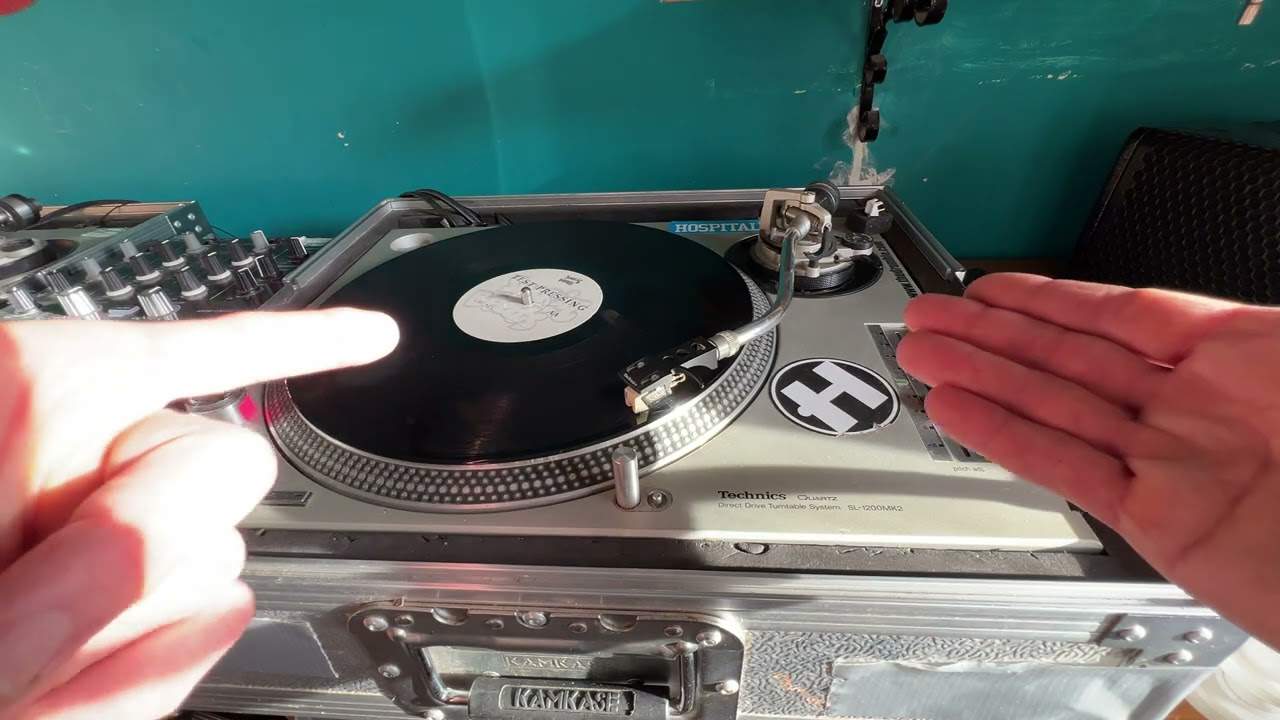
They were similar BPMs. But track number 18 would indeed probably mix with track number 22. Even though there were slight variations of BPM, of course, that's when you could use the pitch control. I hope you're following me. Now again, we had the daddies still got them to this day. Love them Technics SL-1200 Mark II. And you were the envy of the village if you had a set of those. Of course, then and even now, the trouble is with mixing on vinyl is that as you increase or decrease the speed, you not only increase or decrease the speed of the track, you also increase and decrease the tone, the energy of the track. That's why it was imperative that if you wanted to keep the keys of the track together, you could
7:01 Plus minus, something, track indeed
Only really mix in between about plus or minus 3% any above or below that and you started to increase the tones of the track by semitones. So two tracks may be identical, similar keys. One could be 100 BPM. The other one could be 115 BPM. But if you try to beat match them, you would be able to probably but they may then be out of key. Now, the thing is with today's DJ industry, it is so easy to mix tracks because your laptop in front of you will not only give you the BPM, it will also give you the key. It will not only give you the BPM and the key, but it will do something that was revolutionary in the DJ industry. And to my mind, it is the best effect if you want to call it out of any other effect. And that was Key Lock, also known as Master Tempo. Now
What that does, it keeps the key of the track while you can indeed speed up the track. So if you want to speed up or slow it down, not only that, but modern day technology allows you to increase or decrease the speed of your track, not just by about 8% on the old Technics, but up to 100%. So if a track is 100 BPM, you can indeed make it go to 200 BPM. Or you can stop it. So again, the 100 BPM or sorry, the 100% pitch variation is something that you should always be wary of, be careful of. Because if you've got that on your decks and you're finding it difficult to mix, it's simply because a small minute move on the pitch will indeed increase or decrease the BPM quite dramatically. Whereas if you've only
Got say 10% or 8%, then it's not going to increase or decrease the speed that much. Therefore, you're going to get a much more refined mix. So that's something to just be wary of. Also, just a side note, if you are finding it strange that one deck seems to be mixing amazing and the other one doesn't, it could very well excuse me be because the pitch on the one side is set to say plus eight and the other one could be plus or minus 16 plus or minus eight plus or minus 16. You'll still be able to mix with them. But you may find that it's very strange because one seems to be working very strangely plus or minus 16 and the other one seems to be quite smooth. So always check that the pitch variation on both decks are the same unless of course you want to do an effect where
You go to plus or minus 50 or 100. Disable the keylock or master tempo and then you can have some fun. Now, again, back in the day you had vinyl and you couldn't copy your vinyl because you bought a record and that was it. The only way of copying it was to get a cassette and a lot of the original, well not the original, but during the 80s you could get a double deck system with some dodgy turntables, Garrard or something like that, with a cassette deck in the middle so you were able to record something off the radio and play it. But of course back in the day it was great to go to a record shop and be one of the first people to get the 12-inch white label played out and you were indeed, it's not a case of maybe, you were one of the only people out of say
10:58 Give you the exact key
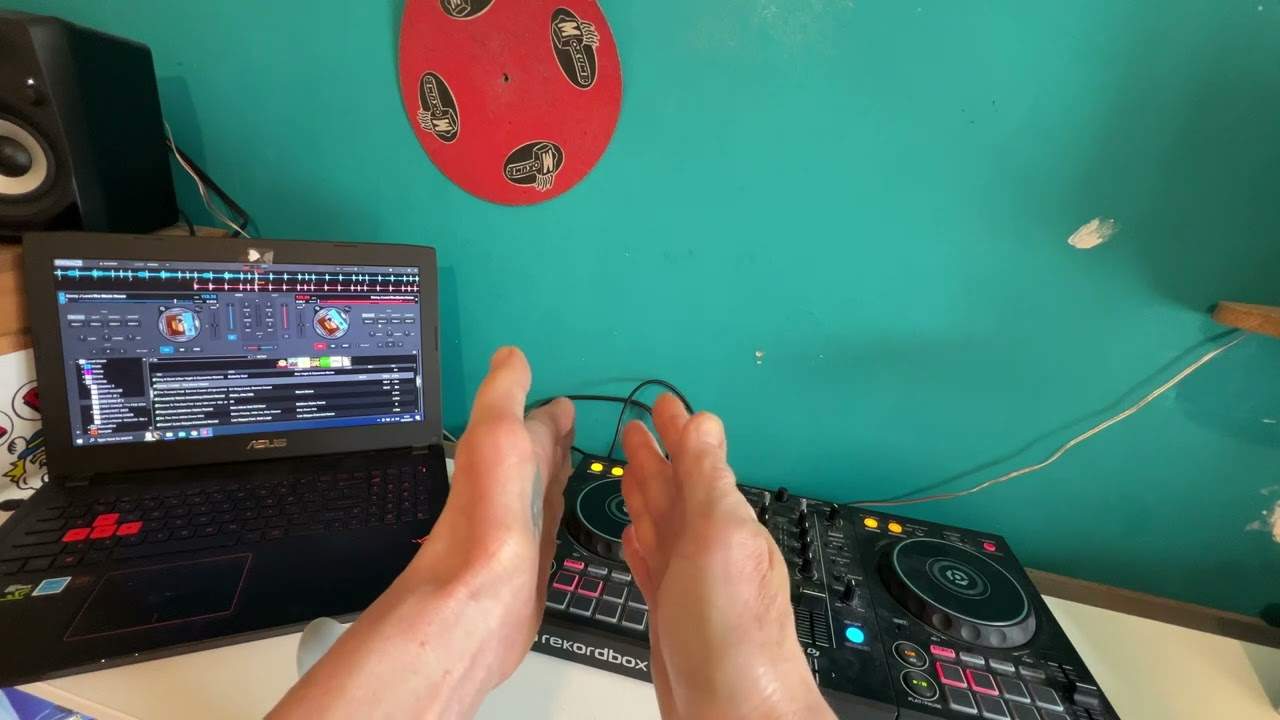
100 or 1000 around the world that have that track. Nowadays it's online and every single mother and his ducks got it. Right so looking at say the likes of controllers now you can buy one of the cheapest controllers out there plug it into your laptop you download your tracks or you're copying from your mate which you shouldn't really do or you've bought your tracks and all of a sudden you become a DJ because you take those files into the software, the software will analyze them for you give you the exact BPM, give you the exact key. There's even software now in the likes of the latest pioneer decks the 3000s if you mix a track in that's out of key it will mix it in key for you. Now that's, just that's taking it to the next level. Now something as well I want to bring,
Bring forward a subject or is that the right way of sugging it saying it sorry is that back in the day when you heard a mix online or on the radio or in a nightclub it was rough it was a little bit sort of offbeat you know sometimes it was out of phrase and so on but that's because it was done by a real DJ playing real vinyl, waiting for the drop maybe slightly missing it or being sort of out of tempo, offbeat a little bit and it was a real mix. Nowadays we're losing the soul of a mix because practically every single mix you hear now online is done to perfection and you have to ask the question is the DJ doing that mix or is the DJ relying on the software to do that mix? It's a little bit different. It's a little bit like getting into an automated car that will take you shopping and bring you back
Home. You're sitting there it's taking you on a journey but you're not driving the car. Now what I recommend, I really do recommend for every single DJ out there especially the new DJs watching this video is do yourself a favour and have a go at mixing on vinyl because it's very difficult and it wouldn't surprise me if you were to get into a mix of vinyl and you're not going to be able to do it. If there's a lot of DJs out there working in nightclubs now who are earning a fantastic amount of money, you put them in front of a set of vinyl turntables. The only screen they've got is on their phone so they can look at Facebook and give them a bunch of vinyl and ask them to do a set. They would probably die a death. What's happening now in the DJ industry is people are
13:21 Crowd and work with the crowd
Losing the essence of what they're doing. They're losing the essence of what they're doing. They're losing the ethics of how someone should DJ. It's a shame really even if you use DVS, virtual vinyl you can still use your laptop. You can still get all the information from your laptop, pile it over into key, get a folder in one key and away you go. The trouble is is that there are not many people now out there, DJs who will look at the crowd and work with the crowd. They're more likely to work with a screen in front of them and hope for the best. Now I know a lot of DJs who can use vinyl and they are amazing and now they're on controllers. That doesn't bother me because they've been seen and done it. What does bother
Me is we're getting now into the future where a lot of DJs will lose the soul of how to be a real DJ. Now this video is not about saying that anyone who uses a laptop or a controller or DVS is not a DJ. Like I said earlier, you are indeed a DJ. But take a minute just to think about it and maybe try and use real vinyl if you can. Just give it a go. Also if you do use real vinyl and you work and use it, go through DJing the process of the hard way, you're going to be able to do it. All right, so this is what I have been doing for myself all this time. I've definitely got a few different things to show you, but the hard way is when you do indeed get onto a laptop, it's easy. Now I do a lot of what's known as riding the pitch, which is basically you slap a record on.
You don't touch the vinyl and you just move the pitch up and down. A lot of people say how do you do it? Well it's like anything. It's practice. And enjoy. And that practice has been matured over decades. It's taken a long time. But. • MUSIC • People now who use Vinyl.com and others, they're not going to talk so much about it for hours there. They can see if something happens that's called writing and that will be one of the things you do in your life. who use a laptop. Are you one of them? You will look at the screen, you will look at the BPM, you will move your pitch so the BPM of the track you're mixing in matches the other one and you bring the track in. Nothing wrong with that but then you have to think
16:00 There's a set he did from 1995 I believe
You're making your life too easy and this is the way sadly this DJ industry is going. People are losing the whole soul of how to DJ really, how you should DJ. Now quite often I'll do live streams. I'm going to do a live stream tonight so this video could be on before my live stream and do you know what? I always make mistakes. One reason is because my vinyl is all over the place. The other one is because I do make mistakes. Sometimes I'll drop a track in that's out of key and I'll go, oh why did I do that? Sometimes I'll drop a track in that's out of phrase but it's real, it's organic and there's a guy called Moody Man and go and Google it or just YouTube it. There's a set he did from 1995 I believe. He was in a nightclub in Paris
And you can hear him actually speeding some tracks up and slowing them down so you can physically hear the track rising and dipping and it's just amazing. Now to me that mix is wonderful. It's absolutely amazing because it's real. So here's a thought for you before you comment. What I want you to do from now on is when you listen to a mix online just listen to it and then think was that mix done to perfection? Was it so pristine in every way? In every single way, shape and form that you're going to give it a 100% mark? Whereas you listen to another mix it's a bit off. It's slightly that the beats are off or maybe that track shouldn't have been there and so on. Now to me any mix is a good mix but I like organic feeling mixes
Where they do go off. They're out of key maybe sometimes they're off beat maybe sometimes but they're brought back in beat. To me that is a DJ who is using their ears not the laptop. So all I'm going to say is try not to rely on a laptop let me know what you think alright, again post a comment please I'm not after thumbs up or anything like that I would just like your feedback Are you a vinyl DJ? Are you a turntablist? Do you use DVS? Do you use a controller? Do you use the best Denon? The best Pioneer? Or do you just use some old run of the mill Citronic Thames 2 with dodgy turntables but you're happy at what you do. Alright, let me know in a comment Thank you very much for watching and I will be doing a live stream later on
Hopefully this evening about 7 o'clock ish UK GMT time it depends if I can get everything sorted because I do have another life Thank you for watching and enjoy Thank you
This transcript was produced automatically from the audio of the video and may contain mistakes.