 8:54
True Vinyl DJ Mixing Help with Old School Tunes
Contents of the video
0:00 The two tracks I'm using is Rochelle Magic Man over here
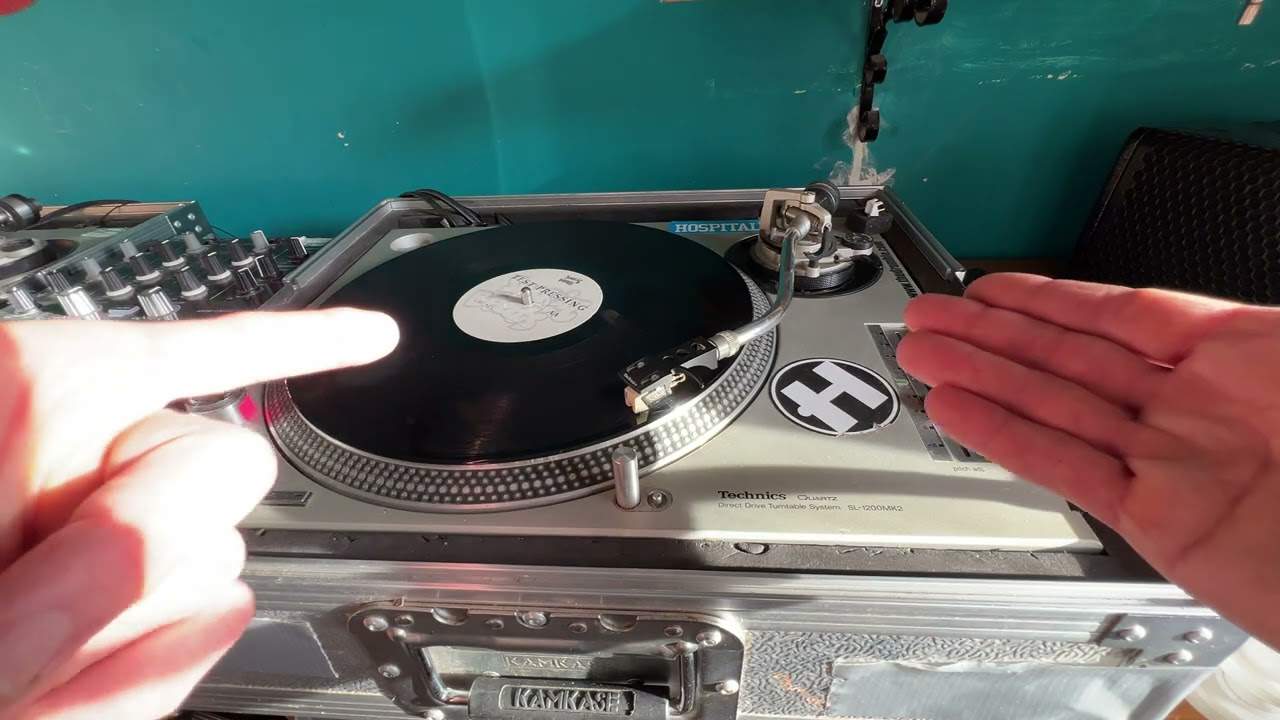
Right, ladies and gentlemen, we're going to go now to very basics. I'm using vinyl. The two tracks I'm using is Rochelle Magic Man over here. We have Weekend by Class Action. Yes, the original 12-inch. I'm not saying vinyl is the best, but I would hazard a guess. No, I'm not going to hazard a guess to say this is fact. If you want to go back to the roots of learning how to DJ, so let's imagine you have got millions and you can buy the best CDJs, the best controllers, but you want to learn how to DJ from back in the day, then get yourself a couple of real turntables, some real vinyl, chuck your laptop and start to practice from the beginning, from the basics. Then when you understand the grassroots, the cornerstone, the foundations, without foundations a house is going to collapse. Then, by all means, fill your boots with modern day technology.
Okay, so the first thing to do really is to find out the BPM of your tracks. Now this is very important, really important. Okay, again, I'm going to go right to basics. It's simply because if you can't work out which tracks are the best, then you're not going to be able to do it. If one track is faster than the other and you're putting your vinyl records on and you just can't work out what's going on, this is pure logic. This isn't rocket science. This is basic sort of mathematics. Once you understand the BPM of your tracks, how many beats are in each minute of a track, then of course you'll be able to understand which one's faster and which one's slower. Yeah. So in other words, if one track has 120 BPM each minute of a track, that means you've got 120 BPM.
2:13 The one that is slower, you could maybe bring up to 117
That means you've got 120 BPM each minute of a track. That means you've got 120 BPM each minute of a track. Oh, 128. Of course that's beats per minute anyway. And the other one is 115. Then just look at pure logic. The one that's 115 is going to have to go faster and or well when I say and or but the one that's faster is going to have to go slower. Alternatively, you can meet them in the middle. So the one that is slower, you could maybe bring up to 117. The one that's faster, reduce that to 117. So straight away, even before you put the record on the turntable. So for example, I've got the pitch up here on that track and let's say this one is 120 BPM, for example. And that one over there, let's say, for example, is 120 BPM as well.
But the pitch is dead center. Now, I have got that at 110. Got that at 120. This one here is now at 120. But if I reduce the pitch down, that one now will go to maybe 118. So it's actually going to go slower. All right? Now small tip there. But anyway, let's get back to grassroots here. So what I'm going to do, I'm going to start this track here. Put that on there. I'm just going to play this. They're both at the center position. Now I can hear straight away that track is too slow. So, oh, don't do that. So I'm going to speed up a bit. Try it again. Slightly better. Let's do it again. Bring the pitch up a bit more. Can you hear it? Starting to get in time. So basically if let's say for example this track here was 120, that track was 117 BPM.
4:27 It's a little bit like drawing a picture, you know?
As I bring the pitch towards me, increase the speed. I'm going from say 117, maybe then 118, 119 and hopefully soon 120. So I'm going to bring it forward towards me even more. Now these two tracks don't necessarily work well together in the mix. The only reason I'm using these is because they've got quite a nice sort of just minimal drum intro. Now this is sort of important because when you've got loads of bass lines and melodies and so on and you're trying to just beat match. There's a lot going on. It's a little bit like drawing a picture, you know? Just draw a stick man and you can see a stick man. When you start drawing this ornate decorative, you're like what is it? You just want to see a stick man.
Actually he's a really good artist. Anyway so I'm going to speed that up again a little bit more. Let's bring that back and let's just get this ready. Maybe too fast now. We're close. Okay that's close. Right now I'm going to stop it there, alright? Now that mix of them being in beat. To begin with it wasn't in beat. Then it was and then it went slightly off. Now when we are mixing old school tunes this is something for you to remember and don't bash your head against a brick wall because you can't seem to work it out and I'll explain what you can't work out. I've confused you haven't I? I have but I will explain. You see old school tunes, this is the deal, old school tunes quite often had, alright? Even though these are actually made by drum machines, alright?
6:31 Questions comments, practice enjoy, plus minus
But again I'm not taking my time. I must sort of back up what I'm about to say now and also I'm not using headphones but a lot of old school tunes were made by real people, real bands, real instruments, a real drummer, not a machine. Therefore, when you have like a small instrumental break it's highly likely that that instrumental break the BPM will vary very slightly from maybe 118 to 18.2 to 118.3 back to 118 back to or even down to 117 It depends what sort of drugs the drummer was on. Anyway so let's try that again So we know it's roughly around there and with this pitch at the moment as well I'm on plus or minus 16% which is slightly more difficult to beatmatch because there is more variation in the speed
Which means you've got less control over the pitch This is why I bang onto people so often if you're going to, especially if you've got the likes of the DGJ400 the small controller with a small pitch you've got minimal room to move the speed So if you're on plus or minus 16% or minus 16, 50 or 100 Good luck! In other words keep to 6% or 8% or 10% Ideally though 6% if you're mixing house music with very similar BPM Okay so let's do this one more time
Put that on there So I know I'm roughly about there There we go Alright so I hope that's been a help Again any questions or comments chuck them in Any questions or comments? chuck them in a comment Thank you very much Don't forget there is a donation button in the description Thank you very much And also please like and share videos like this because it does help with the algorithms Loads of people always say How come you don't get many views? I've been doing this for such a long time You know I'm not surprised But anyway it's all good fun Practice and enjoy Oh that's where my breakfast went Practice and enjoy Thank you
This transcript was produced automatically from the audio of the video and may contain mistakes.