 14:48
WHY the SYNC Is Great to Use and a Big No No in Your DJ Mix
Contents of the video
0:01 Something that is either absolutely loved
Right, ladies and gentlemen, in this video I'm going to talk about something that is either absolutely loved and adored by a lot of DJs, and on the other hand, it's hated. I don't think there's anything in the middle here. I haven't heard anyone who's gone, well, you know, I don't mind it. I've either heard, you know, sorry, love it, brilliant, fantastic, or hate it. Now, again, before I say what it is, probably the people who hate it are well-established DJs, been on vinyl, I think you're already understanding where I'm going here, know what to do and get it. Whereas the sort of more new up-to-date DJs just get a controller, load the software on the laptop and want to form a mix, love it, because it helps.
It is the sync button. But in this video, I'm going to show you why it is. It is indeed fantastic, but also at the same time, it's a bunch of crap. All right? So, yeah, all right, complete contradiction. But hopefully during the course of this video, you will understand exactly where I'm coming from. All right, now, the tunes I'm using is from a very good friend of mine, Mr. Danny J. Lewis. On the right-hand side, I have a track, Incitled, A Love So Rare. On the left-hand side, a definition of garage. Now, this guy, what he makes, what the music... He brings out to the world, has depth, vibe, energy, feeling. It just makes you want to move. But at the same time, his tunes you hear, but if you're that way inclined, you feel it as well.
It's just got that love inside it. You just want to like hug someone when you hear his tunes, okay? Not all of them, because some of them are like, you know, slightly more poppy. But a lot of it... I think about Danny. If someone was to say to him, right, Danny... Now on, every single track you play... All right, maybe I should or shouldn't say this, because I'm sure every track he makes, he enjoys and he loves anyway. But something inside of me is saying that if it was up to him, he would just do that deep, soulful, garagey, hug it, kiss it, love it kind of vibe that you feel, it just makes you warm inside. Anyway, I digress. Okay, so let me play, first of all, a little bit of A Love So Rare. So you get an idea of the tune.
2:37 Just beautiful, absolutely beautiful music
Just beautiful, absolutely beautiful music. Okay, here's a definition of garage.
Okay, hopefully you get the idea there. So what I'm going to do now, I'm going to start A Love So Rare, and then I'm going to start a definition of garage. Now, just have an open mind with this video. Especially have an open mind with exactly what I'm about to do now.
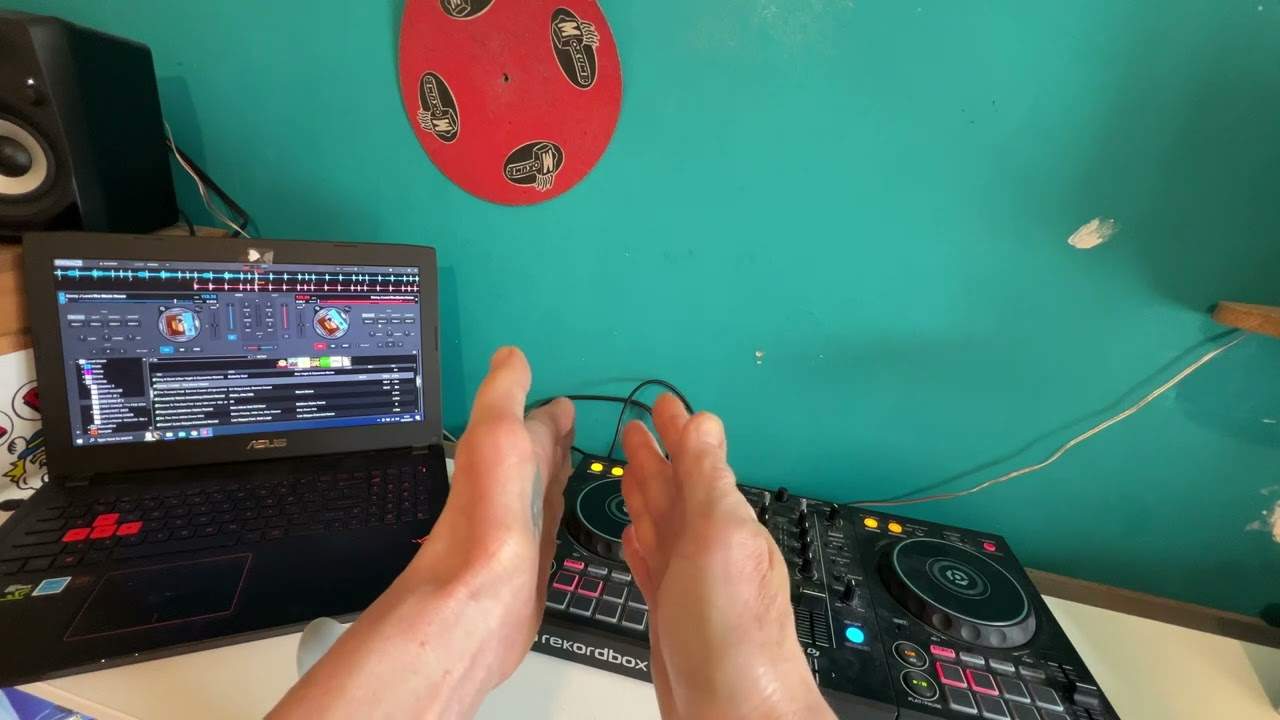
Okay, so let's say you're a new DJ. You have no idea how... You don't even know when to bring the track in. And that's the sort of mix you do. But then you find out about this thing called the sync. What are you going to do? So let's try. I'm just going to press sync on the left-hand side. Let's do the same thing again now.
So straight away, what we've got is we've got a new DJ who's just turned up. You know, they had something for Christmas, a birthday party, or basically maybe, you know, you're 40 plus, you want to be a DJ. Now you can do a mix.
4:10 Hold on a minute
And also, because now I have set this in a certain way... Oh, I've gone off there. Hold on a minute. Let me do that again. Let me start this one off here. Okay, press sync there.
That's the master. Press sync here. And start this one off.
Now slow this one down. Because this is the master, what that means is now... Slow both of the sides out. They're actually slightly off there because I think what happened, I started the second one a little bit too early or a little bit too late. But anyway, I'm not going to start this video over again. But basically what's happening now very quickly is when you've got one deck that is the master and the other one, the sync or the slave, whatever you want to call it. The slave. I'm just talking about lighting. Whatever you do on the master pitch-wise, it will emulate that on the sync. So if you do indeed want to slow the mix down on the master side, you can slow it down and the other side will slow down. Okay.
So why, first of all, is the sync feature a great, great feature? Why is it something that every single DJ should use maybe once, maybe twice in say a set of an hour, two hours or so? So. It's very simply this, okay? Without forming some kind of mix. Let's imagine you want to form a long transition of not sort of four bars, eight bars, 24. Nah, that's cheap talk. No, I'm on about 32 or 64 bars. So you want to form a mix that blends two tracks together. So almost like you're having a mashup in the mix. Now, if you do that, and all you're going to be doing is just letting the two tracks overlay each other and nothing else, then really you're not showing your, excuse me, your professionalism because you should be able to mix the two
Together if you are a well-established DJ. But on the other hand, and this is the key here, if you're forming a long mix 32, 64, 128 bars, it depends how long the actual track is. And you've got sync engaged and you're using effects. You're using bass, mid, treble, some EQ, you know, the EQ, you know, you're adding some color. You're adding some echo, some reverb, some flanger. Then that to me is what you should be doing because you don't want to be concentrating and thinking about are they in beat? No. You want to be more concentrating on adding color and another dimension to the transition you're making. Okay. Now, something I talk about to the students I teach online is this, and I'm going to ask you a question.
7:27 Do you think you mix track one into track two?
All right? Most people get this wrong. And when I explain, you'll understand why you got it wrong and why my interpretation of what I'm about to explain to you is right. Do you think you mix track one into track two? So in other words, you've got a track on here, for example, Danny J Lewis, a definition of garage, and a love so rare. So we've only got two tracks. So do you mix track one into track two? Is your answer yes? Okay, it probably is. Well, you're wrong because you don't. You mix track one into track number three because you'll mix the transition is track number two. And I can demonstrate this or explain it very simply. My arm is track one. My hand is say 32 bars of track one. My hand here is 32 bars of track two.
So my two arms track one track three. Guess what I formed in the middle? I formed a new composition, which is track number two. This is the jam. This is the peanut butter. Okay, this is the cheese in the sandwich. And if it's not right, it's going to make the whole thing sound terrible. So by definition, you need track one to blend naturally into track two with the aid of track three. And then the music the mix progresses on if that transition in the middle doesn't sound good, the whole thing is going to sound terrible. So this is why it's a great idea to have sync. Okay? Yet when we're forming a mix, it does have to be in key or keys that match. It's got to work. Otherwise it's going to sound clangy. But again, relating back to the sync.
10:01 Imagine for the rest of your life going to McDonald's and eating burge
This is why it's a great. It's a great feature to use because if you're going to form along transition, you don't want to worry about keeping it in beat, which means all of your brain power and energy is on the mix. So if you think about it track one now is the time for you to form a new composition track two that no one else has ever done in the world. You can do this. And it's highly likely that you will be the first person to do that transition because if you're going to move the base and then the treble and then maybe the mid or add some filter and then echo, you're the only person who would have done that. You know sort of bass mid then treble then filter their echo because someone else may have had the same two tracks but may
Have done filter first then the echo so you'd have done it for the first time. Okay? So that in my mind is why sync is paramount, but this is where sync is a no-no. This is where sync is just terrible and I'm going to give you an analogy here. Imagine for the rest of your life going to McDonald's and eating burgers. That's all you're going to do for the rest of your life. You may be thinking whoa, that's great, but no believe me after a while you'd get bored sick of it. Because it's the same thing. It's the same taste and it's just going to get boring. So if you're forming a mix of one or two hours and you're using sync with every single transition, you've got no soul in the mix. You've got no body. There's no feel to it.
This is why a lot of old-school DJs do not like sync because in my mind and I'm sure a lot of other people and please comment on this video. Let me know give me a thumbs up hit that Bell notification and don't forget check out. Mr. Danny date Jay Lewis underneath in the description all of his wonderful music. Okay, but if you think about it if we go back years ago when a DJ formed a mix excuse me with two vinyl turntables and it went slightly off and then came back in again. It was organic. It was real you knew that the DJ was in control. But nowadays if I hear a mix and I can't hear any mistakes, I have to question the DJ are they in charge of the mix or is the laptop the computer in charge of them and we need to start steering clear of that.
12:22 Sometimes my analogies are a little bit stupid
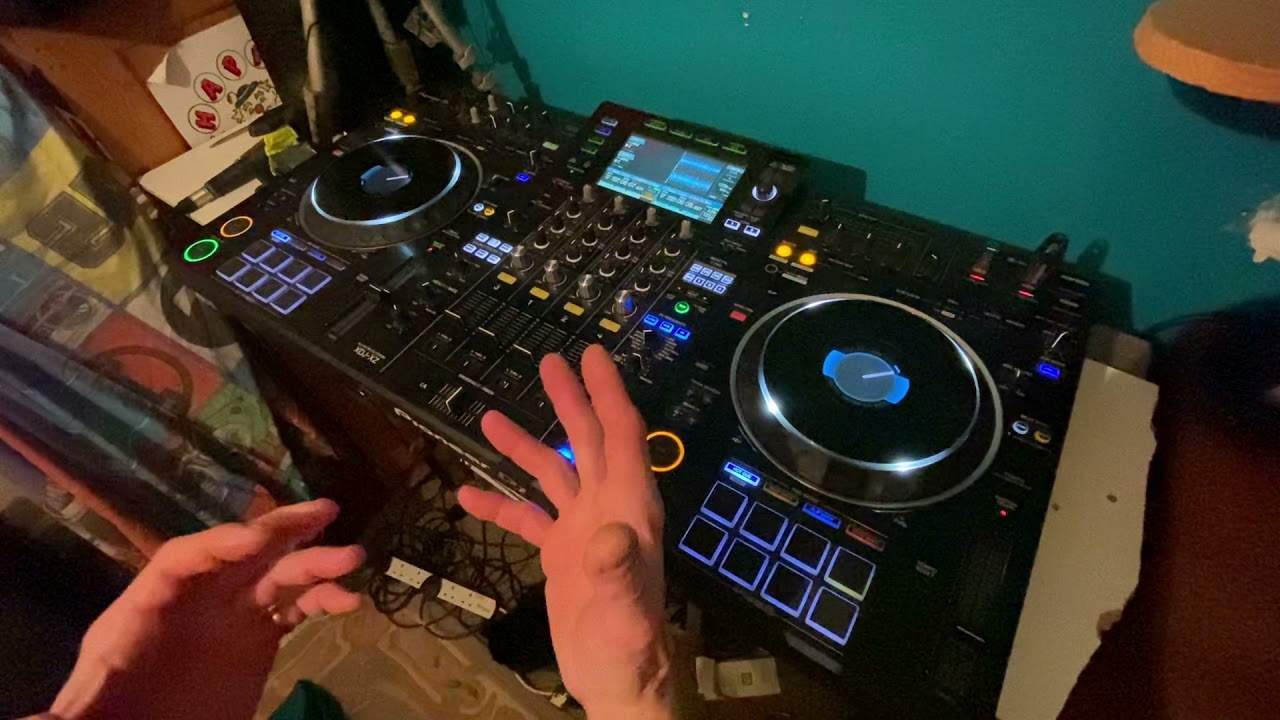
I mean the screen here is fantastic great job that to me is like the windscreen of a car while I'm driving along, you know, I need to make sure I'm in control. I'm looking at that but at the same time when I suppose that's maybe it is a good analogy. Maybe isn't because you do have to look into us now actually that's a really crap analogy because you've always got to look at the windscreen. Sorry. All right, no forget that. All right. I'm not going to edit this video. Sometimes my analogies are a little bit stupid. Okay, how can I put this? All right. Okay. Let's put it another way. The screen there is great to give you a little bit of information. Ah, here's a good analogy. It's like a newspaper. All right, you go out you buy your newspaper you read it but you don't
Read the same newspaper. Time and it isn't in front of you 24 7 7 days a week. You wake up in the morning, you go out you get your newspaper. You have your breakfast, you read it, you put it away. It isn't there all the time. You don't look at it all day all day and all night. That's how the screen should be used. It's there to pass on a bit of information and then you carry on with the job. You are in charge of the mix. I remember there was a it was a mixtape. I think it was by either. Kenny dope. No, it was little Louis Vega. He did a mixtape. It was on CD from the early 90s and it finished with Casey YC a tracking title stomping grounds. And if you listen to that mix, you can hear it was live. You can hear it slightly going offbeat.
It was organic. It felt it sounded great. All right, I'm waffling on here a little bit but I hope you got some good quality information from this video. So again finish off sync great. You're going to form that second track in the mix and you're going to add effects. You're going to make it your own. You're going to big up into track number three, but it's bad if you're going to be using sync all the time. And if you want to learn how to not use sync and you're a new DJ then there's an email in the description get in touch with me because I can teach people how to not use sync. All right? Yeah, I can do it. All right now. I can't of course, I can't promise a hundred percent because it's up to you but it's about the practice but I can give you some great steps how
It makes it so much easier for you to not have to use the sync and many of the other features. So your mixes will become more real. They'll be feeling behind them instead of this kind of computerized gel of tracks with no soul. All right. Thank you for watching. Don't forget to like and subscribe practice and enjoy. Thank you.
This transcript was produced automatically from the audio of the video and may contain mistakes.