 4:41
Setting different positions on the pitch
On YouTube this video is called Complete Beginner DJ Lessons 24 Setting Different Positions on the Pitch Mixing Practise
What this lesson teaches
The hardest exercise in the series and the one that makes the rest of it worth doing. He describes it as the thing that scares the hell out of every modern DJ, and he is not wrong.
The setup
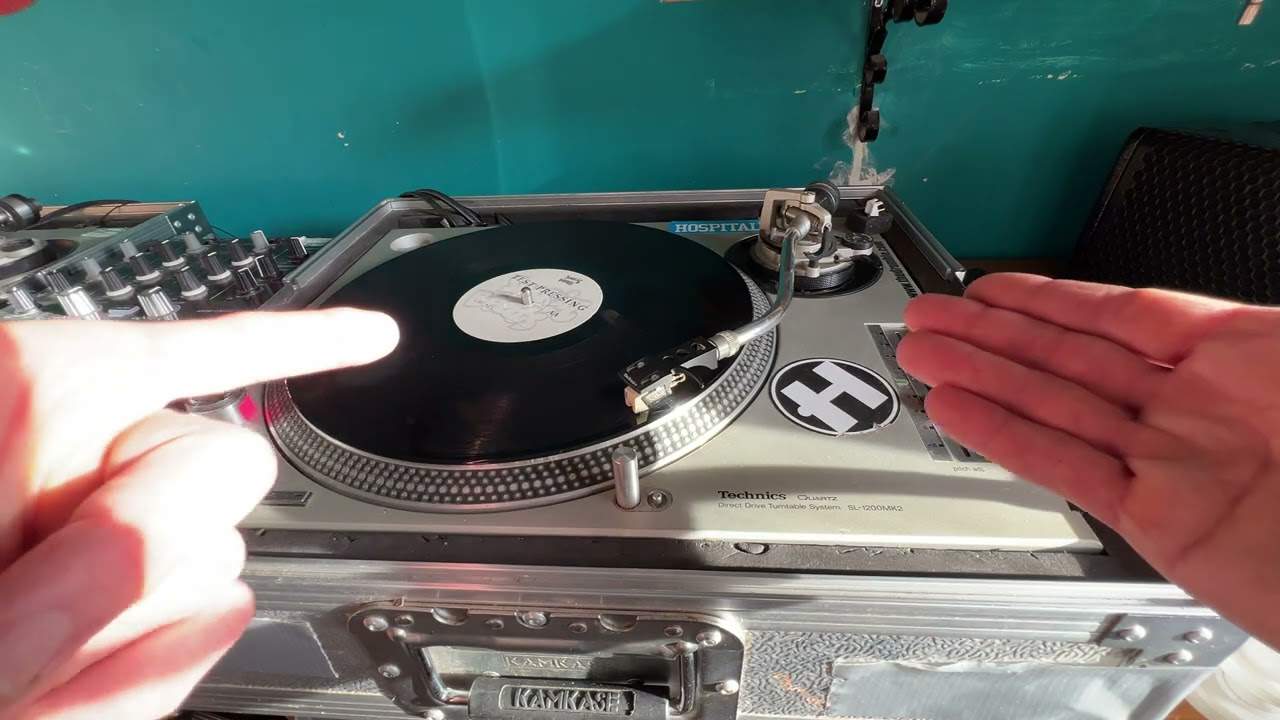
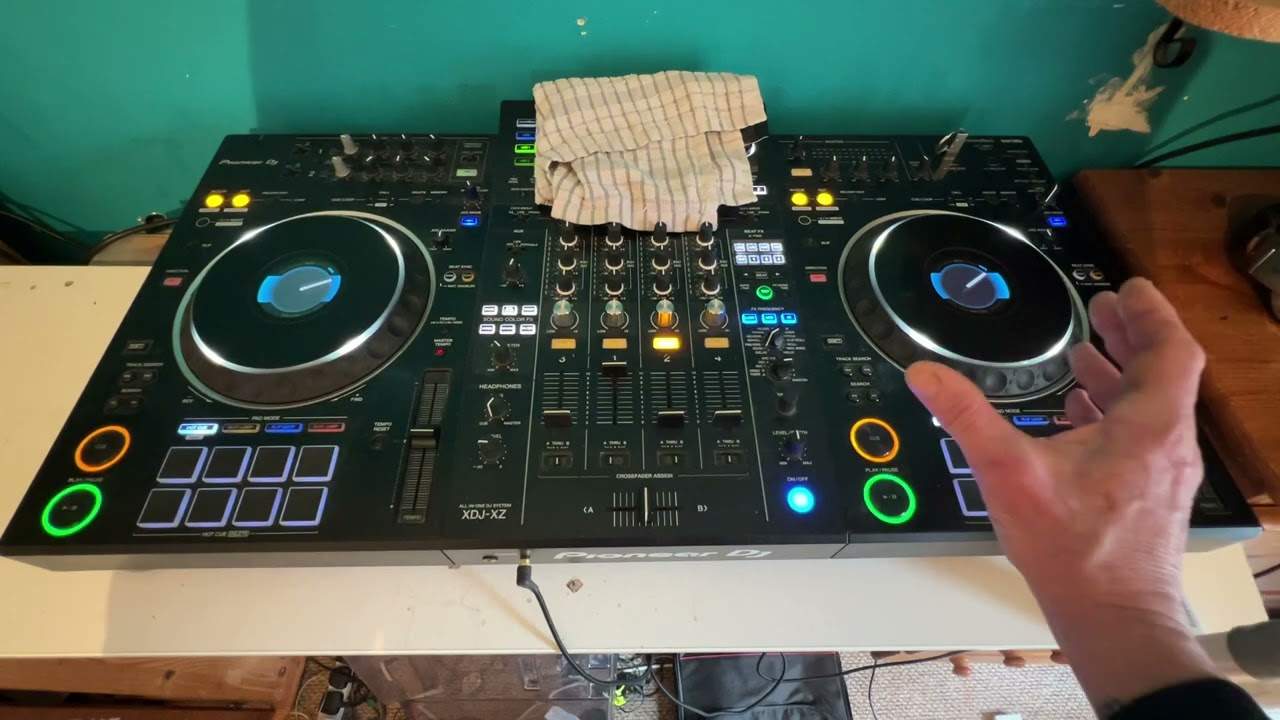
Same track on both sides, both at 126 BPM. Then he covers the display so there is no readout at all.
Then he moves both pitch faders slightly into minus - by eye, which means they are almost certainly not in the same place. One deck might now be a tenth slower, or three tenths faster. He does not know, and neither do you, and there is no way to look it up.
Why both of them
This is the clever part of the design. Moving one fader leaves you able to reason about it - the right side is slow, so push it up. Moving both removes even that. You have two unknown tempos and nothing to compare them against except the sound.
Which is exactly the situation you are in with two different records.
The procedure
Same cycle as before: start one side, count four or eight bars, drop the other on the one, and listen.
Get an echo, and nudge the jog wheel. If the echo shrinks, keep going; if it grows, go the other way.
And then the part that is new
You nudge them together - and a few bars later they come apart again.
That is the signal. The jog wheel fixed the position and the position will not stay fixed, which by the test from the previous lesson means the tempos are different. Nudging again will buy you another few bars and then the same thing happens.
So now you move the pitch fader, very slightly, in the direction that stops the drift. Then nudge back into position. Then listen again, and adjust once more if it still creeps.
That loop - correct the tempo, correct the position, listen - is beatmatching. Everything up to here has been preparation for it.
Keep the range low
His reminder, and it matters more here than anywhere: six, eight or ten per cent. The adjustments you are now making are tiny, and on a wide range they are smaller than your hand can reliably produce. On a small controller with a short fader, a narrow range is the difference between possible and not.
Contents of the video
0:01 Next level
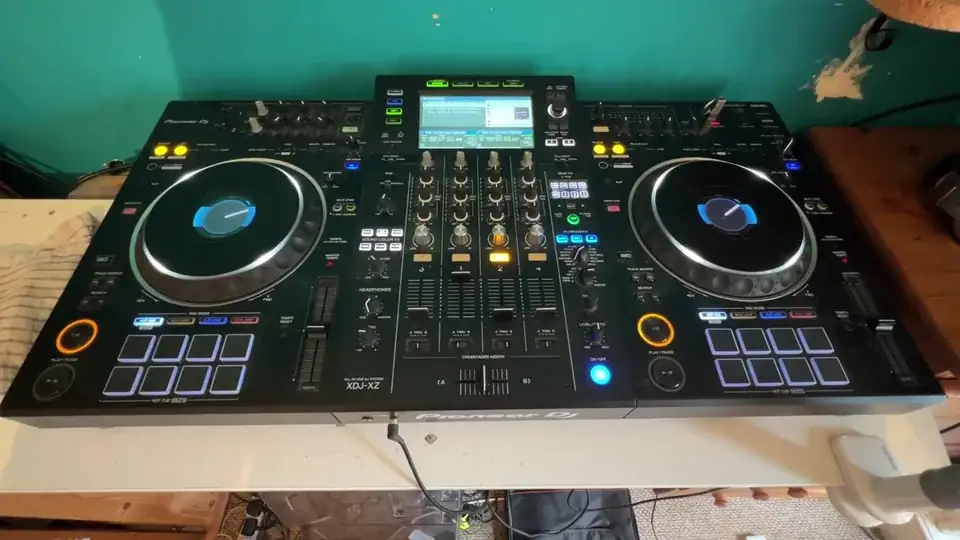
Video 24, ladies and gentlemen, for the complete and utter beginner. Now this is where we go into the depths of beyond, where we are indeed going to go to the next level. This is where it's going to test your brain to the extreme. If you look at the screen, 126 BPM, 126 BPM. Tune is by Lenny Fontana, True House Stories from Karmic Power Records. What I'm going to do is something that scares the hell out of every single DJ, well, every single modern day DJ. And that is, you don't have anything to look at. And I'm going to do just that. There you go. We no longer have any form of readout. But I have got the same track on both sides. If I don't touch anything and just play them together.
0:59 We've got that phasing sound
We've got that phasing sound.
But that's easy, we've covered that. Now what I'm going to do is something that scares the hell out of a lot of new DJs. But if you can't push yourself, you don't push yourself, you're not going to learn. I'm going to move the pitch on both sides to the minus position, very slightly. Now even though I've moved them theoretically in the same visual position, it's very likely that they are now different BPM. So... Even though it looks as though they could be the same BPM, it's more than likely on the screen underneath that cloth that I can't see anymore. The right hand side could be 0.1 slower than the left hand side or the left hand side could be 0.3 slower than the right hand side. But how can we find out?
Well, it's not a question of how we can find out what we've got to do is test ourselves to the extreme. Now, what I want you to do is remember, the previous couple of videos are and we're going to work around that premise of starting the one side queuing up the other side. I'm not going to be using headphones, queuing up the other side and then after say four or eight bars starting the right hand side listening for that echo, listening for the phasing if you get an echo then you move the jog wheel very slightly, move it clockwise. If the echo... Decreases, then of course, you know by your action and moving the jog wheel clockwise on the right hand side. The right hand side was too slow. But here's the key because the pitches could be slightly off.
2:55 Three four, pitch, four three
That means that if you move the jog wheel clockwise and you get it back in beat, you get that phasing sound. It will go off again because the right hand side could well be very slightly slower than the left hand side. And this is now where we need to start using the pitch control. So what you will need to do then is to move the pitch very slightly towards you. Now, if you remember in a previous video I talked about the percentage. Very vital that you stick to a low percentage BPM, especially if you have a small controller with only a small amount of pitch. The bigger controllers you have a larger pitch control, which means you've got more movement. But still for a beginner, ideally stick to either six, eight or 10% movement on your pitch.
So let's start off. Press play on the left hand side. One, two, three, four, one, two, three, four, one, two, three, four, one, two, three, four. Start the other side.
I can hear my face. Moving sound, moving my pitch, too much, anti-clockwise. Okay, the other side's in. Okay, so what I need to do now is just repeat the process. That's it, okay? So what you're doing all the time is you're just slowly moving the pitch. Now if you do want to take this to the next level, go and check out the next video. Thanks for watching, practice and enjoy.
This transcript was produced automatically from the audio of the video and may contain mistakes.