 4:35
How and why you use the jog wheel
On YouTube this video is called Complete Beginner DJ Lessons Video 11 How and WHY You Use the Jog Wheel
What this lesson teaches
The first proper practice mix in the series, and it is set up to remove every variable except one.
The setup
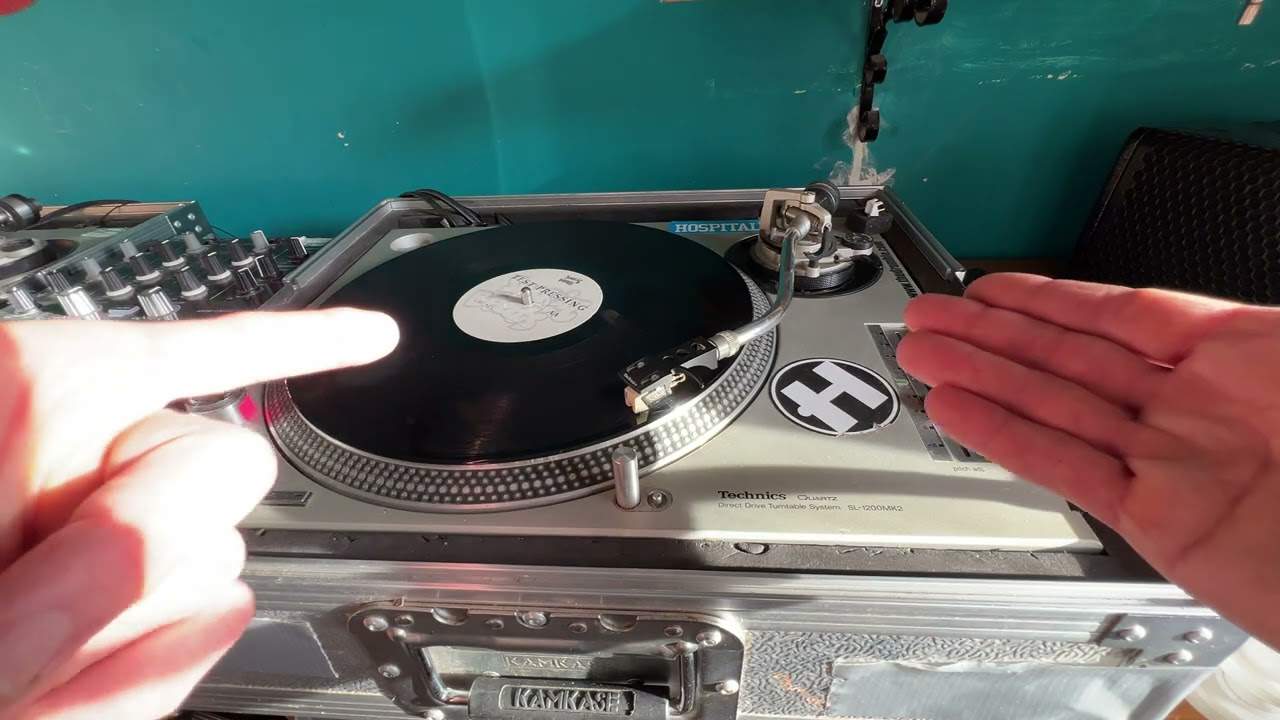
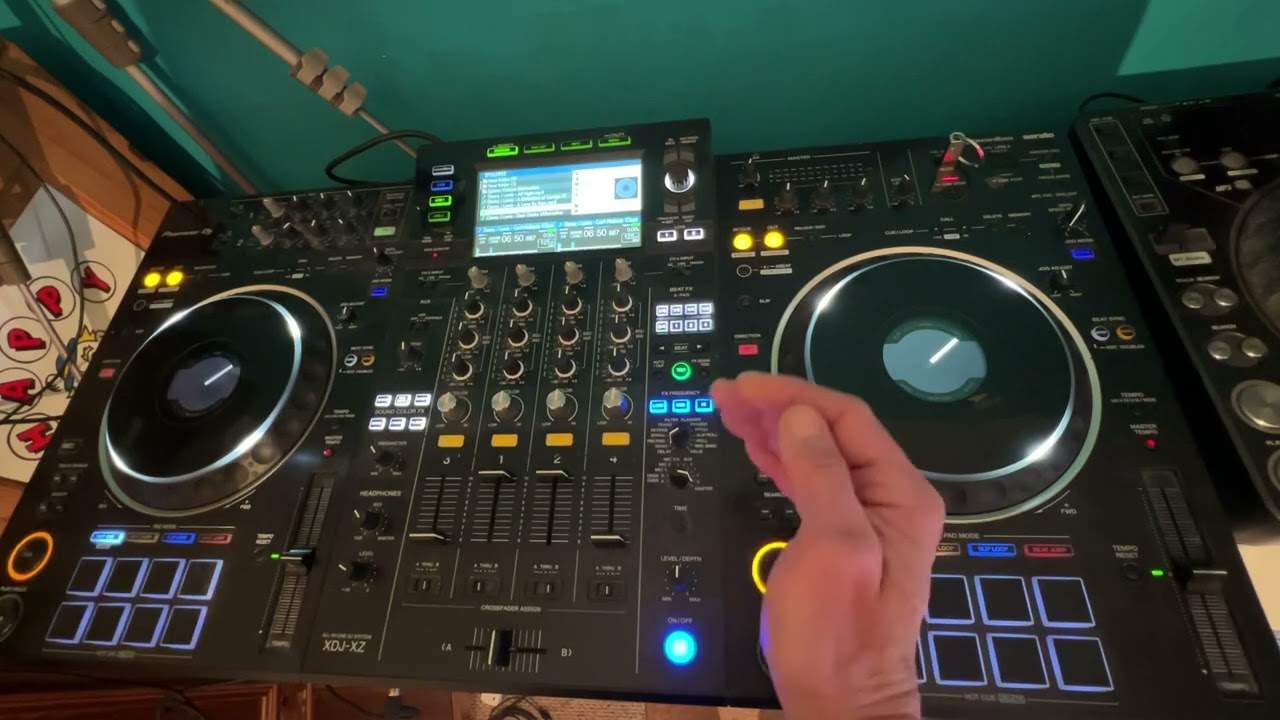
The same track on both sides - a complete mirror image. EQs at twelve o'clock on both, trims matched, crossfader in the middle, both faders up. Tempo reset engaged, so the pitch fader has no effect and both decks are locked at the track's own 125 BPM. CDJ mode.
That arrangement means the two decks are identical in every respect. Anything you hear is a difference in position, and nothing else.
Press play on both at once
And you will miss, because you are not a machine. One side starts a few milliseconds before the other.
Here is the thing to understand: that offset never goes away by itself. The tempos are identical, so the gap you created in the first instant persists for the whole track.
What it sounds like is an echo - each beat arriving twice, very close together. In DJ terms, off beat.
The fix
The jog wheel. If the right side started first, it is ahead, so move its jog wheel anticlockwise to slow it down until the left side catches up, then let go.
Or do the opposite: speed the left side up clockwise until it catches the right. Either works, and he demonstrates both.
The analogy, which is the lesson
Two cars both doing 30 miles an hour. One goes to 31 for a single second and then returns to 30.
They are now travelling at the same speed and the second car is permanently ahead. Matching speed again does nothing - the gap is already banked. The only way to close it is to go slower than 30 for a comparable moment.
That is exactly what the jog wheel is doing, and it is the single most important idea in beatmatching: tempo and position are two different problems, and the control that fixes one cannot fix the other.
Contents of the video
0:00 Video number 10 for the complete and utter beginner
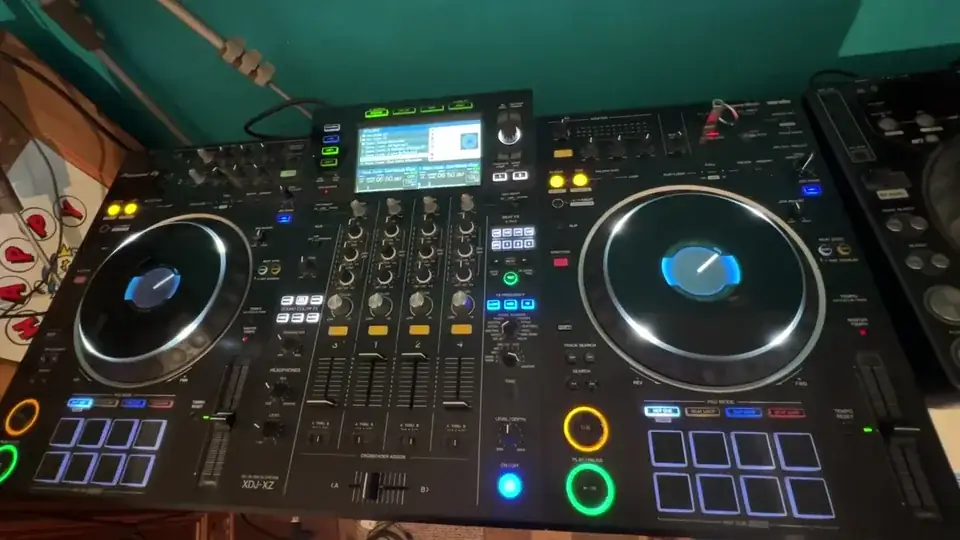
Right guys, video number 10 for the complete and utter beginner. So in this video we're going to do a bit of a mix but this is a very basic beginner practice mix. Now I've got the same track on both sides, the track is by Mr Danny J Lewis, a track entitled Can't No Body. So what I've done now is I've got a complete mirror image of both sides. So the right hand side is exactly the same as the left hand side. The bass, mid and treble are set to 12 o'clock. The trim is the same. I'm going to put the crossfade in the middle, both volumes up. I've set the pitch control to tempo reset. What that means is that no matter where I put the pitch control, it will stay at exactly the correct BPM. 125 BPM, 125 BPM. I'm also going to go to CDJ mode. Now what I'm going to do is I'm going to press play on both sides at exactly the same time.
1:28 Let's just press play and have a listen to what we can hear
Now if let's say because I'm not a machine, I start the right hand side a couple of milliseconds before the left hand side, then the right hand side will always be a couple of milliseconds before the left hand side or vice versa. So let's just press play and have a listen to what we can hear. That's pretty good, they're both the same. So that's really the sort of sound you need to hear. What you don't want to hear is something like this. Now that's really like an echo but also in the DJ term we class that as being off beat. So what's going to happen there is one of the sides is just ahead of the other one. So I'm going to repeat the second demonstration and show you how we can get rid of that sound.
2:30 I started the right hand side just before the left hand side
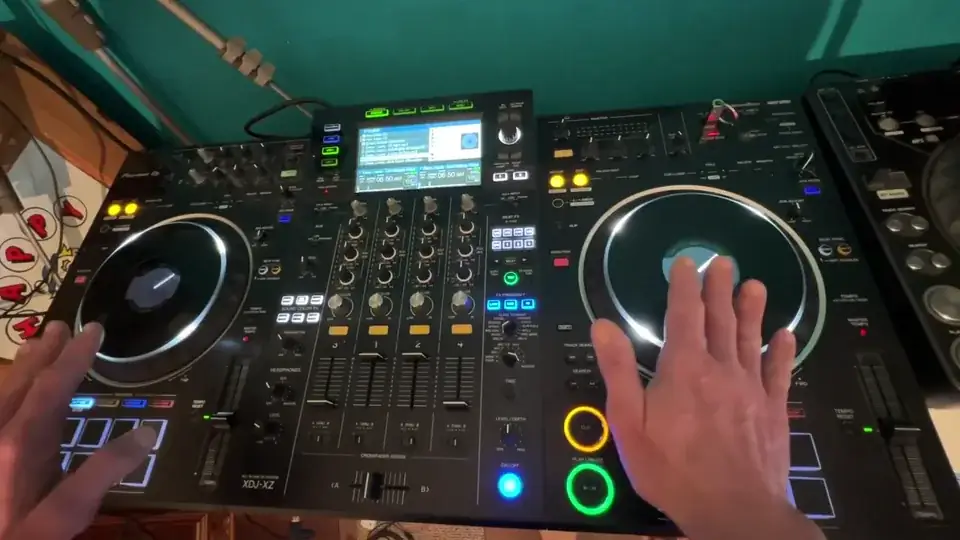
Okay, so what happened there? Now I started the right hand side just before the left hand side. So the right hand side was ahead of the left. What I did then is I moved the jog wheel anti-clockwise. So if you remember in a previous video we talked about the jog wheel slowing the track down. So what I was doing, I was indeed slowing the track down until as such time as the left side caught up. So let's repeat that again. Too far. There you go.
So let's imagine two cars, Audi, BMW. Both of them are travelling say at 30 miles an hour. But all of a sudden... The Audi wants to go 31 miles an hour for say one second. Now even though it's only one second and then the Audi then continues to go 30 miles an hour. The Audi is going to be very slightly ahead of the BMW. So the only way for the Audi to get back to the same position as the BMW is of course to slow down. So that's what we're doing really with the jog wheel. We're slowing down the track. Now the opposite applies. If I wanted to, I could speed up the left-hand side. So I'm going to repeat the process. Start the right hand side first very quickly then followed by the left hand side. But then this time I'm going to move the jog wheel on the left hand side clockwise.
So I'm going to speed this one up. Here we go.
There you go.
Simple demonstration here on matching beats and using the jog wheels. Thanks for watching practice and enjoy.
This transcript was produced automatically from the audio of the video and may contain mistakes.